The international color-coding system simplifies hive management by assigning a specific color to the queen bee based on the last digit of her birth year. This standardized five-year cycle allows you to instantly determine the queen's age by observing the dot of paint on her thorax, without needing to reference external logbooks.
Core Takeaway The system functions as an immediate visual timestamp, enabling beekeepers to assess a queen's age at a glance during routine inspections. This visual data is critical for making on-the-spot decisions regarding colony performance and queen replacement schedules.
Decoding the Five-Color Cycle
The system relies on a repeating rotation of five colors: White, Yellow, Red, Green, and Blue. To determine the age of a queen, you simply match the color of her marking to the final digit of the year she was introduced.
The Standard Rotation
According to international standards, the colors correspond to the year endings as follows:
- White: Years ending in 1 or 6.
- Yellow: Years ending in 2 or 7.
- Red: Years ending in 3 or 8.
- Green: Years ending in 4 or 9.
- Blue: Years ending in 0 or 5.
Mnemonics for Field Recall
Because remembering the sequence can be difficult in the field, many beekeepers use the mnemonic phrase: "Will You Raise Good Bees."
The first letter of each word corresponds to the color order: White, Yellow, Red, Green, Blue.
Operational Advantages
Instant Age Verification
The primary utility of this system is the elimination of administrative friction. You do not need to pause an inspection to check written records or digital logs.
The color immediately tells you if a queen is young (current year's color) or aging (a color from two years prior). This speed is vital when managing a large number of hives.
Streamlining Inspections
Identifying the queen is a prerequisite to checking her color. Techniques such as using a queen excluder can narrow the search area significantly.
By confining the queen to a specific brood box or section, you can locate her faster to verify her marking. Once located, the color confirms her identity and age instantly.
Understanding the Limitations
While the color-coding system is highly effective, it relies on the physical persistence of the mark and the stability of the colony.
Supersedure Confusion
A colony may replace a failing queen on its own (supersedure) without the beekeeper's immediate knowledge. The new virgin queen will be unmarked.
If you encounter an unmarked queen in a hive that previously had a marked one, the color system is no longer applicable until you mark the new queen. You must deduce that the original queen has been replaced.
Paint Durability
The marking paint is not permanent. Over time, worker bees may clean the paint off the queen, or it may wear away naturally.
A faded or missing mark can lead to confusion about the queen's age. It is good practice to re-mark queens if the paint becomes illegible, provided you are certain of her identity.
Making the Right Choice for Your Goal
Whether you are purchasing bees or managing your own breeding program, the color code is a tool for quality control.
- If your primary focus is purchasing queens: Verify that the queen arrives marked with the current year's color to ensure you are receiving new stock.
- If your primary focus is colony longevity: Plan to replace queens when their color indicates they are approaching two to three years of age, as productivity typically declines after this period.
A disciplined adherence to this color rotation turns the queen's age from a guessing game into a known variable.
Summary Table:
| Year Ending In | Color | Mnemonic Key |
|---|---|---|
| 1 or 6 | White | Will |
| 2 or 7 | Yellow | You |
| 3 or 8 | Red | Raise |
| 4 or 9 | Green | Good |
| 0 or 5 | Blue | Bees |
Streamline Your Apiary Operations with HONESTBEE
Maintaining a productive colony starts with efficient management tools. At HONESTBEE, we empower commercial apiaries and distributors by providing a comprehensive range of professional beekeeping supplies—from high-precision marking tools and hive-making machinery to essential consumables and honey-themed merchandise.
Ready to scale your wholesale inventory or upgrade your apiary equipment? Our experts are here to help you select the right solutions for your business.
Related Products
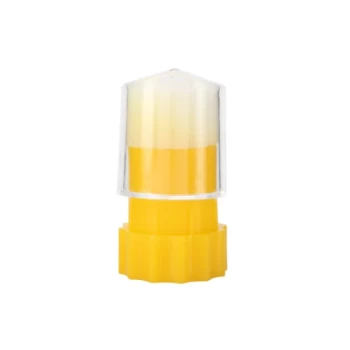
- Queen Bee Marking Tube Cage Bottle Catcher Holder with Clear Plastic Plunger Marker
- Plastic Long Marker Device for Catching and Marking Bees Queen Bee Marking Tube and Cage
- Queen Bee Catcher Plastic Bee Marker Bottle with Piston Marking Tube
- Queen Bee Marking Pen UNI Medium Point for Queen and Bee Marking
- Queen Bee Marking Pen POSCA Queen Marking Pens for Beekeeping Bee Markers
People Also Ask
- How do you capture and immobilize a bee for marking? Master Safe Queen Handling for Your Apiary
- What is the function of a queen marker cage? Essential Guide to Safe Beekeeping Management
- What tools can be used to safely secure a queen bee while marking her? Top Solutions for Professional Beekeepers
- What are the functional differences between a push-in queen marking cage and a queen marking tube? Choose the Best Tool
- What tools are available for safely marking queens? A Guide to Secure and Efficient Queen Marking