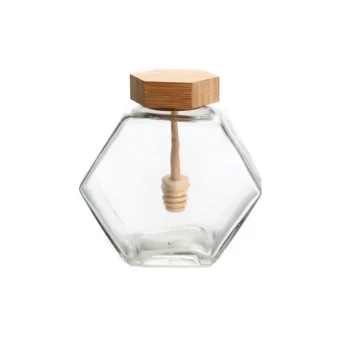
Professional packaging designs and high-quality labeling materials serve as the primary catalyst for increasing the commercial value of honey products. They function as the critical interface between the producer and the consumer, transforming raw agricultural output into a distinctive retail brand. This transformation directly influences consumer purchasing decisions, enables suitability for diverse sales channels (including online platforms), and builds the brand loyalty necessary to survive in a competitive market.
Core Insight: Marketing honey is not just about the quality of the nectar; it is about the integrity of the delivery. Professional packaging does two jobs simultaneously: it physically preserves the product's chemical stability and psychologically signals premium value to the buyer.
The Strategic Role of Visual Identity
Elevating Perceived Value
In a saturated market, the visual presentation is often the only way a consumer can judge quality before tasting. Professional design elements elevate the product from a commodity to a high-value asset.
By utilizing high-quality labeling materials, producers can convey a sense of luxury and care. This "added value" allows producers to justify higher price points and secure premiums that bulk packaging cannot command.
Conveying Brand Identity and Origin
Labels act as the storyteller for the product. They provide the canvas for communicating the specific geographical origin or unique floral source of the honey.
For specific niches, such as urban honey, personalized labels that specify exact collection points create an emotional connection with the buyer. This transforms the product into a cultural gift rather than just a sweetener.
Functional Integrity as a Marketing Asset
Protecting the Product Promise
Marketing claims are useless if the product degrades before it reaches the consumer. Professional packaging provides an effective seal that excludes air and moisture.
This barrier is critical because honey is hygroscopic; absorbing humidity can lead to fermentation and spoilage. By preventing oxidation and keeping the honey chemically stable, high-quality containers ensure the consumer experiences the premium quality promised on the label.
Logistics and Market Reach
The physical dimensions and durability of packaging dictate where you can sell. Standardized, professional packaging is designed to withstand the rigors of long-distance transportation and retail display.
Furthermore, proper dimensioning makes products suitable for e-commerce logistics. Packaging that is robust and standard-sized reduces breakage and shipping complexities, opening up vast online sales channels.
Building Trust Through Information
Traceability and Anti-Counterfeiting
Modern consumers demand transparency. Advanced automated labeling systems integrate essential data such as production dates, nutritional facts, and geographical indications directly onto the package.
This level of detail provides traceability and anti-counterfeiting functions. It assures the consumer that the product is genuine and safe, which is a foundational requirement for building brand trust in international markets.
Leveraging Sustainability
The choice of material itself is a marketing tool. Using recyclable, reusable, or compostable materials aligns the brand with modern environmental values.
Highlighting these eco-friendly choices on the label can attract a specific demographic of environmentally conscious consumers. This establishes a "green" brand image, which is increasingly a prerequisite for entering high-end retail sectors.
Understanding the Trade-offs
Balancing Aesthetics and Cost
While premium glass containers and intricate labels increase value, they also increase production and shipping costs. Heavier materials like glass protect the honey better than some plastics but significantly raise logistics expenses.
Protection vs. User Experience
High-security seals are essential for preventing fermentation and contamination, but they must remain user-friendly. Packaging that is too difficult to open can frustrate consumers, negatively impacting the brand experience despite the high quality of the product inside.
Making the Right Choice for Your Goals
To maximize the marketing potential of your honey products, align your packaging strategy with your specific business objectives:
- If your primary focus is E-commerce: Prioritize standardized dimensions and robust, impact-resistant materials to ensure safe delivery and efficient logistics.
- If your primary focus is Premium Retail: Invest in high-density glass containers and personalized labeling that highlights specific geographical origins to justify a higher price point.
- If your primary focus is Brand Trust & Export: Implement automated labeling systems that provide clear traceability, anti-counterfeiting features, and compliance with international food safety standards.
- If your primary focus is Eco-Conscious Markets: Utilize sustainable, certified compostable or recyclable materials and explicitly highlight these attributes on your visual branding.
High-quality packaging transforms honey from a simple ingredient into a stable, trustworthy, and valuable consumer good.
Summary Table:
| Impact Area | Marketing Benefit | Key Strategy |
|---|---|---|
| Perceived Value | Elevates product from commodity to premium | Use high-quality labeling and luxury materials. |
| Product Integrity | Prevents fermentation and ensures quality | Utilize airtight seals and moisture-resistant containers. |
| Market Reach | Enables e-commerce and long-distance shipping | Adopt standardized, durable, and robust packaging. |
| Brand Trust | Provides traceability and anti-counterfeiting | Implement automated labeling for data and transparency. |
| Sustainability | Attracts eco-conscious consumer segments | Choose recyclable or compostable packaging materials. |
Elevate Your Honey Brand with HONESTBEE Professional Solutions
At HONESTBEE, we empower commercial apiaries and distributors with the high-performance tools and machinery needed to turn raw honey into a premium retail brand. Our comprehensive wholesale portfolio includes:
- Precision Machinery: Advanced honey-filling and hive-making machines for consistent quality.
- Professional Hardware: A full spectrum of durable beekeeping tools and equipment.
- Industry Consumables: Essential supplies to maintain the integrity of your production.
- Cultural Merchandise: Unique honey-themed products to expand your brand’s market appeal.
Ready to maximize your commercial value and streamline your logistics?
Contact HONESTBEE Today to discover how our specialized equipment can transform your honey business.
References
- Miroslav Čavlin, Sara Kostić. Research on the Determination of the Factors Affecting Business Performance in Beekeeping Production. DOI: 10.3390/agriculture13030686
This article is also based on technical information from HonestBee Knowledge Base .
Related Products
- Double Nozzle Small Honey Filling Machine Honey Sachet Packing Packaging Equipment
- Hexagonal Glass Honey Jars with Metal Lug Caps Elegant Versatile Packaging
- Small Honey Filling Machine Sachet Packing Equipment Single Nozzle
- Honey Stick Filler Vertical Paste Sachet Packing Machine for Honey Sachets
- Automatic Single-Dose Snap & Squeeze Honey Sachets Packing Machine
People Also Ask
- What value do retail packaging equipment and filling technologies provide in the honey distribution process? Maximize ROI
- How does industrial honey-filling machinery support Robinia pseudoacacia stands? Maximize Your Acacia Honey Yield
- How does specialized honey filling equipment contribute to honey distribution? Scale Your Wholesale Efficiency Today
- Why is precision temperature control necessary for red honey filling? Preserve Amorpha fruticosa Color and Aroma
- What role does precision filling equipment play in cost control? Maximize Honey Profits & Market Growth