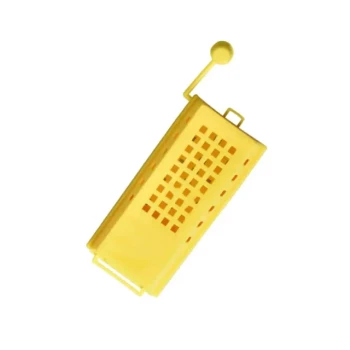
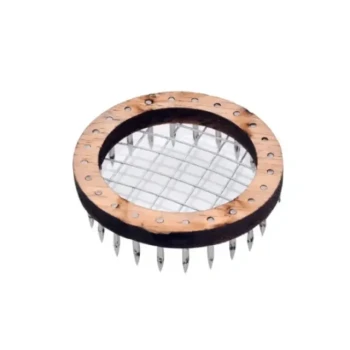
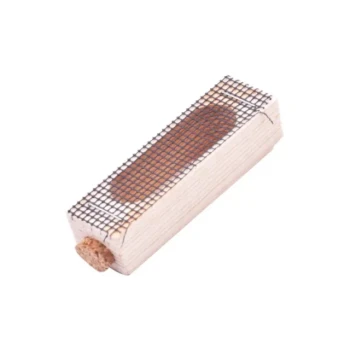
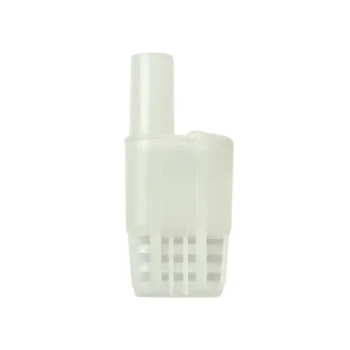
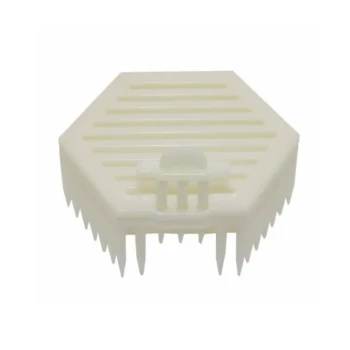
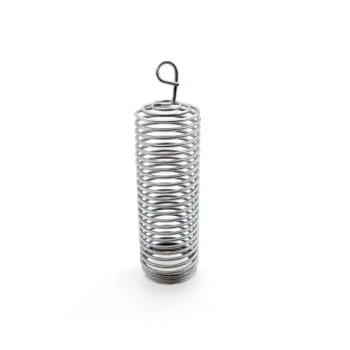
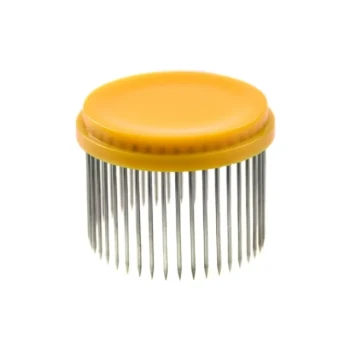
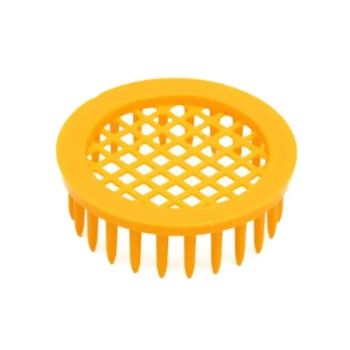
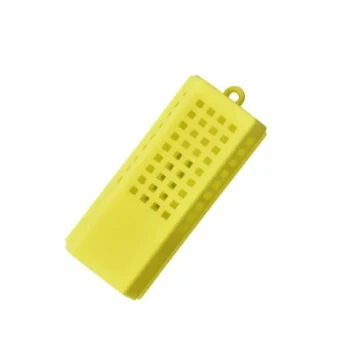
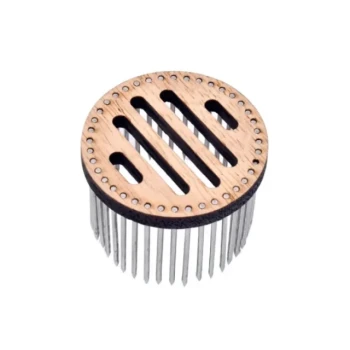
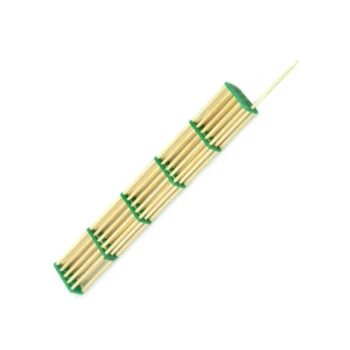
Queen banking cages and mating nuclei serve as vital physical barriers that isolate the newly inseminated queen from direct worker contact while maintaining a precise microclimate. This physical separation prevents lethal aggression from the colony while ensuring the queen remains in an environment conducive to her physiological recovery and development.
Following artificial insemination, a queen is vulnerable and physiologically unstable; she is not yet laying eggs and her chemical signature is immature. These protective enclosures provide a necessary buffer period, preventing colony rejection while ensuring the biological conditions required for successful fertilization are met.
The Mechanics of Physical Protection
Preventing Worker Aggression
The primary physical function of these cages is to prevent balling. This is a defensive behavior where worker bees surround and overheat or sting a queen they perceive as foreign or defective.
Because a freshly inseminated queen has not yet started laying eggs, workers often view her as an intruder. The cage mesh allows for olfactory (scent) acclimatization without allowing physical contact that could harm the queen.
Creating a Controlled Microclimate
Beyond mere containment, these tools ensure the queen is kept at a stable, optimal nest temperature of approximately 34-35°C.
Physical protection is not just about defending against attacks; it is about buffering the queen against thermal fluctuations. This stable warmth is critical for her post-insemination physiology.
The Biological Impact of Protection
Facilitating Sperm Migration
The physical stability provided by the banking cage or mating nucleus is directly linked to reproductive success. The controlled temperature facilitates the successful migration of sperm into the spermatheca (the queen's sperm storage organ).
Without the thermal regulation provided by these environments, sperm migration may be compromised, leading to a poorly mated queen or immediate failure.
Supporting Pheromone Development
The isolation period allows the queen's mandibular gland pheromones to develop normally before full release.
These pheromones are the chemical signals that assert her dominance and health to the colony. By physically protecting her during this maturation phase, you significantly improve the acceptance rate once she is finally released to the workers.
Understanding the Trade-offs
The Cost of Isolation vs. Integration
While physical protection is mandatory, it delays the queen's full integration into the colony's workflow. The trade-off is a longer lead time before egg production contributes to the colony population.
Monitoring Requirements
Keeping queens in banking cages requires vigilant monitoring of the external environment. While the cage protects the queen from the workers, it restricts her ability to thermoregulate independently, making the maintenance of the ambient temperature within the hive or incubator absolutely critical.
Ensuring Long-Term Queen Viability
To maximize the return on your investment in artificially inseminated queens, apply these principles:
- If your primary focus is immediate survival: Ensure the physical barrier remains in place until the queen has visibly started laying or her pheromone profile has matured to prevent balling.
- If your primary focus is reproductive quality: rigorously maintain the environment at 34-35°C during the confinement period to ensure maximum sperm migration to the spermatheca.
By respecting the biological need for this protected recovery phase, you transform a fragile, inseminated insect into a robust, accepted colony leader.
Summary Table:
| Protective Feature | Primary Function | Biological Benefit |
|---|---|---|
| Mesh Isolation | Prevents "Balling" behavior | Protects queen from lethal worker aggression |
| Microclimate Buffer | Maintains 34-35°C stability | Facilitates optimal sperm migration to spermatheca |
| Controlled Barrier | Pheromone maturation | Improves queen acceptance rates and colony dominance |
| Physical Enclosure | Restricts movement | Ensures physiological recovery after insemination |
Maximize Your Apiary’s Genetic Potential with HONESTBEE
At HONESTBEE, we specialize in empowering commercial apiaries and distributors with the high-precision tools required for advanced queen breeding. From specialized queen banking cages and mating nuclei to industrial-grade honey-filling machines and hive-making equipment, our comprehensive wholesale catalog covers every aspect of modern beekeeping.
Whether you are scaling your queen production or outfitting a regional distribution network, our durable beekeeping machinery and essential consumables ensure your queens are protected and your operations are efficient.
Ready to elevate your beekeeping business? Contact us today to explore our full wholesale range!
References
- Susan Cobey. Comparison studies of instrumentally inseminated and naturally mated honey bee queens and factors affecting their performance. DOI: 10.1051/apido:2007029
This article is also based on technical information from HonestBee Knowledge Base .
Related Products
- Automatic Heat Preservation 6 Frame Pro Nuc Box for Honey Bee Queen Mating
- Portable Bee Mating Hive Boxes Mini Mating Nucs 8 Frames for Queen Rearing
- Twin Queen Styrofoam Honey Bee Nucs Mating and Breeding Box
- Professional Queen Bee Introduction and Transport Cage
- Professional Queen Cage with Sliding Gate and Feeder Plug
People Also Ask
- What are the options for adding frames to a nuc after taking two frames from the parent colony?
- How are nuc boxes used in queen rearing? The Essential Tool for Reliable Queen Mating
- What steps are involved in transferring frames from the nuc box to the hive? A Guide for a Smooth, Low-Stress Colony Move
- What is the process for managing a new bee colony started in a nuc box? Expert Tips for Hive Success
- How long can bees be kept in a nuc box? Expert Timeline for Hive Transfer