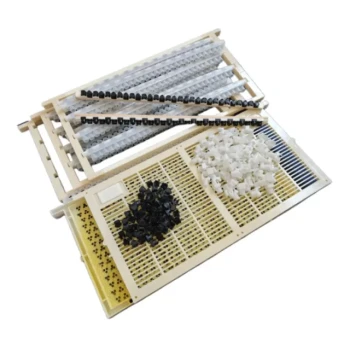
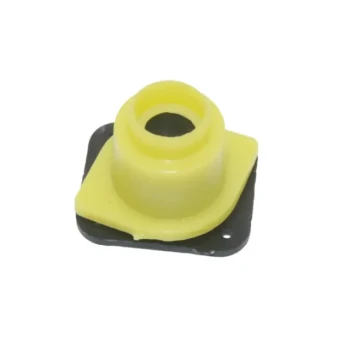
Queen breeding equipment and artificial insemination devices act as the control mechanisms for honeybee genetics, shifting reproduction from a game of chance to a precise science. By decoupling mating from environmental randomness, these tools allow breeders to isolate and amplify specific survival traits—such as disease resistance and heat tolerance—ensuring that only the most resilient genetics are propagated.
Core Takeaway These technologies are not merely for reproduction; they are filters for genetic quality. They enable the systematic elimination of susceptibility alleles and the rapid fixation of desirable traits like Varroa Sensitive Hygiene (VSH), securing the long-term sustainability of colonies against environmental and biological threats.
Eliminating Genetic Uncertainty
The Strategic Role of Artificial Insemination
In nature, queen mating is random, often introducing susceptible genes into a colony. Artificial insemination (AI) instruments serve as the core equipment for controlled hybridization.
They allow breeders to introduce semen from specific drones—proven to carry high-performance traits—into a selected virgin queen. This eliminates the "noise" of natural selection and ensures that specific resilience traits are inherited.
Fixing Resistance Alleles
Traits like Varroa Sensitive Hygiene (VSH) or specific disease resistance are often recessive or complex to breed. To "fix" these traits in a population, both parents must carry the specific genes.
High-precision AI equipment ensures that mother queens with proven resistance mate exclusively with drones from similar high-performance colonies. This rapidly increases the frequency of targeted resistance alleles while preventing the introduction of weaker genetics from external populations.
Scaling Resilience Through Specialized Equipment
Mass Propagation of Superior Genotypes
Identifying a resilient bee is only the first step; the challenge is replicating it. Professional rearing tools, such as grafting needles and queen cell cups, allow for the precise cloning of the maternal genetic line.
Once a superior breeder colony is identified via a selection index, these tools facilitate the large-scale production of daughter queens. This ensures that valuable traits, such as the long proboscis or high foraging activity, are efficiently distributed across commercial operations.
Isolating Genetics from Environment
To confirm that a bee is truly resilient, one must rule out environmental luck. Standardized commercial beehives provide a consistent physical environment for testing.
By keeping nesting space, ventilation, and entrance structures identical, breeders ensure that superior performance is driven by genetics rather than external factors. This validation is critical before mass breeding begins.
Understanding the Trade-offs and Risks
The Risk of Reduced Diversity
While directional breeding creates powerful specific traits, it can inadvertently narrow the gene pool.
Over-reliance on a few "super queens" without careful management can lead to inbreeding depression. This creates a population that is highly resistant to one threat (like mites) but potentially vulnerable to a new, unforeseen pathogen.
Technical Complexity vs. Natural Vigor
Artificial insemination bypasses the natural "fitness test" of the mating flight.
In nature, only the fastest, strongest drones catch the queen. When using AI, breeders must be vigilant to ensure they are not selecting drones that carry desirable genetic markers but lack physical vitality.
Making the Right Choice for Your Goal
To apply these tools effectively, align your equipment choice with your breeding objective:
- If your primary focus is trait fixation (e.g., Disease Resistance): Prioritize Artificial Insemination instruments to ensure total control over both maternal and paternal genetic contributions.
- If your primary focus is commercial distribution: Invest in standardized grafting tools and mating nucs to maximize the output volume of your proven genetic lines.
- If your primary focus is validation: Utilize standardized hive equipment to eliminate environmental variables and prove that your strains possess true genetic superiority.
True resilience in beekeeping is not found; it is engineered through the precise application of these selective technologies.
Summary Table:
| Equipment Type | Primary Breeding Function | Benefit to Strain Resilience |
|---|---|---|
| AI Instruments | Controlled Hybridization | Eliminates random mating; fixes recessive traits like VSH. |
| Grafting Tools | Mass Propagation | Enables large-scale cloning of superior maternal genotypes. |
| Mating Nucs | Population Management | Protects virgin queens and drones during selection phases. |
| Standardized Hives | Phenotype Validation | Eliminates environmental variables to prove genetic superiority. |
Elevate Your Genetics with HONESTBEE Professional Solutions
Building a resilient honeybee strain requires more than expertise—it requires precision technology. HONESTBEE empowers commercial apiaries and distributors with the high-performance tools necessary to engineer the future of beekeeping. From high-precision artificial insemination instruments for trait fixation to specialized honey-filling and hive-making machinery for commercial scaling, we provide a comprehensive wholesale portfolio designed for industry leaders.
Our Value to You:
- Total Genetic Control: Master the science of queen breeding with our professional-grade hardware.
- Commercial Scalability: Streamline your operations with robust beekeeping machinery and essential consumables.
- Industry Expertise: Partner with a supplier that understands the demands of large-scale apiary management.
Ready to enhance your colony resilience and operational efficiency? Contact HONESTBEE today for a wholesale consultation and discover how our equipment can secure your long-term success.
References
- Peter Neumann, Lars Straub. Beekeeping under climate change. DOI: 10.1080/00218839.2023.2247115
This article is also based on technical information from HonestBee Knowledge Base .
Related Products
- Queen Bee Artificial Insemination Instrument Equipment for Instrumental Insemination
- Retractable Chinese Queen Rearing Grafting Tools Equipment
- Professional Queen Catcher and Introduction Queen Cage
- Plastic Chinese Queen Grafting Tool for Bee Queen Rearing
- Stainless Steel Beekeeping Queen Grafting Tool for Honey Bee Rearing
People Also Ask
- Why is maintaining sanitary conditions important during artificial insemination? Protect Your Queen from Fatal Infections
- Why are artificial insemination instruments critical in bee hybridization? Master Genetic Control & Pure Breeding
- What is the core value of bee artificial insemination instruments in breed improvement? Achieve Precise Genetic Control
- Why is professional bee artificial insemination equipment considered a core tool for genetic control in honeybee breeding? Ensure 100% Purity
- Why is high-purity CO2 used for queen bee artificial insemination? Unlock Precision Breeding & Faster Egg-Laying