Alternative honey plants change both the harvest calendar and the processing line. Hovenia dulcis and Acanthopanax senticosus can extend flowering windows to approximately 17–22 days and produce up to 4.15 µL of nectar per flower, compared with about 2.20 µL for traditional black locust. For commercial apiaries, this can mean larger, more concentrated harvests that require higher-throughput extraction, effective filtration, controlled handling, and automated filling. These systems help preserve the distinct quality and premium positioning of specialty honey.
The shift to alternative nectar sources is not only an apiary decision; it is an equipment-capacity and product-separation decision. Longer, higher-yield flows demand faster harvesting and processing, while specialty varietals require machinery that can protect flavor, clarity, nutritional quality, and batch identity.
How Alternative Floral Sources Change Harvesting Requirements
Longer flowering windows require coordinated harvesting
A flowering period of 17–22 days gives beekeepers more time to collect nectar, but it can also create a sustained influx of honey into the apiary. Harvesting plans must account for hive readiness, available labor, storage capacity, and extractor throughput across the entire bloom.
Compared with a shorter, more concentrated flow, an extended bloom may support multiple staged harvests or a larger final pull. Either approach requires equipment and staffing that can prevent frames from accumulating faster than they can be processed.
Higher nectar yields increase processing pressure
Greater nectar production per flower can raise honey yields significantly when the bloom is widespread and accessible. The practical result is a need for higher-capacity extractors, larger settling or storage tanks, and faster filling systems.
Floral architecture also matters. Herbaceous plants and shrubs that are easy for bees to access can produce dense nectar flows, increasing the speed at which honey reaches the processing area.
Harvest timing affects varietal identity
Specialty honey depends on controlling which floral source dominates the crop. Hives placed near a target bloom should be harvested promptly after flowering to reduce dilution by later nectar sources.
This is especially important for distributors and wholesalers selling varietal honey. A clearly separated Hovenia dulcis or Acanthopanax senticosus line has greater commercial value than a crop that has been unintentionally blended into a general polyfloral product.
Why Processing Machinery Must Become More Flexible
Extraction capacity must match peak inflow
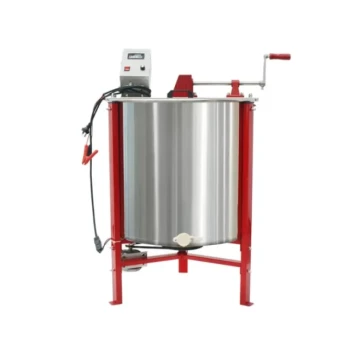
Centrifugal extractors should be selected according to frame capacity, cycle time, and expected peak harvest volume, not only average annual production. A machine that is adequate during low-flow periods may become a bottleneck during a high-yield alternative bloom.
Higher-efficiency extraction reduces queue time between uncapping and processing. This helps maintain an orderly workflow and allows commercial apiaries to take advantage of short periods of favorable weather and bee activity.
Filtration must protect both cleanliness and product character
Filtering removes wax particles and other impurities, but the filtration approach should reflect the intended product. Light-colored, premium varietal honeys generally require fine filtration to maintain clarity, while darker or more viscous honeys may need more robust filtration and bulk-handling equipment.
The objective is not to process every honey identically. Filtration should deliver a clean, stable product without unnecessarily stripping the visual, aromatic, or natural characteristics that distinguish the floral source.
Temperature control is essential
Honey viscosity varies by floral source, moisture content, and temperature. Controlled, gentle heating can improve pumping, filtration, and filling, but excessive heat may damage delicate flavor and natural enzymes.
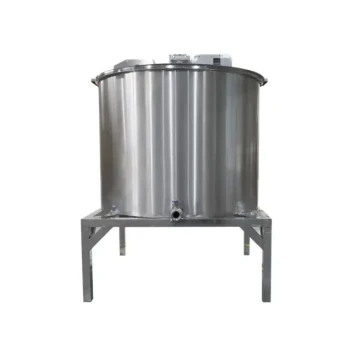
Temperature-controlled tanks, transfer lines, and filling equipment therefore provide more reliable handling than uncontrolled heating. They are particularly valuable when one facility processes both light specialty honey and thicker, darker varieties.
Protecting Separate Honey Streams
Avoiding cross-contamination
Different floral sources can have sharply contrasting profiles. Privet, for example, produces a dark and bitter honey that can compromise a light clover or acacia product if the same equipment is not cleaned and managed properly.
Commercial operations should plan for dedicated circuits where economically justified, or for efficient cleaning and changeover procedures between varietal batches. Pumps, filters, hoses, tanks, and filling heads all require consideration.
Managing seasonal batches
Early-season honey is often lighter and more delicate, while later-season or polyfloral honey may be darker and denser. Multiple harvests therefore require clear batch identification and equipment capable of handling changing viscosity and color.
Separate storage tanks and documented transfer procedures help preserve traceability. This enables distributors and resellers to offer distinct retail, food-service, and industrial product lines instead of selling every batch under one undifferentiated label.
Supporting migratory operations
Migratory beekeepers face additional logistical demands because hives, frames, extraction equipment, and packaging supplies move between flowering regions. Durable machinery, compact transport arrangements, and rapid setup are important operational advantages.
A supplier capable of providing extraction, filtration, storage, filling, and consumable components through one coordinated channel can reduce procurement delays during time-sensitive floral flows.
Matching Machinery to Commercial Product Strategy
Premium table honey
Light-colored and unifloral honeys require precise fine filtration, gentle thermal control, and accurate filling. Filling equipment should maintain consistent weights and minimize foaming or product disturbance.
This configuration is suited to specialty products marketed for clarity, delicate flavor, and floral identity.
Dark or industrial-use honey
Dark honeys such as buckwheat are often sold into baking and food-manufacturing applications. Their higher viscosity and stronger flavor may require more robust filtration, larger transfer capacity, and bulk-oriented storage and filling equipment.
The machinery should prioritize reliable flow, durability, and efficient large-container filling rather than only small retail presentation.
Blended honey products
Some mild honeys are suitable for controlled blending into targeted color or flavor grades. Commercial blending tanks with temperature control and accurate dosing allow processors to achieve consistent specifications across variable harvests.
Blending equipment should be used deliberately, with clear separation between products sold as blends and those marketed as single-origin or varietal honey.
Understanding the Trade-offs
Higher capacity can increase idle investment
A larger extractor or automated filling line improves performance during strong flows, but it may be underused during weaker seasons. Capacity should be based on projected peak requirements, planned product expansion, and the ability to serve multiple customers or varietal lines.
For smaller operations, modular equipment or outsourced processing may be more economical than purchasing a fully automated line immediately.
More separation increases operational complexity
Dedicated tanks and processing circuits protect product identity but require more floor space, cleaning procedures, inventory controls, and operator training. The commercial benefit is strongest when the separated honey commands a clear premium or serves a distinct customer segment.
Where full dedication is impractical, validated cleaning and rapid changeover procedures become essential.
Automation does not replace process control
Automated extraction and filling improve speed and consistency, but they cannot correct poor harvest timing, unsuitable storage, excessive heating, or inadequate filtration selection. Equipment must be integrated into a documented workflow covering frame handling, batch identification, temperature, cleaning, and final inspection.
Fast fulfillment matters during narrow harvest windows
Alternative blooms may create short periods when equipment, filters, containers, and packaging materials are urgently needed. Delayed delivery can force apiaries to hold raw honey longer than planned or miss the optimal processing window.
For distributors and B2B resellers, reliable stock availability, rapid quotations, technical support, and coordinated delivery are therefore part of the equipment solution—not merely purchasing conveniences.
How to Apply This to Your Project
The correct configuration depends on whether the operation is maximizing volume, protecting varietal identity, or expanding into premium packaged honey.
- If your primary focus is high-volume harvesting: Prioritize high-capacity centrifugal extractors, efficient filtration, larger storage tanks, and automated filling to prevent strong nectar flows from overwhelming the processing line.
- If your primary focus is premium varietal honey: Invest in fine filtration, gentle temperature control, dedicated or easily cleanable product circuits, and precise filling equipment to preserve clarity and floral identity.
- If your primary focus is multiple seasonal or migratory harvests: Choose durable, adaptable machinery with flexible filling heads, manageable changeovers, batch traceability, and dependable transport or delivery support.
- If your primary focus is wholesale product range expansion: Build a modular processing system that can handle light, dark, thick, blended, retail, and bulk honey formats without sacrificing consistency.
When floral sources change, the best equipment strategy is to plan for both the biology of the bloom and the commercial value of the finished honey.
Summary Table:
| Aspect | Traditional Floral Source | Alternative Honey Plants | Impact on Machinery |
|---|---|---|---|
| Flowering window | Shorter, concentrated | Extended (17-22 days) | Need for staged harvesting and higher throughput |
| Nectar yield per flower | ~2.20 µL | Up to 4.15 µL | Requires higher-capacity extractors and faster filling |
| Harvest timing | Standard | Critical for varietal purity | Requires prompt processing after flowering |
| Filtration needs | Uniform | Varied by honey type | Must adapt to preserve clarity and character |
| Temperature control | Moderate | More critical for delicate flavors | Need precise temperature management |
| Batch separation | Easier | More complex | Requires dedicated circuits or efficient changeovers |
| Equipment flexibility | Standard | High adaptability required | Need modular and versatile machinery |
Upgrade your apiary's processing line to meet the demands of alternative floral sources. At HONESTBEE, we provide a full spectrum of beekeeping tools, machinery, and equipment, including high-throughput extractors, precise filling systems, and temperature-controlled tanks. Our one-stop sourcing, rapid response, and dedicated support help you maximize yields, preserve varietal quality, and maintain supply reliability for your commercial operations. Contact us today for a tailored solution that boosts your efficiency and profitability. Get in touch with our experts.
Related Products
- Precision Durable Efficient HONESTBEE Rotary Honey Filling Machine
- Automatic Honey Filling and Filtering Machine for Beekeeping Bottle Filling
- Economy Small Honey Filling Machine Honey Bottle Filler Packaging Machine
- Fully Automatic Honey Filling Packaging Machine for Processing Line
- Commercial Rotary Honey Filling Machine for Production
People Also Ask
- What are the common types of bottling machines used for honey? Choosing the Right Solution for Your Apiary
- How do high-precision honey filling machines ensure quality? Optimize Your Commercial Production with HONESTBEE
- What quality control role does professional honey filling equipment perform? Ensure Consistency and Product Stability
- How do honey filling and processing machines aid native bee product conservation? Boost Value with HONESTBEE Technology
- What is a key feature of the new generation of the honey filling machine? The Advanced Electronic Control Unit