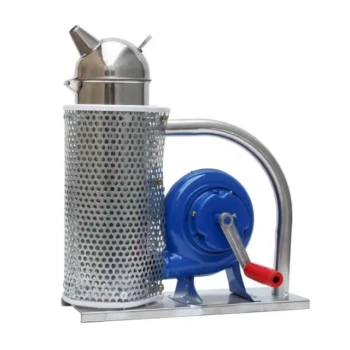
Simple smokers and torches function as essential biological control tools. By burning dry grass or plant branches to generate cool smoke, these devices mask the alarm pheromones bees use to coordinate defensive attacks. This smoke simultaneously triggers a survival instinct that compels bees to consume honey rather than sting, rendering the colony docile for safe harvesting.
Core Insight: The smoke does not physically subdue the bees through force; it fundamentally alters their biological priorities. By simulating a natural fire threat, you disrupt the colony's defensive network and induce a feeding state, allowing for safe extraction even without expensive protective equipment.
The Biological Mechanism of Smoke
Disrupting Chemical Communication
Honey bees rely heavily on chemical signals, specifically alarm pheromones, to alert the colony of intruders.
When a guard bee senses a threat, it releases these pheromones to recruit other bees for defense.
The cool smoke generated by dry grass or branches physically masks these scents. This effectively cuts the communication line between the guard bees and the rest of the colony, preventing a mass defensive mobilization.
Triggering the Survival Response
Beyond masking scents, smoke simulates the conditions of a nearby forest fire.
This triggers an evolutionary survival instinct where bees prepare to evacuate their home.
In response to this perceived threat, the bees begin engorging themselves on honey. This feeding behavior physically weighs them down and makes them lethargic, significantly reducing their ability and inclination to sting.
Operational Benefits for the Harvester
Enhancing Personnel Safety
The primary utility of the smoker is the protection of the operator.
By neutralizing the aggressive tendencies of the colony, simple torches allow harvesters to open hives and inspect combs with minimal risk of stings.
This is particularly vital in resource-constrained environments, as it allows for safe honey extraction even when professional-grade protective suits are unavailable.
Preserving Colony Integrity
Using smoke is not just about operator safety; it is also a humane method of handling the livestock.
When bees are calm, they are less likely to attack the harvester and die (as honey bees die after stinging).
Furthermore, a calm colony allows the harvester to work with precision, minimizing physical damage to the comb structure and reducing stress-induced interference with the colony's long-term health.
Understanding the Trade-offs
The Importance of "Cool" Smoke
It is critical to distinguish between smoke and heat.
The goal is to produce cool smoke, which is achieved by smoldering materials like cogon grass, dried manure, or branches.
If the torch produces high heat or open flames, you risk singing the bees' wings or burning the hive, which will trigger a panic response rather than the desired calming effect.
Material Selection
Not all smoke is beneficial.
You must rely on natural organic materials that burn slowly and cleanly.
Using materials with chemical contaminants or high resin content can produce toxic fumes that may harm the bees or contaminate the honey harvest.
Making the Right Choice for Your Goal
To utilize simple smokers effectively, assess your specific harvesting conditions:
- If your primary focus is operator safety: Ensure the torch produces a dense, consistent volume of white smoke to fully blanket the alarm pheromones before opening the hive.
- If your primary focus is colony health: Use strictly natural fuels like dried grass or manure to generate cool smoke, avoiding any open flame that could injure the bees.
Success in honey harvesting relies not on overpowering the colony, but on using smoke to trigger a natural biological pause in their defensive behavior.
Summary Table:
| Mechanism | Primary Effect | Benefit for Harvester |
|---|---|---|
| Pheromone Masking | Blocks chemical alarm signals | Prevents mass defensive mobilization |
| Survival Instinct | Induces honey engorgement | Bees become lethargic and less likely to sting |
| Biological Pause | Simulates natural fire threat | Allows for safe hive entry without stings |
| Cool Smoke Usage | Gentle temperature regulation | Protects bee health and prevents wing damage |
Elevate Your Beekeeping Operation with HONESTBEE
At HONESTBEE, we specialize in empowering commercial apiaries and distributors with high-performance solutions. Whether you are seeking traditional beekeeping tools or advanced honey-filling and hive-making machinery, our comprehensive wholesale portfolio is designed to maximize your efficiency and yield.
From essential industry consumables to specialized hardware and honey-themed cultural merchandise, we provide the full spectrum of equipment needed to scale your business. Ready to optimize your production and safety standards?
Contact HONESTBEE Today to Discuss Your Wholesale Needs
References
- Paul Schweitzer, Boussim Issaka Joseph. Plants used in traditional beekeeping in Burkina Faso. DOI: 10.4236/oje.2013.35040
This article is also based on technical information from HonestBee Knowledge Base .
Related Products
- Stainless Steel Honey Bee Smoker Hive and Honeycomb Smoker for Beekeeping
- Professional Bee Smoker with Elongated Spout and Durable Bellows for Beekeeping
- Premium Traditional Copper Bee Smoker with Bellows
- Heavy Duty Manual Bee Smoker Blower for Beekeeping
- European Stainless Steel Bee Smoker for Honey Bee Hive
People Also Ask
- What are bee smokers made out of? Choose the Right Material for Your Apiary
- Why is a stainless steel bee smoker considered indispensable? Master Hive Management with Cool Smoke Technology
- What type of bee smoker is recommended for a beginner? Top Picks for Easy Hive Management
- How do bee smokers and colored light sources work together to assist in night-time honey harvesting? Expert Strategies
- What is the best material for a bee smoker? Choose the Right Fuel for a Calm Hive