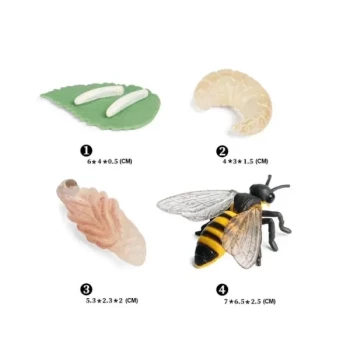
Standardized managed honeybee hives optimize yields by providing a high-density, controllable pollinator workforce that ensures consistent fruit set and maximized honey extraction. These systems replace the unpredictability of wild populations with a strategic, industrial-scale deployment designed to synchronize perfectly with crop blooming periods. By utilizing uniform components, they increase honey production by up to 300% compared to traditional methods while drastically reducing labor costs through mechanized compatibility.
Standardized hives transform beekeeping from a manual craft into a high-efficiency industrial process by leveraging interchangeable components and scientific spatial design to maximize both pollination frequency and honey volume. For distributors and wholesalers, these systems represent the essential infrastructure for modern, high-output agricultural operations.
The Mechanics of Pollination Optimization
Strategic Density and Deployment
Standardized hives allow growers to achieve a precise pollinator density, such as the industry-standard four hives per hectare for crops like apples and cherries. This high-density approach ensures a sufficient supply of worker bees during the narrow peak flowering window, leading to highly efficient cross-pollination.
Predictability vs. Wild Populations
Unlike relying on natural wild populations, which are susceptible to local environmental fluctuations, managed hives offer a predictable and controllable workforce. This industrial-scale management ensures that pollination occurs uniformly across the entire field, significantly improving fruit set and seed yield.
High-Frequency Flower Visitation
By deploying active colonies at the exact start of the blooming period, beekeepers can ensure optimal visitation frequencies. This is particularly critical for high-value crops like avocados and tomatoes, where the frequency of visits directly correlates to the final size and quality of the produce.
Enhancing Production Through Technification
Interchangeability and Labor Efficiency
The use of standardized frames and supers allows for the seamless interchange of components between different colonies. This modularity simplifies routine inspections and colony management, enabling a single operator to manage a much larger number of hives than is possible with traditional equipment.
Maximizing Honey Storage Space
Standardized box hives are designed to be expandable based on nectar flow. Beekeepers can add vertical space (supers) as needed, providing the colony with scientifically optimized room to store honey without crowding the brood nest, which maximizes the total annual yield per hive.
High-Speed Mechanized Harvesting
Modern hive designs utilize removable honeycomb frames that are compatible with high-speed centrifugal extractors. This mechanized process significantly increases collection efficiency and reduces physical damage to the bee population, allowing for a faster return to production.
Navigating the Trade-offs of Industrial Beekeeping
Capital Investment vs. Traditional Methods
While standardized systems offer significantly higher yields—averaging 33 kg per hive compared to 24 kg in traditional systems—they require a higher initial capital investment. Distributors must communicate that the rapid return on investment (ROI) comes from the increased output-to-input ratio and reduced long-term labor costs.
Management Complexity and Expertise
Operating a technified apiary requires a higher level of professional industry expertise than traditional beekeeping. Success depends on precise timing for deployment and the ability to manage high-density populations effectively, making technical support a vital component of the product offering.
Risk of Over-Concentration
Deploying high densities of managed bees in a single area can increase the risk of pest and disease transmission. Professional-grade hives mitigate this through designs that allow for more effective pest control and health monitoring, but they require a proactive management approach.
Scaling Your Agricultural Supply Portfolio
How to Apply This to Your Project
- If your primary focus is maximizing client ROI: Prioritize the distribution of modern box hives, which can increase average annual yields from 5.6 kg to over 24 kg per hive.
- If your primary focus is supply chain reliability: Partner with suppliers who offer a comprehensive full-spectrum product portfolio to ensure all interchangeable components are available for rapid order fulfillment.
- If your primary focus is technical leadership: Position your services as a source of deep professional expertise, helping wholesalers understand the strategic deployment densities required for specific regional crops.
By integrating standardized hive systems into your inventory, you provide the essential tools required for the high-efficiency, intensive operations that define modern agriculture.
Summary Table:
| Feature | Traditional Methods | Standardized Managed Hives | Impact on Production |
|---|---|---|---|
| Component Design | Non-uniform/Manual | Interchangeable & Modular | Reduces labor costs; scales easily |
| Pollinator Density | Unpredictable (Wild) | Strategic (4 hives/hectare) | Ensures 100% crop synchronization |
| Harvesting Style | Manual Extraction | High-speed Mechanized | Up to 300% increase in honey yield |
| Average Yield | ~24 kg per hive | ~33 kg per hive | Higher ROI for large-scale projects |
Scale Your Beekeeping Distribution with HONESTBEE
Are you looking to enhance your portfolio with high-efficiency infrastructure? HONESTBEE provides distributors and wholesalers with a one-stop sourcing solution for the modern apiary. From specialized hive-making and honey-filling machinery to a full spectrum of precision-engineered beekeeping tools and consumables, we deliver the reliability your commercial clients demand.
Why Partner with HONESTBEE?
- Comprehensive Portfolio: Full access to hardware, machinery, and honey-themed cultural merchandise.
- Operational Excellence: Benefit from ultra-fast delivery, rapid response times, and deep industry expertise.
- Market Advantage: High-margin, professional-grade equipment designed for rapid ROI and industrial scalability.
Ready to lead the market in agricultural technification? Contact our expert team today to access our wholesale catalog and customized OEM/ODM services.
References
- Goutam B. Hosamani. The role of insects in crop pollination. DOI: 10.33545/27080013.2022.v3.i2b.272
This article is also based on technical information from HonestBee Knowledge Base .
Related Products
- Galvanized Beekeeping Smoker for Honey Bee and Apiculture
- HONESTBEE Professional Hive Top Bee Feeder Feeding Solution
- Langstroth Honey Bee Box Hive Boxes for Different Depths
- Automatic Heat Preservation 6 Frame Pro Nuc Box for Honey Bee Queen Mating
- Professional Insulated Plastic Bee Hives
People Also Ask
- What is the primary function and mechanism of beekeeping smokers? Enhance Hive Safety and Harvesting Efficiency
- What is the primary function of a beekeeping smoker in the context of observing honeybee development? Expert Hive Guide
- What is a beekeeping smoker and what are its components? A Guide to Essential Hive Management
- How does smoke from a beekeeping smoker affect honeybees? Master Hive Control with Science
- What is the function of a beekeeping smoker during the harvesting and processing of Apis florea combs? | Expert Guide