Nesting behavior is the primary equipment decision in commercial beekeeping. Cavity-nesting species such as Apis mellifera and Apis cerana build multiple parallel combs inside enclosed spaces, making them suitable for standardized box hives, movable frames, honey supers, and centrifugal extractors. Open-nesting species such as Apis dorsata and Apis florea build a single exposed comb and generally cannot be transferred to standard frame equipment, so harvesting depends on manual comb collection or specialized capture systems.
The key distinction is whether the colony naturally builds multiple removable combs inside a cavity or one exposed comb in the open. Modern commercial equipment is highly effective for cavity-nesting bees, while open-nesting species require more limited, labor-intensive, and species-specific approaches.
Why Nesting Behavior Determines Hive Compatibility
Cavity-Nesting Bees Fit Standard Hive Systems
Apis mellifera, the Western honey bee, and Apis cerana, the Eastern honey bee, naturally establish colonies in sheltered cavities. They build multiple roughly parallel combs that can be separated, inspected, replaced, and harvested individually.
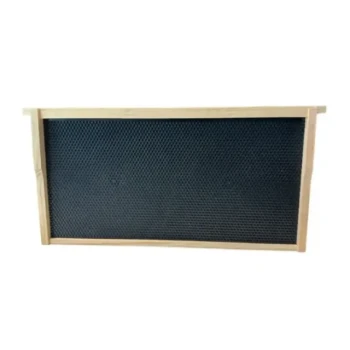
This behavior aligns with movable-frame hive systems. Wooden hive bodies provide the enclosure, frames guide comb placement, and supers create additional storage space as the colony expands.
Open-Nesting Bees Do Not Use Standard Frames
Apis dorsata and Apis florea typically attach a single comb to an exposed branch, rock face, shrub, or other elevated structure. Their comb is not naturally divided into removable frames or contained within a standardized box.
Trying to force these colonies into conventional frame hives usually conflicts with their biology. Commercial operators instead rely on manual comb collection, trapping devices, or biomimetic nest structures designed around the species' preferred nesting location.
Natural Nest Volume Guides Hive Dimensions
Wild colonies commonly select cavities with capacities of approximately 20 to 100 liters, with an average near 40 liters. They generally prefer a protected cavity with one entrance and reduced exposure to direct sunlight, wind, and rain.
Hive manufacturers can use these preferences to produce appropriately sized equipment. Differences among races also matter: Italian bees may favor smaller cavities, while central European German bees may prefer larger ones.
How Species Biology Shapes Commercial Hive Equipment
Apis Mellifera Supports Scalable Apiaries
The Western honey bee is the strongest fit for standardized commercial equipment. Its multiple-comb nesting pattern supports hive bodies, movable frames, wax foundation, queen excluders, and high-capacity honey supers.
Because Apis mellifera is widely managed for honey production, apiaries can also justify centrifugal extractors, uncapping equipment, honey pumps, filling machines, and other high-throughput processing systems.
Apis Cerana Requires Precise Hive Design
Apis cerana can be managed in movable-comb hives, but hive dimensions must suit its smaller colony structure and nesting preferences. Poorly proportioned equipment can increase colony stress and contribute to absconding.
For this species, precise manufacturing is especially important. Consistent internal dimensions, suitable entrances, and durable components help maintain colony retention and simplify inspection.
Apis Dorsata Requires Specialized Harvesting Methods
Apis dorsata, often called the giant honey bee, builds a large exposed comb, frequently in tall trees or other elevated locations. Its nesting structure and strong defensive behavior make conventional movable-frame management impractical.
Harvesting therefore involves access equipment, protective clothing, manual comb removal, and careful separation of honey-bearing comb from brood. These operations are less compatible with automated extraction and filling lines.
Apis Florea Favors Small Open Nest Sites
Apis florea commonly nests on shrubs and other exposed, relatively small structures. Like Apis dorsata, it builds a single open comb rather than several framed combs inside a hive cavity.
Equipment for this species is better understood as capture, observation, or pollination-support hardware than as a complete commercial honey production system based on standard supers and extractors.
How Harvesting Equipment Follows the Comb Structure
Movable Frames Enable Non-Destructive Extraction
When bees build comb inside removable frames, beekeepers can inspect brood, replace damaged components, and remove only capped honey frames. The comb can then be uncapped and placed in a centrifugal extractor.
This process preserves the comb foundation and allows colonies to refill existing comb more efficiently than rebuilding from scratch. It also supports repeatable processing and better hygiene at commercial scale.
Single Exposed Combs Require Manual Handling
An exposed single comb cannot normally be placed directly into a standard extractor without substantial preparation. Harvesting typically requires cutting, transporting, and pressing or straining the comb manually.
This approach increases labor, handling time, and the risk of damaging brood or contaminating the product. It also limits the usefulness of automated filling and processing machinery.
Honey Volume Determines Processing Capacity
High-yielding colonies managed in standardized hives require equipment sized for the expected harvest rate. Large supers, radial or high-capacity extractors, uncapping systems, settling tanks, pumps, and filling machines become important when production is continuous or concentrated into short honey-flow periods.
Equipment selection should therefore consider both how the bees build comb and how much honey the operation expects to process.
How Bee Races Modify Equipment Requirements
Temperament Affects Protective Equipment
Species compatibility is only the first decision. Subspecies and races such as Italian, Russian, and Carniolan bees differ in defensiveness, swarming tendency, brood production, and seasonal activity.
More defensive colonies require durable full suits, secure veils, protective gloves, smokers, and reliable hive-handling tools. Protective equipment should be specified alongside hive bodies and extraction machinery, not treated as an afterthought.
Productivity Affects Hive Expansion
Races with strong honey production or rapid brood expansion may fill available comb quickly. They benefit from standardized hive bodies, timely supering, queen excluders where appropriate, and sufficient frame inventory.
Underestimating expansion capacity can create congestion and increase swarm pressure. For distributors and commercial buyers, a complete product portfolio should include replacement frames, supers, foundations, protective equipment, and extraction components rather than only the basic hive box.
Absconding Tendency Affects Hive Design
Some ecotypes, particularly those sensitive to unsuitable cavity dimensions or environmental stress, may leave the hive more readily. This makes internal volume, entrance design, ventilation, insulation, and material quality operational factors.
For Apis cerana, precisely dimensioned hive components can be more important than simply offering a generic Langstroth-style format.
Understanding the Trade-offs
Standardization Improves Efficiency but Reduces Flexibility
Standard frame hives make inspection, transport, extraction, and packaging predictable. They also allow distributors to stock interchangeable components and help commercial apiaries scale labor and processing capacity.
However, standardized equipment is not universally applicable. Open-nesting species may reject enclosed boxes or fail to construct comb in a usable frame arrangement.
High-Capacity Equipment Can Be Excessive
Large extractors, automated filling machines, and extensive super inventories are valuable for high-volume Apis mellifera operations. They may be uneconomical for small apiaries, low-yielding colonies, or species harvested through manual methods.
Buyers should match equipment capacity to colony numbers, seasonal flow, labor availability, and actual processing volume.
Equipment Cannot Replace Biological Compatibility
A precisely manufactured hive does not make every honey bee species suitable for conventional management. Nesting behavior, migration or absconding tendencies, colony defensiveness, and environmental requirements remain decisive.
Claims that a single hive design can serve all honey bee species should therefore be treated cautiously. Product selection must begin with the bee's natural nesting pattern.
Open-Comb Harvesting Has Greater Welfare and Quality Risks
Manual removal of exposed comb can disturb brood, damage colonies, and produce inconsistent honey handling. Operators also face elevated safety risks when colonies are located in tall trees or defend large open combs.
Where conservation, pollination, or colony retention is the priority, capture and habitat-support systems may be more appropriate than intensive honey harvesting.
Making the Right Choice for Your Goal
Select equipment by combining the species' nesting structure with its temperament, colony size, expected yield, and operating environment.
- If your primary focus is scalable honey production: Prioritize cavity-compatible species such as Apis mellifera, standardized movable-frame hives, ample supers, centrifugal extraction, and hygienic filling equipment.
- If your primary focus is Apis cerana management: Use precisely dimensioned hive bodies, suitable entrances, compatible frames, and equipment designed to reduce stress and absconding.
- If your primary focus is open-nesting species: Invest in protective access gear, manual comb-harvesting tools, and species-specific capture or biomimetic nest equipment rather than conventional frame-hive systems.
- If your primary focus is equipment distribution: Build a full-spectrum portfolio covering hive bodies, frames, wax foundation, supers, queen excluders, smokers, protective clothing, extractors, pumps, and filling machinery.
- If your primary focus is operational reliability: Source standardized components with responsive technical support, consistent dimensions, and efficient fulfillment so replacement parts and seasonal expansion equipment remain available.
The most effective commercial beekeeping system is the one that makes the bee's natural nesting behavior work for the operation rather than against it.
Summary Table:
| Nesting Type | Species | Hive Compatibility | Harvesting Method |
|---|---|---|---|
| Cavity-Nesting | Apis mellifera, Apis cerana | Standard movable-frame hives | Centrifugal extraction, non-destructive |
| Open-Nesting | Apis dorsata, Apis florea | Impractical with standard hives | Manual comb collection, limited automation |
Ready to equip your apiary for success? HONESTBEE provides a full spectrum of beekeeping tools, machinery, and equipment—from hive-making and honey-filling machines to protective gear and consumables. Our one-stop sourcing and fast, reliable service ensure you get the right gear for your bee species. Contact our experts today to optimize your operations and boost your honey yield!
Related Products
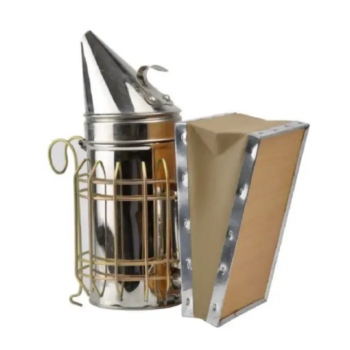
- Stainless Steel Honey Bee Smoker Hive and Honeycomb Smoker for Beekeeping
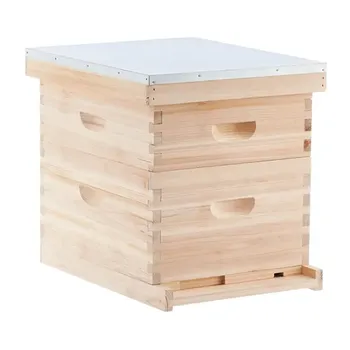
- High-Performance Langstroth Bee Hives for Global Professional Beekeeping
- Langstroth Honey Bee Box Hive Boxes for Different Depths
- Automatic Heat Preservation 6 Frame Pro Nuc Box for Honey Bee Queen Mating
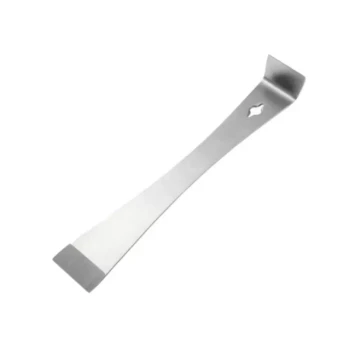
- Professional Stainless Steel Pry-Bar Hive Tool
People Also Ask
- What are bee smokers made out of? Choose the Right Material for Your Apiary
- Why is a stainless steel bee smoker considered indispensable? Master Hive Management with Cool Smoke Technology
- What type of bee smoker is recommended for a beginner? Top Picks for Easy Hive Management
- How should a beekeeper use a smoker when approaching a hive? A Guide to Calm, Safe Inspections
- Why is a specialized bee smoker considered a critical tool for apiary safety? Master Hive Control & Productivity