Honeybee legs are a coordinated foraging system, not simply walking appendages. The forelegs clean the antennae, the middle legs brush pollen from the thorax, and the hind legs compress and carry pollen in the corbiculae, or pollen baskets. Commercial pollen traps are designed around this sequence, using calibrated entrance openings to dislodge packed pollen pellets from returning workers while allowing the bees to pass safely.
The key principle is coordination: grooming structures prepare the bee’s sensory organs and collect pollen from its body, while the hind-leg rake, press, and corbicula convert loose grains into transportable pellets. Pollen-harvesting equipment works by gently removing those pellets at the hive entrance.
How Specialized Leg Structures Support Foraging
Antenna cleaners maintain sensory function
The antenna cleaners are comb-like, semicircular notches located along the inner margins of the forelegs. They are present across honeybee castes and are used when a bee draws its antenna through the notch.
This grooming action removes debris and excess material from the antennae. Clean antennae are essential because they provide sensory information used during flower handling, navigation, communication, and hive activity.
Middle-leg brushes gather pollen from the body
The middle-leg tarsi function as brushes, particularly for pollen caught on the thorax and other body hairs. Honeybees have branched body hairs that readily retain pollen grains as they visit flowers.
The bee uses its legs to groom pollen from these hairs and move it toward the hind legs. This makes the middle-leg brushes an important transfer stage between flower visitation and pollen storage.
Hind-leg rakes and presses form the pellet
The hind legs contain several structures that prepare pollen for transport. Hair combs or rakes help gather the pollen, while the pollen press compacts it into a dense pellet.
The pollen is moistened and consolidated as the bee grooms itself, then pushed into the concave corbicula. The result is a compact load that can remain attached during flight.
How the Corbiculae Carry Pollen
The corbicula is a specialized transport surface
A corbicula, commonly called a pollen basket, is a concave area on the worker bee’s hind-leg tibia. It is surrounded by fringe hairs and includes a central anchoring bristle or similar stabilizing structure.
The basket does not operate as a sealed container. Instead, its concave surface, surrounding hairs, and compacted pollen pellet hold the load securely against the leg.
Pollen is packed rather than loosely accumulated
Loose pollen would be difficult to transport efficiently because it could fall away during flight. The bee therefore uses the hind-leg combs and pollen press to build a stable pellet in the corbicula.
This packing process explains why pollen traps can target the hind legs specifically: the harvestable material is concentrated in a defined, accessible location rather than spread randomly over the bee’s body.
The process is sequential
Foraging can be understood as a workflow:
- Pollen grains adhere to the bee’s branched body hairs.
- Fore- and middle-leg grooming structures remove and transfer the pollen.
- Hind-leg rakes and presses gather and compact it.
- The corbiculae hold the finished pellets during the return flight.
- The hive entrance becomes the point where commercial equipment can remove the load.
This sequence is important when evaluating equipment because a pollen trap must interact with the completed pellet without interfering with the bee’s other grooming or movement functions.
How Pollen-Harvesting Tools Relate to Bee Anatomy
Entrance traps target the corbiculae
Commercial entrance pollen traps are positioned where returning foragers enter the hive. Their screens or grids are calibrated to contact the pollen pellets carried on the hind legs and dislodge them into a collection drawer or tray.
The equipment does not need to scrape pollen from every part of the bee. It takes advantage of the corbicula’s predictable position and the pellet’s compact form.
Grid dimensions determine collection performance
The openings must be sized and positioned carefully. If they are too open, pollen pellets may pass through without being removed; if they are too restrictive, they can impede bees or create a risk of catching legs, wings, or other body parts.
For distributors and beekeepers, this makes screen geometry, material finish, and dimensional consistency more than minor design details. They directly affect collection efficiency, bee passage, equipment reliability, and user confidence.
Smooth construction supports safer passage
A pollen trap should use smooth, well-finished surfaces and accurately manufactured openings. The objective is to remove the packed pellet—not to scrape aggressively against the bee’s limbs.
Equipment designed around the anatomy of the corbiculae can harvest pollen while preserving normal movement through the entrance. Product specifications should therefore address both pollen-removal performance and bee-safe passage.
Collection trays complete the system
Once the pellet is dislodged, it should fall into a clean, accessible collection area. A practical system therefore combines the entrance grid with a removable drawer or tray that supports inspection, cleaning, and efficient handling.
For commercial operations, this integrated design is valuable because it reduces manual collection steps and creates a more consistent harvesting workflow.
Understanding the Trade-offs
Higher collection can affect colony management
A pollen trap may remove part of the pollen entering the hive. Because pollen is an important food resource for the colony, collection intensity and operating schedule should be managed in relation to colony needs.
The equipment should be viewed as a harvesting aid, not as a reason to maximize removal continuously. Beekeepers must balance product collection with colony nutrition and development.
Aggressive scraping is not better harvesting
A trap that removes pellets only by creating excessive resistance may increase apparent collection but also raise the risk of disrupting bee movement or damaging delicate structures. Efficient equipment should rely on calibrated contact rather than forceful obstruction.
This is why precise manufacturing and quality control matter. Small variations in grid dimensions or rough surfaces can change the practical performance of the device.
Antenna cleaners are not pollen traps
The foreleg antenna cleaner is directly relevant to bee health and grooming, but it is not the primary target of pollen-harvesting equipment. Confusing these structures can lead to poorly designed hive entrance guards or screens that interfere with normal grooming.
Pollen traps should be engineered around the hind-leg corbiculae and pollen pellets, while leaving sufficient clearance for ordinary leg, antenna, and wing movement.
Pollen composition can vary
The pollen collected reflects the plants visited by the colony and the bees’ foraging behavior. As a result, the product is not uniform across locations, seasons, or bee populations.
For operations supplying pollen for analysis or processing, collection hardware should be paired with suitable handling, labeling, storage, and quality procedures. The trap determines how pollen is collected; it does not by itself establish the pollen’s botanical or commercial quality.
Making the Right Choice for Your Goal
The best equipment choice depends on whether the priority is biological safety, collection efficiency, or operational convenience.
- If your primary focus is bee safety: Choose pollen traps with smooth construction, accurately calibrated openings, and adequate clearance for normal bee passage and leg movement.
- If your primary focus is collection efficiency: Select equipment designed to contact and dislodge compacted pellets from the hind-leg corbiculae rather than relying on broad, aggressive scraping.
- If your primary focus is operational efficiency: Prioritize integrated traps with accessible collection drawers, easy cleaning, consistent dimensions, and dependable order fulfillment for replacement or scaled deployment.
- If your primary focus is product range and sourcing: Work with a supplier able to provide coordinated hive-entrance hardware, pollen collection components, and responsive technical support from one source.
Understanding the bee’s anatomy is the foundation for choosing pollen-harvesting equipment that is effective, safe, and commercially practical.
Summary Table:
| Structure | Function | Role in Pollen Harvesting |
|---|---|---|
| Antenna cleaners | Clean antennae for sensory function | Not a target for traps; ensure clearance for grooming |
| Middle-leg brushes | Gather pollen from thorax and body | Transfer stage; not directly targeted by traps |
| Hind-leg rakes and presses | Collect and compact pollen into pellets | Pellets formed here, ready for trap removal |
| Corbiculae (pollen baskets) | Carry pollen pellets during flight | Primary target for entrance traps; position predictable |
Optimize your pollen harvesting with precision-engineered traps from HONESTBEE. Our wholesale solutions are designed for commercial apiaries and distributors, offering a full spectrum of beekeeping tools and machinery. With rapid response, dedicated service, and ultra-fast delivery, we ensure your operations run smoothly. Contact us today to explore our range and secure a reliable supply chain for your business. Get in touch.
Related Products
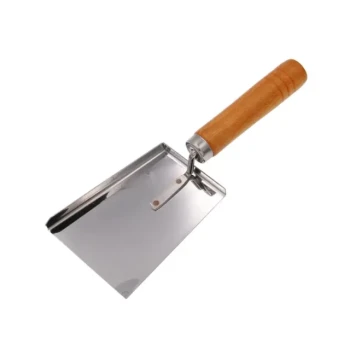
- Stainless Steel Pollen Shovel with Wooden Handle
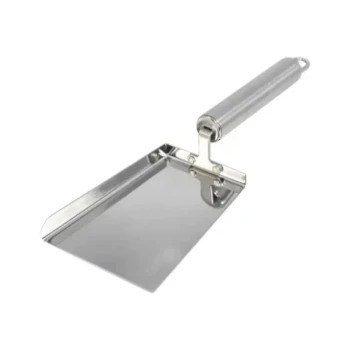
- Heavy-Duty Ergonomic Stainless Steel Pollen Shovel
- Heavy-Duty Ergonomic Grip Galvanized Pollen Shovel
- Removable Plastic Pollen Trap With Ventilated Tray for Bees Pollen Collector
- 30 cm Plastic Entrance Hole Bee Pollen Trap and Collector
People Also Ask
- How do bee pollen collection tools affect the quality of bee pollen used in functional dairy ice cream production?
- Why should commercial apiaries focus on the collection of diversified bee products? Maximize Your Hive’s Profit Potential
- How does a specialized pollen collector facilitate the harvesting of diverse bee products? Automate High-Value Yields
- What is the impact of pollen collectors and associated equipment on the cost structure of pollen production? Maximize ROI
- What is the technical significance of using specialized cutting tools for propolis? Master Precision Pollen Harvesting