Varroa management is both a parasite-control and disease-prevention operation. Varroa mites weaken adult bees and developing brood while transmitting viruses such as Deformed Wing Virus (DWV) and Acute Bee Paralysis Virus (ABPV). In commercial apiaries, effective control depends on routine mite measurement, correctly selected treatments, accurate application, and equipment that supports repeatable hive inspections.
Core takeaway: Treating mites without measuring infestation levels creates unnecessary chemical exposure and may miss rapidly worsening colonies. The most reliable approach combines standardized monitoring tools, compliant varroacide application equipment, screened hive hardware, and documented integrated pest management.
Why Varroa Mites Are a Commercial Colony Threat
Direct damage to bees and brood
Varroa destructor is an external parasite that reproduces primarily in capped brood and feeds on developing and adult bees. Infested bees may emerge with malformed wings, reduced flight capacity, impaired physiology, and lower ability to perform normal colony tasks.
The result is not limited to individual bee loss. Heavy infestations reduce the number and quality of emerging workers, weakening brood production, foraging, thermoregulation, and honey-storage capacity.
Viral transmission increases the risk
Varroa mites are important vectors and amplifiers of several honey bee viruses. DWV is strongly associated with wing deformities and colony decline, while ABPV and other viruses can contribute to paralysis, shortened bee lifespan, and rapid population loss.
Mite feeding also disrupts bee physiology and immune defenses. This allows infections that might otherwise remain limited to spread through the colony more aggressively.
Commercial consequences
The impact can include reduced colony strength, lower honey production efficiency, higher labor requirements, increased treatment costs, and colony replacement expenses. Reported losses vary widely by region, season, management quality, mite resistance, and pathogen pressure; severe infestations can ultimately cause colony death.
For commercial operations, the key business risk is not only losing a hive. It is losing synchronized colony strength across an apiary during pollination or honey-production periods.
The Monitoring Equipment Required for Effective Decisions
Treatment should follow measured infestation levels and colony conditions, not a fixed calendar alone. Commercial beekeepers and distributors should therefore treat monitoring equipment as an essential part of the pest-control product range.
Sticky boards and mite-counting trays
A sticky board or adhesive monitoring sheet placed beneath the colony collects naturally fallen mites. A screened bottom board helps separate falling mites from the bee cluster and allows the board to be removed and inspected.
These boards are useful for trend monitoring and for checking whether a treatment is producing mite drop. They are less reliable than direct sampling for estimating the total infestation when mite fall is low or environmental conditions vary.
Alcohol wash testing kits
An alcohol wash kit provides a more direct estimate of phoretic mites on adult bees. Typical components include a sampling cup, liquid container, mesh or strainer, collection vessel, and a clearly marked counting surface.
The method sacrifices the sampled bees, so procedures should be standardized and performed by trained personnel. Consistent sampling location, sample size, timing, and recordkeeping are critical when comparing colonies or treatment results.
Sugar-roll and alternative sampling tools
A sugar-roll test can provide a nonlethal alternative for estimating mites on adult bees. It may be useful when preserving the sample is important, but results can be more variable than alcohol washing if the technique is inconsistent.
For either method, suppliers should provide complete kits rather than isolated components where possible. Integrated kits reduce setup errors and support faster field deployment across large apiaries.
Hive inspection and documentation equipment
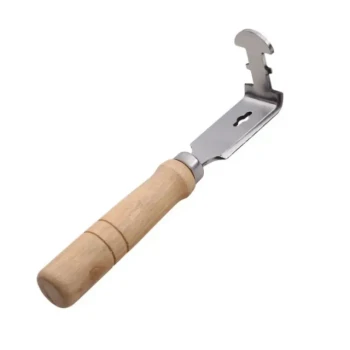
Routine inspections require durable hive tools, frame grips, protective clothing, gloves, lighting, sample containers, labels, and field records. A magnifier or digital inspection aid can help with brood assessment and mite or disease identification.
Commercial operators also benefit from standardized forms or digital records that track colony identity, mite counts, brood condition, treatment dates, product lot information, and follow-up results.
Treatment Tools for Precision Varroa Control
Oxalic acid vaporization equipment
An oxalic acid vaporizer is designed to distribute an approved oxalic acid formulation through the hive under defined operating conditions. It requires a suitable power source, secure hive access, temperature-resistant handling procedures, and appropriate respiratory and eye protection.
Vaporization equipment must be used exactly according to the product label and local regulations. The applicator improves delivery consistency, but it does not eliminate the need to account for colony condition, brood presence, timing, and worker safety.
Formic acid dispensers
Formic acid dispensers or controlled-release pads are intended to provide a measured treatment dose over a specified period. Delivery rate can be affected by temperature, ventilation, hive configuration, and product design.
Because formic acid can affect brood and queens when misapplied, accurate dispensers and reliable temperature monitoring are important. Distributors should pair dispensers with clear instructions, storage guidance, and compatible protective equipment.
Other approved treatment applicators
Depending on the jurisdiction and treatment program, commercial apiaries may use additional approved miticide products and delivery systems. The critical requirement is controlled, label-compliant application rather than simply choosing the most concentrated product.
Treatment consumables should be sourced through dependable channels with traceable packaging, current labeling, and appropriate storage conditions. Regulatory approval and permitted use can differ by country, region, crop, and hive product.
Personal protective equipment
Treatment operations require task-appropriate PPE, which may include chemical-resistant gloves, protective clothing, eye protection, and respiratory protection where required by the label or risk assessment.
PPE is not an optional accessory in a commercial product portfolio. It is part of a complete treatment system that protects workers and supports compliant operations.
Hive Hardware That Supports Control
Screened bottom boards
A screened bottom board can allow mites to fall away from the bee cluster and provides a platform for monitoring boards. It can also improve inspection access and ventilation when correctly matched to the hive design.
However, screened floors should not be presented as a standalone control method. They may support monitoring and reduce some opportunities for mites to return to the cluster, but they do not replace measurement, treatment, brood management, or reinvasion control.
Entrance and physical pest barriers
Entrance guards, mouse guards, elevated stands, and related hardware help manage other apiary threats, including mice, ants, and moisture-related problems. These tools do not directly treat Varroa, but they protect colony stability while mite-control programs are being implemented.
A stable, clean hive environment makes it easier to identify whether declining colony performance is associated with Varroa, viral disease, poor nutrition, weather, or another stressor.
Sanitation and hive-maintenance tools
Hive tools, frame supports, cleaning equipment, replacement components, and protected storage help reduce cross-contamination and improve inspection efficiency. Sanitation is especially important when colonies show signs of secondary disease.
Equipment should be easy to clean, durable in field conditions, and compatible with the hive formats used by the customer base.
Building an Integrated Management Program
Measure before treatment
A practical program begins with sampling representative colonies across the apiary. Colonies should be monitored at relevant seasonal points, after major management events, and whenever bee behavior, brood quality, or population strength changes unexpectedly.
The objective is to identify colonies requiring intervention while avoiding unnecessary treatment of colonies that do not need it.
Apply the correct treatment at the correct time
Treatment selection should consider mite level, brood status, temperature, honey supers, queen condition, label restrictions, and the presence of viral symptoms. Application equipment should make the dose and exposure period as consistent as possible.
No applicator can compensate for incorrect product selection or poor timing. Training and clear operating procedures remain essential.
Confirm treatment performance
Post-treatment monitoring determines whether mite levels have fallen sufficiently and whether reinvasion is occurring. A single successful treatment does not provide permanent protection, particularly where nearby untreated colonies or drifting bees continue to introduce mites.
Commercial operations should record pre-treatment and post-treatment counts so that ineffective products, resistance patterns, and reinvasion risks become visible.
Manage the wider disease environment
Varroa control should be integrated with brood inspection, nutrition management, queen evaluation, hive sanitation, and monitoring for bacterial and fungal diseases. Viral symptoms can persist even after mite numbers decline, so colony recovery should be assessed over time rather than assumed immediately.
Understanding the Trade-offs and Common Pitfalls
Overreliance on natural defenses
Some honey bee populations have stronger grooming or mite-removal behaviors than others. European honey bees, including Apis mellifera, are generally vulnerable to Varroa and should not be managed on the assumption that natural defenses will control commercial infestations.
Selective breeding can contribute to long-term resilience, but it is not a substitute for current monitoring and intervention.
Treating without testing
Calendar-only treatment can lead to two opposite failures: insufficient control when mite pressure is high, or unnecessary chemical exposure when mite pressure is low. Both outcomes increase operating costs and can accelerate resistance or create residue concerns.
Monitoring tools are therefore not merely diagnostic products. They are what make treatment decisions defensible and economical.
Applying products inaccurately
Excessive dosing, poor ventilation, unsuitable temperatures, or incorrect placement can harm bees, brood, queens, workers, and hive products. Treatments must follow the approved label, including restrictions related to honey supers and harvest timing.
Product compatibility, storage, expiry, and formulation also matter. A generic applicator or substitute chemical should not be treated as equivalent to an approved system.
Assuming fallen mites equal total infestation
Sticky-board counts can be valuable for trend analysis, but natural mite fall is influenced by colony activity, weather, board position, and treatment status. A low count does not always prove that a colony has a low total mite burden.
Direct adult-bee sampling and brood inspection provide important confirmation, especially when colonies are showing signs of decline.
Ignoring resistance and reinfestation
Repeated use of the same active ingredient can reduce treatment effectiveness where resistant mite populations develop. Mites can also move between colonies through drifting, robbing, and other forms of bee contact.
Integrated programs should therefore include rotation where permitted, post-treatment verification, apiary-wide coordination, and rapid attention to colonies with unusually high counts.
Making the Right Choice for Your Goal
Effective sourcing should combine monitoring, treatment, hive hardware, PPE, and documentation supplies rather than treating them as unrelated product categories.
- If your primary focus is commercial beekeeping: Establish a repeatable program built around alcohol wash or equivalent sampling, sticky-board trend checks, compliant treatment applicators, and post-treatment verification.
- If your primary focus is distribution or wholesale: Offer a one-stop portfolio that includes monitoring kits, screened bottom boards, oxalic acid vaporizers, formic acid dispensers, PPE, replacement parts, and hive inspection tools.
- If your primary focus is treatment accuracy: Prioritize calibrated or purpose-designed applicators, clear instructions, temperature and ventilation guidance, and products supported by current regulatory labeling.
- If your primary focus is operational efficiency: Select durable, standardized equipment with rapid availability, traceable consumables, compatible components, and responsive technical support.
- If your primary focus is residue and colony safety: Emphasize measured application, approved products, correct timing, sanitation, and documented compliance rather than maximum chemical intensity.
Reliable Varroa management comes from turning measurement into timely, precise, and verifiable action.
Summary Table:
| Aspect | Impact on Colonies | Required Tools |
|---|---|---|
| Mite feeding | Weakened bees, malformed wings | Sticky boards, alcohol wash kits |
| Virus transmission | DWV, ABPV, colony decline | Screened bottom boards, PPE |
| Monitoring | Informed treatment decisions | Mite-counting trays, sugar-roll kits |
| Treatment | Precise varroa control | Oxalic acid vaporizers, formic acid dispensers |
| Prevention | Reduced reinfestation | Entrance guards, hive tools, sanitation equipment |
Protect your commercial apiary with HONESTBEE's comprehensive range of Varroa monitoring and treatment tools. As a trusted B2B supplier, we offer one-stop sourcing for beekeeping equipment, from alcohol wash kits and sticky boards to vaporizers and PPE. Our fast delivery, dedicated support, and full-spectrum portfolio ensure you can act swiftly and effectively. Contact us today for a tailored solution that keeps your colonies healthy and your operations profitable. Get in touch with our experts.
Related Products
- Langstroth Screen Bottom Board for Beekeeping Wholesale
- Adjustable Formic and Acetic Acid Dispenser for Bee Mite Treatment
- Varroa Easy Check Mite Tester Kit Counter Alcohol Wash Jar
- Professional Stainless Steel Pry-Bar Hive Tool
- Compact Circular Bee Mite Treatment Dispenser
People Also Ask
- What role do screen bottom boards and monitoring inserts play in assessing Varroa mite mortality and maintaining hive hygiene in Langstroth hives?
- What is the primary function of a standard screen bottom board when assessing honeybee grooming behavior? - Key Mite Data
- What is the primary function of a screen bottom board? Achieve Accurate Varroa Mite Assessment in Your Apiary
- Why is the combination of a screen bottom board and a sticky trap board essential for monitoring Varroa mite? Guide
- Why might a screen bottom board be less effective for pest control? Understanding the 'Mixed Sunlight' Complication