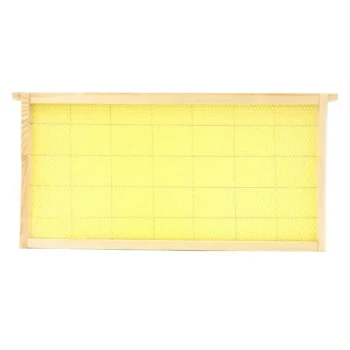
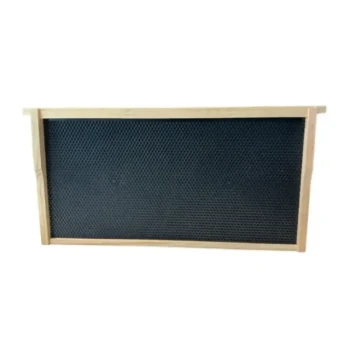
In practical terms: Wooden frames with natural beeswax foundation generally achieve faster and more reliable bee acceptance, especially when colonies are building comb under ordinary nectar conditions. Plastic frames and foundation are substantially more durable, rot-resistant, and resistant to wax moth damage, but bees usually draw them more slowly unless the plastic is wax-coated and nectar flow is exceptionally strong.
The central trade-off is acceptance versus durability: choose wooden frames with beeswax foundation for rapid comb construction, or plastic systems for long service life, reduced maintenance, and greater resistance to handling damage.
Bee Acceptance and Comb-Building Speed
Why beeswax foundation is usually accepted faster
Natural beeswax provides a familiar scent and surface that honeybees readily work into comb. Its embossed cell pattern also gives the colony an immediate guide for constructing uniform honeycomb.
Under normal nectar conditions, colonies typically draw beeswax foundation faster than uncoated plastic foundation. This makes it the more dependable option when rapid hive expansion or early-season comb production is the priority.
How plastic foundation affects acceptance
Bees can use plastic foundation successfully, but acceptance is often slower. A strong nectar flow provides the greatest incentive for bees to cover the plastic with wax and build out the cells.
A thin coating of beeswax can significantly improve plastic foundation acceptance. This is an important distinction when evaluating plastic products: wax-coated plastic generally performs better than uncoated plastic, although it may still not match the immediate acceptance of natural beeswax.
Impact on apiary expansion
Wooden frames with beeswax foundation are often preferable when a beekeeper needs colonies to draw comb quickly. Faster construction can support timely hive expansion and provide usable comb for brood-rearing or honey storage sooner.
Plastic systems may be better suited to operations that prioritize standardized equipment, simplified handling, and long-term reuse over the fastest possible initial comb drawing.
Durability and Handling Performance
Strength of wooden frames with beeswax foundation
The wooden frame provides a strong, repairable outer structure, but the beeswax foundation itself is delicate. It can sag, break, or melt if it lacks adequate support or is exposed to excessive heat.
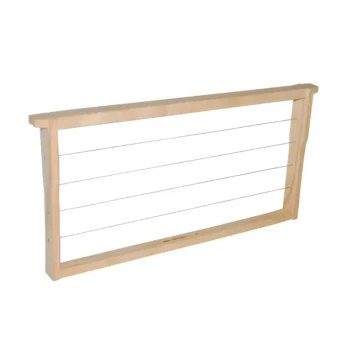
For heavy honey loads and extraction, beeswax foundation normally requires embedded horizontal or vertical wires, prewired supports, wedge strips, or sidebar support pins. Proper reinforcement is essential for reducing comb failure during transport and centrifugal extraction.
Strength of plastic frames and foundation
Plastic foundation has greater mechanical strength than pure beeswax foundation. It does not require embedded support wires, resists damage during extraction, and is less likely to shatter in cold conditions or sag in high heat.
Plastic is also resistant to rot and wax moth damage. One-piece molded plastic frames can further reduce assembly labor by integrating the outer frame and foundation into a single component.
Repairability and heat resistance
Wooden frames may loosen at the nails or joints when pried apart with a hive tool, but this type of damage is generally repairable. Plastic frame ears and top bars can break under similar stress, and such damage is usually irreparable.
Plastic can also warp if left in high heat outside the hive. Wooden frames are not immune to environmental damage, but they are generally easier to repair or replace component by component.
Operational and Commercial Considerations
Assembly and labor
Wooden frames with wired beeswax foundation require more preparation. Assembly may include fitting the foundation, installing or tensioning wire, securing the wax, and checking the frame before use.
Plastic frames and snap-in plastic foundations reduce assembly time and ongoing maintenance. One-piece molded designs can be particularly efficient for high-volume commercial apiaries where labor standardization matters.
Extraction and transport
Plastic foundation offers strong support during honey extraction and is better suited to rough handling, repeated movement, and long-distance distribution. Its structural consistency can reduce damage-related losses when equipment is transported between sites or through a supply chain.
Wooden frames with properly supported beeswax foundation remain effective for extraction, but they require more careful handling. Incorrect wiring, inadequate support, or excessive heat can lead to sagging or comb separation.
Product configuration matters
Not all plastic systems perform identically. Plastic foundation installed in wooden frames with grooved top and bottom bars can provide strong support while avoiding some internal crevices found in certain one-piece designs.
For distributors and resellers, it is therefore important to evaluate the complete frame system, not only the foundation material. Frame geometry, wax coating, support design, assembly requirements, and compatibility with existing hive equipment all affect customer satisfaction.
Understanding the Trade-offs
Beeswax foundation: key limitations
Beeswax foundation is more vulnerable to heat, cold-related brittleness, compression, and rough handling. It may also require more storage care and protective packaging during transportation.
Because beeswax is a natural material, quality and performance can vary with thickness, reinforcement, and manufacturing consistency. Thinner sheets may suit cut-comb or chunk-honey applications, while heavier brood or extraction frames require more substantial foundation.
Plastic foundation: key limitations
Uncoated plastic is typically slower for bees to accept. If colonies lack a strong nectar flow, the foundation may remain only partially drawn, delaying comb production.
Plastic also depends heavily on surface preparation and product quality. A suitable beeswax coating can improve acceptance, but coatings must be consistent and compatible with the beekeeper’s operating conditions.
Avoiding the wrong comparison
Comparing natural beeswax foundation only with uncoated plastic can make the difference appear larger than it is in some apiaries. Conversely, comparing a wax-coated, well-designed plastic system with fragile, poorly supported wax foundation does not represent a fair durability assessment.
The most useful comparison considers acceptance, coating, reinforcement, climate, extraction method, handling intensity, and expected service life together.
Making the Right Choice for Your Goal
The appropriate choice depends on whether the priority is rapid colony construction, maximum durability, lower labor, or a balanced product portfolio.
- If your primary focus is fast bee acceptance: Choose wooden frames with natural beeswax foundation, particularly when colonies must draw comb under ordinary nectar conditions.
- If your primary focus is long service life: Choose plastic frames or foundation for superior resistance to rot, wax moth damage, extraction stress, and rough handling.
- If your primary focus is labor efficiency: Choose snap-in plastic foundation or one-piece molded plastic frames to reduce assembly and maintenance requirements.
- If your primary focus is balanced performance: Use plastic foundation with a thin beeswax coating, or plastic foundation installed in wooden frames for added structural support and easier repair.
- If your primary focus is wholesale or distribution flexibility: Maintain both systems in the product portfolio, offering beeswax-based options for rapid comb building and plastic options for commercial durability and operational consistency.
Selecting the right system becomes straightforward when bee acceptance and equipment durability are evaluated as separate—and equally important—performance requirements.
Summary Table:
| Aspect | Wooden Frames + Beeswax Foundation | Plastic Frames/Foundation |
|---|---|---|
| Bee Acceptance | Fast and reliable, especially under normal nectar flow | Slower unless wax-coated; strong nectar flow helps |
| Durability | Beeswax delicate; needs wire reinforcement; wood repairable | More durable, rot-resistant, resistant to wax moth; plastic may warp in heat |
| Labor | More assembly (wiring, fitting foundation) | Less assembly; snap-in or one-piece designs |
| Extraction | Requires careful handling; must be properly reinforced | Strong support; handles rough extraction and transport well |
| Cost | Natural materials, often lower initial cost | Higher up-front cost but longer life and less maintenance |
Ready to equip your apiary with the right frames? At HONESTBEE, we offer a full spectrum of beekeeping equipment, from wooden frames with natural beeswax foundation to high-quality plastic systems. Whether you're a commercial apiary seeking rapid comb building or a distributor looking for durable, wholesale options, our one-stop sourcing and dedicated support ensure you get the best value. With ultra-fast delivery and expert guidance, we help you maximize efficiency and profitability. Contact us today to discuss your needs and get a tailored quote!
Related Products
- Assembled Wooden Bee Frames with Beeswax Foundation Ready to Use by HONESTBEE
- HONESTBEE Wired and Assembled Wooden Bee Frames Foundation for a Thriving Hive
- Assembled Wooden Bee Frames with Plastic Foundation for Durability and Convenience by HONESTBEE
- Wooden Bee Hive Frames for Beekeeping and Wholesale
- Beeswax Foundation Sheets Beehive Foundation for Wholesale
People Also Ask
- Under what circumstances should bee frames be destroyed? Protect Your Apiary from American Foulbrood
- How should frames be rearranged as a bee colony grows? Master Hive Expansion and Nest Management
- Do bee frames need foundation? Choose the Right Approach for Your Apiary
- What types of bee frames can be cleaned and returned to service? A Guide to Safe Apiary Refurbishment
- How do you re-wax bee frames? A Simple Guide to Faster Comb Building