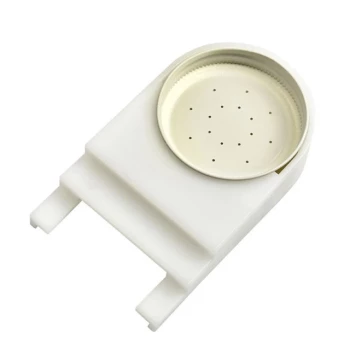
A bee feeder functions as a precise internal delivery mechanism for administering natural spruce extracts to a honeybee colony. Installed directly above the brood area, the feeder contains a syrup mixture infused with the extract, which the bees ingest and circulate throughout the hive via their natural nutritional intake and social feeding behaviors.
Core Takeaway Using a bee feeder transforms medication delivery from an external disruption into a natural biological process. By mixing spruce extracts into feed syrup, you ensure high bioavailability and even distribution among worker bees without the chemical volatility associated with sprays or evaporation methods.
The Mechanism of Delivery
The effectiveness of a bee feeder lies in how it integrates the medicinal extract into the colony's daily routine.
Strategic Placement
The feeder is installed above the brood area. This specific location places the nutrient source close to the center of hive activity, encouraging rapid discovery and uptake by the bees.
Distribution via Social Feeding
Once the bees consume the syrup containing the spruce extract, the medication is not merely digested by a single bee. It is distributed throughout the colony via social feeding behaviors (trophallaxis).
As worker bees share food with one another, the extract is passed from bee to bee. This ensures the substance reaches a wide demographic within the hive, rather than being limited to only those bees that directly accessed the feeder.
Advantages Over Alternative Methods
Using a feeder addresses the "Deep Need" of maintaining hive health while delivering necessary treatment. It offers distinct advantages over external application methods.
Enhanced Bioavailability
The primary benefit of the feeder method is higher bioavailability. Because the extract is ingested as part of a food source, it is absorbed systematically by the bees.
This contrasts with external methods, where absorption might be inconsistent or dependent on contact with treated surfaces.
Operational Simplicity
The feeder method provides ease of operation for the beekeeper. Administering the extract becomes as simple as managing the hive's food supply, rather than requiring complex application equipment.
Understanding the Trade-offs: Feeders vs. Volatile Methods
When choosing an administration method, it is critical to understand what you are avoiding by using a feeder.
Avoiding Chemical Interference
Methods such as spraying or evaporation often rely on volatile acids. These can introduce severe chemical interference into the hive environment, potentially stressing the colony or altering the delicate chemical balance of the hive atmosphere.
Stability of the Hive Environment
By using a feeder, you avoid the sudden environmental shifts caused by sprays. The delivery is internal and gradual, maintaining a more stable hive environment while still ensuring the medication is effectively administered.
Making the Right Choice for Your Goal
Selecting the correct delivery method depends on your specific objectives regarding colony health and labor efficiency.
- If your primary focus is Bioavailability: Use a feeder to ensure the extract is ingested and metabolically processed by the bees for maximum efficacy.
- If your primary focus is Hive Stability: Choose the feeder method to avoid the stress and chemical disruption associated with spraying volatile acids.
Ultimately, the bee feeder leverages the colony's natural biology to deliver spruce extracts safely, evenly, and effectively.
Summary Table:
| Feature | Bee Feeder Delivery | External Sprays/Evaporation |
|---|---|---|
| Mechanism | Internal ingestion & social feeding | Topical contact or inhalation |
| Bioavailability | High (Systematic absorption) | Variable (Surface-level) |
| Hive Stability | High (Stable environment) | Low (Chemical volatility/stress) |
| Application | Simple (Mixed with syrup) | Complex (Requires specialized gear) |
| Primary Benefit | Natural biological integration | Rapid external application |
Elevate Your Beekeeping Efficiency with HONESTBEE
Are you looking to optimize hive health while streamlining your operations? HONESTBEE provides commercial apiaries and distributors with the industry's most reliable beekeeping tools and machinery.
From high-capacity hive-making and honey-filling machines to specialized feeders and essential consumables, our comprehensive wholesale offering is designed to scale your business. We empower our partners with durable equipment that respects the natural biology of the colony.
Ready to upgrade your inventory? Contact us today to discuss our wholesale pricing and how our specialized hardware can support your growth.
References
- L. Romanchuk, Seymour Furman. Natural spruce extract is an effective remedy to fight against varroatosis in organic beekeeping. DOI: 10.15421/2020_254
This article is also based on technical information from HonestBee Knowledge Base .
Related Products
- Rapid Bee Feeder White Plastic 2L Round Top Feeder for 8 or 10-Frame Bee Hives
- HONESTBEE Entrance Bee Feeder Professional Hive Nutrition Solution for Beekeeping
- White Plastic 0.5L Beekeeping Entrance Feeder for Bees
- HONESTBEE Entrance Bee Feeder Efficient Hive Front Liquid Feeding Solution for Beekeeping
- HONESTBEE Professional Entrance Bee Feeder Hive Nutrition Solution
People Also Ask
- What should be done with feeders and equipment after feeding bees? Essential Steps for Apiary Health
- What should be done if feed in a feeder is not consumed by the bees? Prevent Hive Mold with Prompt Feed Management
- What is the necessity of specialized internal or entrance feeders? Secure Your Hive with Professional Feeding Tools
- How do bee feeders work to preserve colony health during nectar shortages? Essential Guide for Beekeepers
- How quickly does a medium to strong colony usually empty a feeder? A Beekeeper's Guide to Hive Health