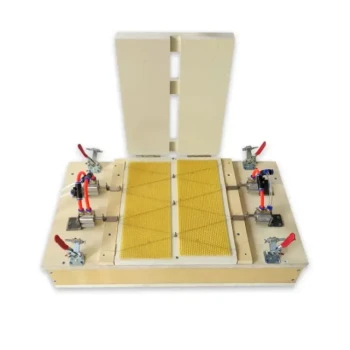
A Wax Foundation Embosser is a critical precision instrument used to imprint hexagonal cell patterns onto beeswax sheets, serving as a structural template for the colony. By inserting these pre-formed foundations into frames, you significantly reduce the physiological energy bees must expend on wax secretion, while simultaneously forcing the construction of straight, standardized combs required for modern hive management.
Core Takeaway: The Wax Foundation Embosser bridges the gap between biological necessity and industrial efficiency. It allows the colony to redirect metabolic energy from building comb to foraging for nectar, while providing the structural uniformity required for mechanized extraction and scalable apiary management.
The Physiological Impact on Colony Efficiency
The primary value of the embosser lies in how it conserves the colony's resources. By determining the architecture of the comb before the bees begin working, you optimize their biological output.
Reducing Metabolic Energy Expenditure
Bees consume a significant amount of honey to produce beeswax. The Wax Foundation Embosser provides a massive head start by supplying the cell base.
Because the bees utilize the embossed sheet as a foundation rather than building entirely from scratch, they significantly reduce the amount of wax they must secrete. This conservation of energy allows the colony to reallocate resources toward collecting pollen and nectar, directly increasing the hive's productivity.
Regulating Colony Demographics via Cell Size
The embosser allows for the precise control of cell dimensions, which dictates the type of bee the colony produces.
A foundation embossed with a 5.35 mm cell size encourages the rearing of worker bees, which are the workforce for foraging and honey production. Conversely, larger cells (5.5 mm to 5.6 mm) bias the colony toward producing drones. Using the embosser to maximize worker population is a key strategy for high-yield operations.
Improving Hive Ventilation and Health
Standardized foundations guide bees to build combs that are uniform and well-spaced.
This structural consistency prevents the overcrowding and irregular comb construction often seen in wild colonies. Optimized spacing facilitates better internal ventilation and temperature regulation, further reducing the energy bees must burn to heat or cool the nest.
Operational Efficiency for the Beekeeper
Beyond the biological benefits, the embosser is essential for the mechanical and logistical side of modern apiculture. It transforms the hive from a natural cavity into a manageable production unit.
Enabling Mechanized Extraction
For professional operations, the structural integrity of the comb is non-negotiable.
Foundations created by an embosser produce combs with consistent strength and straightness. This durability is essential for withstanding the centrifugal forces of mechanical honey extractors. Without this standardization, combs would frequently collapse during harvest, destroying the colony's infrastructure.
Facilitating Component Interchangeability
The embosser ensures that every frame of comb is identical in width and depth.
This standardization allows beekeepers to move frames between hives without compatibility issues. It simplifies apiary operations, such as splitting hives or bolstering weak colonies with resources from strong ones, helping to maintain overall apiary stability.
Understanding the Trade-offs: Quality Control
While the embosser creates the shape, the material quality is a critical variable that can undermine efficiency if ignored.
The Risk of Chemical Accumulation
The embosser imprints the pattern, but the purity of the wax sheet itself is paramount.
If the foundation is made from recycled wax, it may contain high concentrations of acaricides and pesticides. These chemicals are transferred to the bees and larvae through contact. Using contaminated wax negates the efficiency gains by compromising colony health.
Material Selection Strategy
To maintain biosafety, it is critical to use foundations made from pure honey cappings wax. This strategy minimizes cross-contamination and ensures that the embossed foundation supports a healthy, distinct immune environment for the bees.
Making the Right Choice for Your Goal
The settings and materials you use with a Wax Foundation Embosser should depend on your specific objectives for the apiary.
- If your primary focus is Maximum Honey Production: Utilize an embosser with a 5.35 mm cell size to maximize the worker bee population and ensure combs are strong enough for mechanical extraction.
- If your primary focus is Genetic Breeding: utilize embossers with 5.5 mm to 5.6 mm cell sizes on specific frames to encourage drone production for mating purposes.
- If your primary focus is Colony Health & Biosafety: Prioritize the purity of the wax fed into the embosser, strictly avoiding recycled wax to prevent chemical buildup.
By standardizing the internal architecture of the hive, you empower the colony to focus on production rather than construction.
Summary Table:
| Feature | Impact on Colony Efficiency | Operational Benefit |
|---|---|---|
| Resource Conservation | Reduces honey consumption for wax secretion | Redirects energy to foraging and nectar collection |
| Cell Size Control | Regulates demographics (worker vs. drone) | Maximize workforce for high-yield honey production |
| Structural Uniformity | Improves hive ventilation and temperature control | Enables mechanized extraction and frame interchangeability |
| Durability | Strengthens comb infrastructure | Prevents comb collapse during centrifugal extraction |
Elevate Your Apiary with HONESTBEE Precision Equipment
Maximize your honey production and operational efficiency with HONESTBEE’s professional-grade beekeeping solutions. As a dedicated partner to commercial apiaries and global distributors, we provide everything from precision Wax Foundation Embossers and honey-filling machines to a full spectrum of essential consumables and hive-making hardware.
Why choose HONESTBEE?
- Comprehensive Wholesale Offering: A one-stop shop for tools, machinery, and honey-themed merchandise.
- Industry Expertise: Our equipment is designed to enhance colony health and streamline industrial-scale management.
- Scalable Solutions: We cater to the unique needs of large-scale operations and supply chains.
Ready to scale your beekeeping business? Contact us today to explore our wholesale catalog!
References
- Sisay Fikru, Gebremedhin Gebresilassie. Assessment of Beekeeping Practices (Absconding, Bee Forage and Bee Diseases and Pests) in Jigjiga Zone, Somali Regional State of Ethiopia. DOI: 10.4172/2375-446x.1000135
This article is also based on technical information from HonestBee Knowledge Base .
Related Products
- Beeswax Machine Press Embosser Wax Foundation Mold Printer Bee Hive Equipment Making Sheet
- Economy Manual Beeswax Embossing Mill Wax Foundation Machine Roller
- Manual Beeswax Comb Foundation Machine Wax Foundation Mill Embossing Machine
- Fully Automatic Beeswax Embossing Machine Foundation Mill
- Electric Flatting and Embossing Machine with Tray for Beekeeping
People Also Ask
- What equipment is needed to make beeswax foundation? A Guide to DIY Wax Sheet Production
- What miscellaneous equipment is needed for making foundation? A Guide to the Essential Tools
- What miscellaneous equipment is useful when making beeswax foundation? Essential Support Tools for Beekeepers
- What specific equipment is required for making beeswax foundation? Essential Tools for High-Quality Production
- What is the recommended temperature for melting beeswax to make foundation sheets? Master the 70°C-80°C Ideal Range