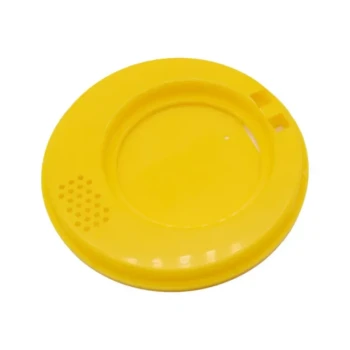
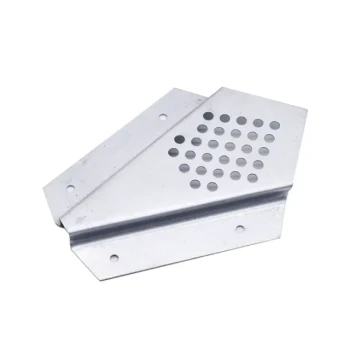
An escape board functions as a mechanical one-way gate for your hive. When placed directly below a honey super, it utilizes a passive system—often a maze or specific valve design—that allows bees to travel down toward the brood nest but physically prevents them from navigating back up. This leverages the bees' natural tendency to move downward at night, clearing the upper boxes of the majority of the colony.
By relying on the colony's natural movement patterns rather than repellents or forced air, an escape board offers a calm, chemical-free method for harvesting. However, its effectiveness is strictly time-dependent and relies on the super being free of brood.
The Mechanics of Clearance
The One-Way System
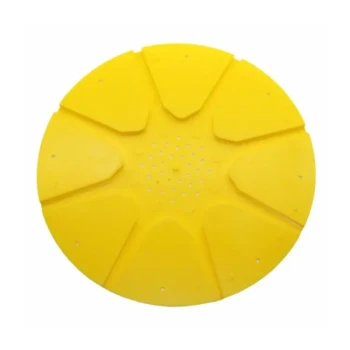
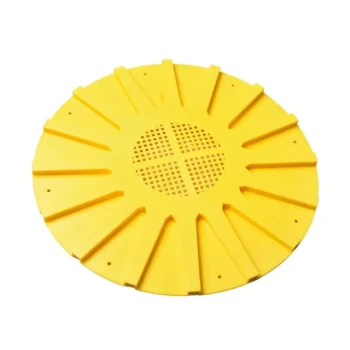
The core principle of the escape board is directional control. The device is engineered with specific exit points that are easy for bees to locate from above.
Once the bees descend through these holes, they enter a restricted space or "maze."
Foiling Re-Entry
While the path downward is intuitive for the bees, the return path is not.
The design creates a complex route or a physical narrowing that bees cannot navigate in reverse. Consequently, once a bee leaves the super to join the cluster below, it is permanently locked out of the upper box.
Leveraging Night Cycles
The escape board is most effective because it works in tandem with bee behavior.
Worker bees naturally migrate down toward the warmth of the brood nest during the cool of the night. The escape board simply ensures that when they make this nightly commute, they cannot return the next morning.
Installation and Timing
Proper Placement
To function, the board must be placed strictly between the honey supers you intend to harvest and the brood boxes below.
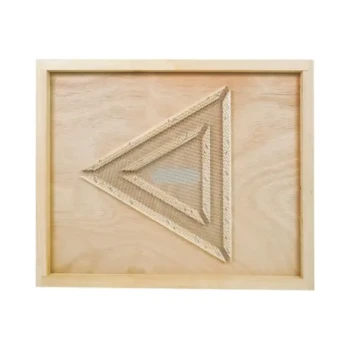
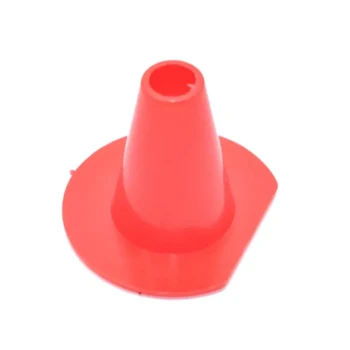
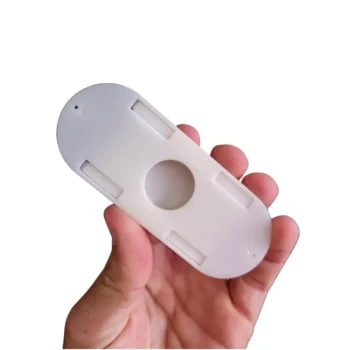
Some systems use a standalone board (like a Triangle Escape Board), while others involve inserting a specific device into the oval hole of a standard inner cover.
The Waiting Period
Unlike fume boards or blowers, this is not an instant process.
Most references suggest allowing the board to remain in place for a minimum of 24 to 48 hours. In some configurations, it may take 3 to 5 days to achieve maximum clearance.
Understanding the Trade-offs
The Brood Constraint
The most common reason for an escape board failure is the presence of brood in the honey super.
If the queen has laid eggs in the super, nurse bees will refuse to abandon the developing larvae. They will ignore the impulse to move down, rendering the escape board ineffective.
Mechanical Blockages
The mechanism relies on smooth traffic flow.
Larger drones can occasionally get stuck in the narrower passages of the escape device. A single stuck drone can block the exit for all other bees, halting the clearing process entirely.
Residual Populations
While highly effective, an escape board rarely clears 100% of the bees.
You should expect a small number of stragglers to remain in the super. Always continue to wear protective beekeeping gear during the harvest, as the remaining bees may be defensive or confused.
Making the Right Choice for Your Goal
- If your primary focus is a stress-free harvest: Use an escape board, as it clears the hive passively without agitating the colony with strong smells or loud noises.
- If your primary focus is speed: Choose a different method, as this process requires a setup trip and a return trip 2 to 5 days later.
- If your primary focus is reliability: Inspect your supers for brood before installation; if brood is present, the board will not work.
The escape board is the tool of choice for the patient beekeeper who prioritizes a calm apiary over immediate results.
Summary Table:
| Feature | Escape Board Mechanism |
|---|---|
| Core Principle | One-way mechanical gate (passive maze or valve) |
| Optimal Timing | 24 to 48 hours (up to 5 days for maximum clearance) |
| Best Condition | Super must be brood-free; used during nightly migration |
| Primary Benefit | Stress-free, chemical-free, and preserves honey flavor |
| Key Limitation | Slower than blowers; drones may cause blockages |
Elevate Your Apiary Efficiency with HONESTBEE
At HONESTBEE, we specialize in empowering commercial apiaries and distributors with professional-grade solutions. Whether you are scaling up with our high-capacity honey-filling machines or outfitting your operation with premium beekeeping tools and consumables, our comprehensive wholesale portfolio is designed for your success.
Why partner with HONESTBEE?
- Full Spectrum Supply: From hive-making machinery to essential hardware.
- Commercial Grade: Durable equipment built for heavy-duty industry use.
- Market Growth: Expand your retail reach with our unique honey-themed cultural merchandise.
Ready to streamline your honey production and harvest? Contact us today to discover how our expert equipment and wholesale offerings can grow your beekeeping business.
Related Products
- HONESTBEE Wooden Bee Escape Board with Triangle Mesh Design for Beekeeping
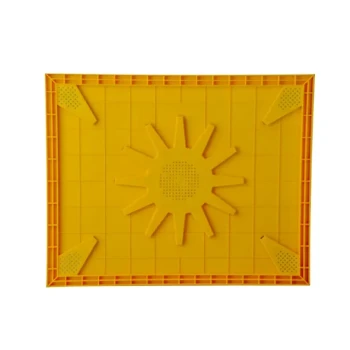
- HONESTBEE Multi Exit Plastic Bee Escape Board for Efficient Honey Harvesting
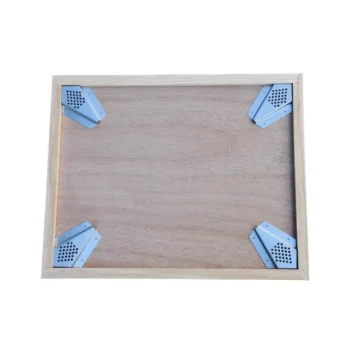
- HONESTBEE 4-Way Metal Corner Wooden Bee Escape Board
- Slatted Porter Style Bee Escape for Rapid Hive Clearing
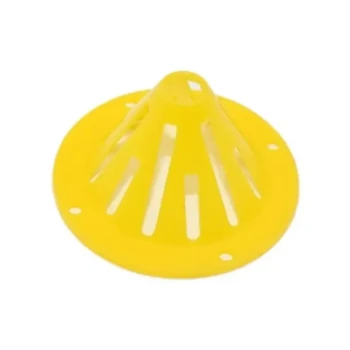
- Professional Cone Style Bee Escape for Efficient Honey Harvesting
People Also Ask
- How is a bee escape board used to clear a hive body for honey harvesting? Optimize Your Chemical-Free Harvest
- What is a bee escape board and what problem does it solve? Simplify Your Honey Harvest with Passive Clearing
- How is a bee escape board used and how does it function? Master This Gentle Honey Harvesting Tool
- What are the proper steps for using a bee escape board for honey harvesting? Master the Passive Clearing Technique
- What tools and methods are used to clear honey bees from honey supers? Efficient Harvesting for Commercial Beekeepers