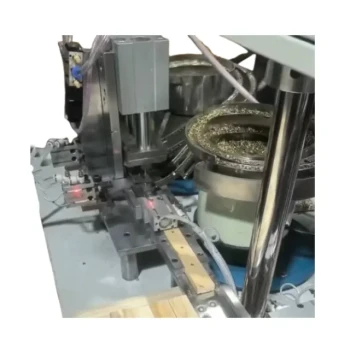
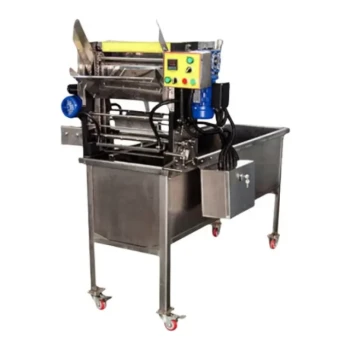
Automated hive-making machinery acts as the technical foundation for standardized management in large-scale apiaries by replacing manual variability with industrial precision. It contributes to standardization by enabling the rapid mass production of dimensionally identical hive components, ensuring that as colony counts expand, every unit maintains the specific structural environment required for optimal bee health and operational efficiency.
By eliminating manual inconsistencies, automated machinery creates a system where every hive component is interchangeable. This transforms beekeeping from a variable craft into a scalable industrial process, securing the economic returns necessary for large operations.
The Technical Basis of Standardization
Achieving Absolute Interchangeability
In manual hive construction, slight variances can make swapping parts impossible. Automated machinery employs high-precision woodworking techniques to process key components like frames, bodies, and bottom boards.
This ensures every piece is dimensionally uniform. Consequently, beekeepers can mix and match components across thousands of hives without modification, creating a truly modular hardware infrastructure.
Enabling Rapid Scale-Up
Large-scale apiaries often need to expand colony counts quickly to capitalize on seasonal blooms. Automated equipment allows for the mass production of weather-resistant components at a speed manual labor cannot match.
This capability ensures that the supply of hardware never bottlenecks biological growth. Operations can deploy hundreds of new colonies rapidly, knowing the equipment is ready and consistent.
Optimization of Biological Conditions
Supporting Specific Subspecies Requirements
Different bee subspecies have distinct needs regarding insulation and space for overwintering and spring development. Automated machinery ensures that internal hive dimensions and ventilation structures are replicated exactly across the entire operation.
This consistency creates a stable, predictable environment for every colony. It eliminates the risk of colony loss due to poor housing construction, directly supporting better survival rates and faster spring buildup.
Enhancing Hygiene and Disease Control
Industrial-grade hardware supports precise hygiene management. Automated production results in smoother surfaces and tighter joints, which can reduce areas where pests or pathogens might harbor.
By maintaining high-quality, consistent housing standards, apiaries can mitigate disease risks. This standardization makes systemic disease control measures more effective across the population.
Economic and Operational Efficiency
Reducing Maintenance and Logistics Costs
Precision manufacturing significantly lowers long-term maintenance costs. Because parts are interchangeable, damaged components can be replaced instantly without customized fitting.
Furthermore, processing raw timber in-house with specialized machinery reduces the price premiums associated with purchasing finished products. This improves the asset turnover rate and aligns tool replacement with the apiary's production rhythm.
Facilitating Mechanized Harvesting
Standardization is the prerequisite for automation elsewhere in the workflow. Mechanical honey harvesting requires hives to be uniform so they fit into uncapping and extraction machinery.
By ensuring dimensional accuracy, hive-making machinery makes the use of automated honey-filling and harvesting lines feasible. This integration of standardized housing and automated processing is essential for maximizing economic returns.
Operational Considerations and Trade-offs
Capital Investment vs. Labor Savings
While automated machinery reduces the labor time per unit for hive construction, it represents a significant upfront capital expense. The return on investment relies on the scale of the operation; smaller apiaries may not realize the same economic benefits as large, clustered operations.
Reliance on Raw Material Quality
High-precision machinery requires consistent raw timber input to function optimally. Apiaries must manage their timber supply chain effectively to ensure the machinery produces the high-standard ecological hives intended, as poor-quality wood can still lead to structural failures despite precise cutting.
Making the Right Choice for Your Goal
To leverage automated hive-making machinery effectively, align your implementation with your specific operational targets:
- If your primary focus is Rapid Expansion: Prioritize machinery with high throughput capabilities to ensure hardware supply never limits your colony growth rate during key seasons.
- If your primary focus is Asset Longevity: Focus on machinery that specializes in high-precision joinery and weather-resistant assembly to minimize long-term replacement costs.
- If your primary focus is Biological Optimization: Configure your machinery to produce hives with specific ventilation and insulation parameters tailored to your local bee subspecies.
Standardization is not merely about organizing equipment; it is the strategic lever that converts biological potential into predictable economic performance.
Summary Table:
| Standardization Factor | Contribution of Automated Machinery | Operational Benefit |
|---|---|---|
| Dimensional Accuracy | High-precision woodworking for identical components | 100% interchangeability of parts |
| Production Speed | Mass production of frames and hive bodies | Rapid expansion to meet seasonal blooms |
| Biological Stability | Replicated insulation and ventilation structures | Improved bee health and survival rates |
| Hygiene & Disease | Smoother surfaces and tighter joints | Reduced pest harborages and easier cleaning |
| Workflow Integration | Uniform dimensions for mechanical harvesting | Feasibility of automated honey-filling lines |
Revolutionize Your Apiary with HONESTBEE Precision Engineering
Transition from variable manual craftsmanship to a scalable industrial powerhouse. HONESTBEE empowers commercial apiaries and distributors with a comprehensive range of professional beekeeping machinery, including specialized hive-making machines and automated honey-filling lines.
Our equipment ensures your hardware maintains the precise technical standards required for biological health and maximum asset turnover. Whether you need a full spectrum of beekeeping tools or essential industry consumables, we provide the hardware necessary to secure your economic returns.
Ready to standardize your operations? Contact our experts today to discuss our wholesale offerings and find the perfect machinery for your apiary's growth.
References
- Małgorzata Bieńkowska, Robert Maciorowski. The Buzz Changes within Time: Native Apis mellifera mellifera Honeybee Subspecies Less and Less Popular among Polish Beekeepers Since 1980. DOI: 10.3390/agriculture11070652
This article is also based on technical information from HonestBee Knowledge Base .
Related Products
- Automatic High-Speed Bee Hive Box Stapling Machine
- Automatic Finger Joints Joint Making Machine for Bee Box and Hive Making
- High-Efficiency Pneumatic Bee Hive Making Machine for Rapid Box Assembly
- Mini Desktop Bee Hive Frame Forming Making Machine
- Beehive Handle and Frame Rest Cutting Machine: Your Specialized Hive Machine
People Also Ask
- How is the Bee Box machine adjusted for different box sizes? Maximize Your Woodworking Versatility and Precision
- How is the Bee Box machine operated? Optimize Your Commercial Hive Production with Scalable Staffing Solutions
- How was the Bee Box machine designed? Industrial Engineering for High-Volume Beekeeping Production
- What is the production capacity of the Bee Box machine? Boost Output up to 1,000 Boxes Daily
- What are the power requirements and control system for the Bee Box machine? Optimize Your Apiary Equipment Production