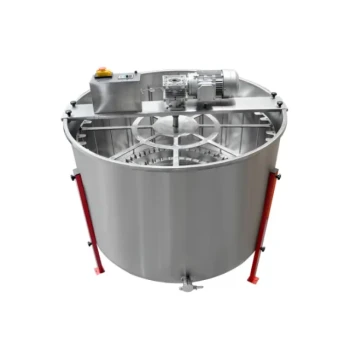
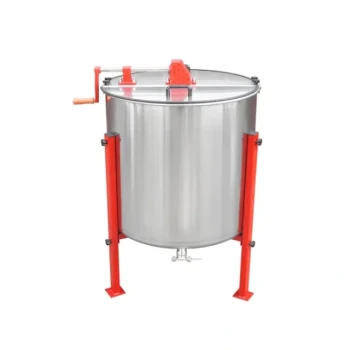
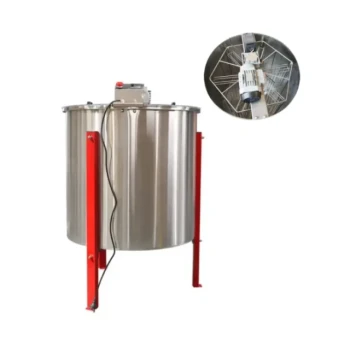
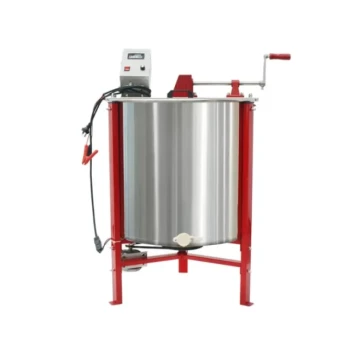
Commercial-grade honey extraction functions through the precise application of centrifugal force, spinning hive frames at high speeds to separate liquid honey from the wax comb. This mechanical process is designed to harvest mature honey rapidly without compromising the physical integrity of the honeycomb structure, allowing the wax foundation to be returned to the hive immediately.
Core Takeaway The critical value of commercial extraction is not just speed, but biological conservation. By preserving the wax comb rather than crushing it, the equipment eliminates the bees' need to expend energy rebuilding their nest, directly redirecting their labor toward nectar collection and significantly increasing yield frequency.
The Mechanics of Extraction
Utilizing Centrifugal Force
The core mechanism of industrial-grade extractors is high-speed rotation. Hive frames are loaded into a drum that spins, generating sufficient G-force to pull honey out of the hexagonal cells.
This physical separation occurs without the need for heat or crushing. This ensures that the raw honey is removed cleanly while the delicate structure of the wax remains undamaged.
Processing at Scale
In forest and meadow ecosystems with medium to high nectar-producing potential, volume management is critical. High-capacity machinery processes large numbers of frames simultaneously.
This capability is essential during peak nectar flow periods. It allows beekeepers to clear frames rapidly, ensuring there is always storage space available in the hive for incoming nectar.
Ecological and Biological Efficiency
Energy Conservation for the Colony
Bees consume significant resources to secrete beeswax. When traditional harvesting methods destroy the comb, the colony must consume excessive energy and time to rebuild the nest.
Commercial extractors break this cycle by keeping the honeycombs intact. Because the combs are preserved, they can be recycled and reused by the bees immediately after harvest.
Shortening the Production Cycle
When bees do not need to rebuild, they focus their energy on pollen and nectar collection. This shift in labor allocation creates a faster turnover rate for commercial production.
By reducing the biological "cost" of the harvest on the colony, the frequency of harvests during a single flowering season can be increased.
Operational Considerations
Managing Physicochemical Properties
Rapid processing is not just about volume; it is about quality control. By harvesting quickly during specific flow periods, beekeepers help maintain the honey's physicochemical integrity.
This ensures that the product captures the specific profile of the forest or meadow bloom before environmental conditions change or the honey degrades in the hive.
The Necessity of Maturity
The equipment is specifically calibrated for mature honey. The centrifugal process relies on the specific viscosity and weight of ripened honey to extract properly.
Attempting to extract unripe nectar can result in inefficient separation or moisture content issues, underscoring the need for precise timing in the harvest.
Making the Right Choice for Your Goal
To maximize the benefits of commercial extraction equipment in your specific ecosystem, consider these factors:
- If your primary focus is maximizing volume: Prioritize centrifugal extractors to ensure comb preservation, as this redirects colony energy from wax production to nectar foraging.
- If your primary focus is operational efficiency: Utilize high-capacity machinery during peak bloom windows to maintain rapid turnover and prevent hive congestion.
Commercial extraction technology acts as a force multiplier, converting what would be wax-production time into pure honey production time.
Summary Table:
| Feature | Mechanical Function | Ecosystem & Biological Benefit |
|---|---|---|
| Centrifugal Force | Spins frames at high speeds to pull honey from cells | Separates honey without crushing the delicate wax structure |
| Comb Preservation | Keeps the physical integrity of the honeycomb intact | Saves bee energy; bees focus on nectar collection over wax building |
| High-Capacity Processing | Handles large volumes of frames simultaneously | Critical for peak nectar flow in forest/meadow environments |
| Rapid Turnover | Quickly clears storage space in the hive | Increases harvest frequency within a single flowering season |
Scaling Your Apiary Operations with HONESTBEE
At HONESTBEE, we specialize in empowering commercial apiaries and distributors with the industrial-grade tools necessary for high-volume success. From high-capacity centrifugal extractors that preserve your biological assets to advanced honey-filling machines and specialized hive-making hardware, we supply the full spectrum of beekeeping machinery and essential consumables.
Why partner with HONESTBEE?
- Maximize Yields: Our equipment reduces the energy cost for your colonies, turning wax-building time into honey-production time.
- Complete Wholesale Solutions: We provide everything from specialized hardware to honey-themed cultural merchandise.
- Industry Expertise: We understand the unique demands of forest and meadow honey production at scale.
Ready to enhance your harvesting efficiency and increase your seasonal output? Contact us today to explore our comprehensive wholesale offerings!
References
- Florentina Sandu, A. Stratu. Plant Species Important for Pollinating Insects. Case Study: Băiceni Locality (Botoşani County). DOI: 10.2478/abmj-2023-0009
This article is also based on technical information from HonestBee Knowledge Base .
Related Products
- 32 Frame Commercial Electric Honey Extractor for Beekeeping and Honey Production
- 40 Frame Commercial Electric Honey Extractor for Beekeeping
- Commercial 48-Frame Stainless Steel Honey Extractor
- HONESTBEE 72 Frame Industrial Electric Honey Extractor for Beekeeping
- Commercial Electric 12 Frame Honey Extractor Spinner Motorized Honey Extractor
People Also Ask
- What are commercial honey extractors used for? Boost Your Apiary's Efficiency & Profitability
- What is a commercial honey extractor? The Essential High-Volume Solution for Large Apiaries
- Who are commercial honey extractors designed for? Scaling Your Industrial Beekeeping Success
- How is honey extracted commercially? Maximize Your Apiary's Efficiency and Honey Yield
- What are commercial honey extractors and for what scale of beekeeping are they intended? Scale Your 200+ Colony Apiary