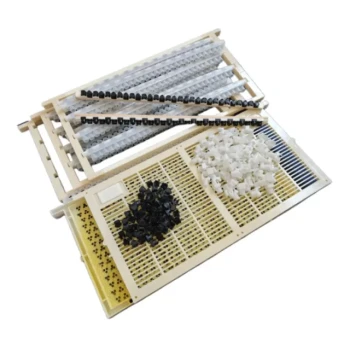
High-precision artificial insemination (AI) equipment fundamentally transforms bee breeding by replacing the randomness of natural mating with exact genetic control. It allows breeders to mechanically deliver precise semen volumes from specific drones to a queen, ensuring the accurate inheritance of superior traits such as high honey yield and disease resistance. By eliminating the uncertainty inherent in open-air mating, this technology serves as the technical foundation for cultivating high-quality breeder queens and executing scientific breeding programs.
Natural mating involves uncontrollable variables that often dilute desirable genetics. High-precision AI equipment eliminates this uncertainty, allowing breeders to isolate specific traits—like Varroa mite resistance or climate adaptation—and replicate them consistently across generations to boost overall colony productivity.
Achieving Absolute Genetic Control
Overcoming Natural Instability
In nature, queen bees exhibit polyandrous behavior, mating with multiple drones randomly during flight. This makes it impossible to know the exact genetic lineage of the offspring.
High-precision equipment overrides this by enabling mating within a closed population. Breeders can select specific drones, ensuring that the resulting colony genetics are intentional rather than accidental.
Precision in Dosage and Source
Advanced instruments allow for the exact measurement of semen volume, often down to the microliter. Technicians can administer 1 microliter for single-drone studies or 10 microliters for multi-drone insemination.
This level of precision is critical for research. It allows scientists to isolate variables, studying how specific insemination volumes or drone sources independently impact queen physiology and colony behavior.
Removing Geographic Barriers
Traditionally, controlled breeding required physical isolation, such as transporting bees to islands or remote mountain valleys.
AI equipment renders this logistical challenge obsolete. It allows for strict selective breeding in any location, protecting indigenous bee species and reducing the costs and risks associated with transporting colonies for mating.
Targeting and Amplifying Superior Traits
Boosting Productivity
By controlling the genetic input, breeders can target quantitative traits like honey production or propolis collection.
Through systematic selection using AI, these traits can be strengthened rapidly. Within a few generations, this targeted approach can significantly increase the average yield and technical efficiency of the apiary.
Enhancing Disease Resistance
One of the most critical applications of this technology is the selection for hygiene and defense.
Breeders can isolate traits such as Varroa mite resistance or specific hygienic behaviors. By ensuring these genes are passed down without dilution, the overall health and survival rate of the bee population improves.
Climate and Environmental Adaptation
High-precision AI helps researchers study and cultivate bees that are specifically adapted to local climates.
This is vital for adaptation research. It enables the development of colonies that are resilient to environmental changes, ensuring long-term sustainability for beekeeping operations.
Understanding the Operational Requirements
The Necessity of Skilled Intervention
While the equipment provides the capability, success relies on a broader ecosystem of tools and skills.
Effective use requires complementary equipment like grafting needles, rearing frames, and cell cups. The systematic replacement of queens is an active management strategy, not a passive one, requiring trained technicians to handle the delicate mechanics of the process.
Biological and Management Factors
AI is a powerful tool, but it operates within biological constraints.
The goal is to improve temperament, foraging activity, and longevity. However, breeders must carefully manage the "closed population" to avoid inbreeding depression while pursuing specific genetic goals.
Making the Right Choice for Your Breeding Program
To maximize the value of high-precision AI equipment, align your approach with your specific objectives:
- If your primary focus is Commercial Production: Prioritize the selection of quantitative traits like honey and propolis yield to solve low productivity issues and increase output scale.
- If your primary focus is Colony Health: Use the equipment to strictly control mating for Varroa resistance and hygienic behavior to reduce colony loss.
- If your primary focus is Conservation or Research: Leverage the volume precision to study physiological impacts and preserve indigenous species without needing geographic isolation.
By moving from random natural selection to precision engineering of the bee genome, you secure the future productivity and resilience of your apiary.
Summary Table:
| Feature | Impact on Bee Breeding | Benefit for Breeders |
|---|---|---|
| Genetic Control | Replaces random mating with targeted selection | Guaranteed inheritance of superior traits |
| Precision Dosage | Exact semen volume measurement (microliters) | Consistent queen quality and research accuracy |
| Geographic Independence | Controlled breeding without physical isolation | Reduced logistics costs and species protection |
| Trait Amplification | Focuses on honey yield and hygienic behavior | Higher productivity and increased colony survival |
| Environmental Adaptation | Facilitates breeding for specific local climates | Long-term sustainability and resilience |
Elevate Your Apiary Genetics with HONESTBEE
At HONESTBEE, we empower commercial apiaries and distributors with the cutting-edge technology needed to secure the future of beekeeping. From high-precision artificial insemination instruments to a complete range of hive-making machinery and honey-processing equipment, our wholesale solutions are designed to scale your operations and improve genetic productivity.
Why partner with HONESTBEE?
- Comprehensive Wholesale Catalog: Access everything from specialized breeding tools to essential industry consumables.
- Precision & Reliability: Our equipment is built for the rigors of professional beekeeping and scientific research.
- Expert Support: We help you select the right machinery—whether it's honey-filling machines or queen-rearing hardware—to maximize your efficiency.
Ready to transform your breeding program and boost your apiary's output? Contact us today to explore our full range of solutions!
References
- Nischal Kafle. Beekeeping in Nepal: Assessing policy effectiveness and pathways for sustainable growth. DOI: 10.59552/nppr.v5i1.91
This article is also based on technical information from HonestBee Knowledge Base .
Related Products
- Queen Bee Artificial Insemination Instrument Equipment for Instrumental Insemination
- Automatic High-Speed Bee Hive Box Stapling Machine
- Automatic Pneumatic Bee Frame Machine for Eyelet Insertion
- Double Head Beekeeping Grafting Tools for Beekeepers
- HONESTBEE Bee Frame Grooving Machine | Precision Slotting for Bee Frame Making
People Also Ask
- Why is maintaining sanitary conditions important during artificial insemination? Protect Your Queen from Fatal Infections
- Why are artificial insemination instruments critical in bee hybridization? Master Genetic Control & Pure Breeding
- What is the core value of bee artificial insemination instruments in breed improvement? Achieve Precise Genetic Control
- Why is professional bee artificial insemination equipment considered a core tool for genetic control in honeybee breeding? Ensure 100% Purity
- Why is high-purity CO2 used for queen bee artificial insemination? Unlock Precision Breeding & Faster Egg-Laying