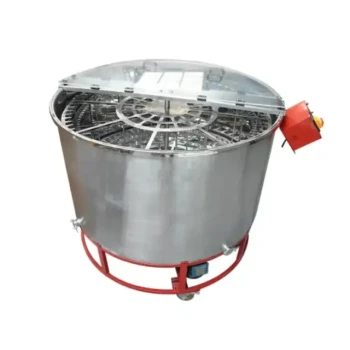
Hive distribution directly determines machinery requirements: operations with 100 or more hives generally need to move beyond manual assembly, extraction, and bottling. More than 87% of commercial beekeepers operate between 100 and over 300 hives, with the 100–199 range representing 65.7% of operations. At this scale, automated hive-making equipment and commercial honey-processing lines help standardize equipment, increase seasonal throughput, and reduce labor cost per hive.
The larger the apiary, the more important it becomes to configure hive-making and honey-processing machinery as one coordinated production system. Equipment should be selected according to colony count, harvest volume, labor availability, packaging requirements, and expected growth.
Why Hive Count Changes Equipment Requirements
Small Apiaries Can Rely on Manual Tools
Operations with fewer than 10 hives can often manage assembly, inspection, extraction, and filling with basic manual tools. A hand-operated extractor and manual bottling process may provide adequate capacity without creating significant labor bottlenecks.
At this scale, the lower purchase cost and simpler maintenance of manual equipment usually outweigh the productivity benefits of automation.
Commercial Scale Creates Repetitive Work
As an apiary expands to dozens or hundreds of colonies, manual hive assembly and honey handling become repeated production tasks rather than occasional maintenance activities. Small inefficiencies multiply across every hive, frame, harvest batch, and package.
The 100–199 hive range is particularly important because it represents the majority of commercial operations identified in the reference data. These businesses need equipment that improves workflow without necessarily requiring the same configuration as a very large industrial apiary.
Growth Requires Capacity Planning
Machinery should be selected for the operation’s expected working scale, not only its current hive count. Replacing undersized equipment after each expansion can create downtime, duplicate investment, and compatibility problems.
Distributors and resellers should therefore present equipment by operational tier, such as small commercial, mid-sized commercial, and high-volume production, while confirming the buyer’s expected growth and peak-season workload.
Selecting Automated Hive-Making Machinery
Standardization Is the Primary Benefit
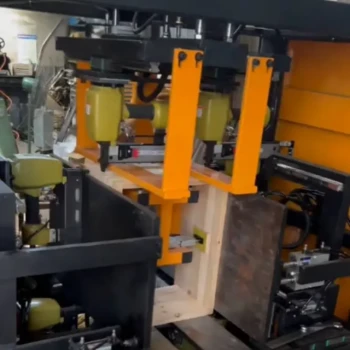
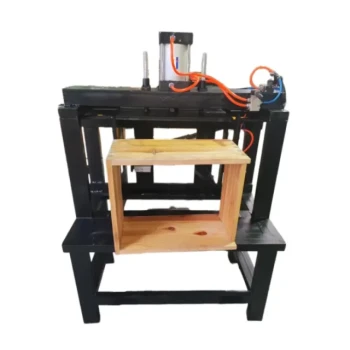
Automated hive-making machinery produces consistent boxes, frames, and related components from wood or composite materials. Uniform dimensions allow hive parts to be interchanged across sites and reduce adjustment time during inspection, transport, and maintenance.
For commercial operators, this consistency is an operational requirement rather than merely a manufacturing advantage. Standardized components simplify inventory management and make expansion more predictable.
Production Volume Should Match Apiary Distribution
A centralized apiary with 100–199 hives may require a different machine configuration from a business operating across multiple sites or transporting colonies for pollination. The relevant question is not only how many hives exist, but how many components must be produced, repaired, or replaced within a defined period.
Distributors should assess the buyer’s hive types, frame dimensions, material preferences, production frequency, and number of operating locations before recommending a machine.
Precision Supports Future Monitoring
Consistent hive construction also creates a more reliable physical platform for sensors and other monitoring systems. When boxes and frames follow repeatable dimensions, sensor installation and data collection become easier to standardize across the apiary.
This does not mean automation alone creates a complete monitoring system. It means accurate hive manufacturing can support later adoption of precision management technologies.
Matching Honey-Processing Machinery to Scale
Extraction Capacity Must Reflect Harvest Peaks
Honey processing is often constrained by short, intensive harvest periods. A machine that appears adequate during ordinary weeks may become a serious bottleneck when many colonies are harvested simultaneously.
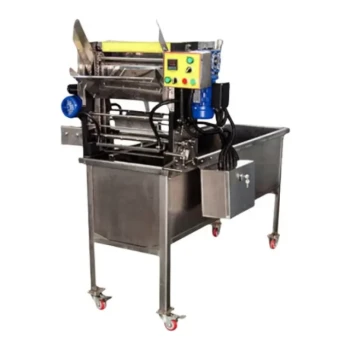
For medium and larger commercial operations, electric extractors generally provide greater capacity and efficiency than manual extractors. The correct choice depends on batch size, extraction frequency, available power, labor, and the volume expected during peak harvest.
Filling Automation Improves Consistency
Manual bottling becomes difficult to control as production volume increases. Automated filling machinery can improve filling precision, reduce repetitive labor, and support more consistent packaging across wholesale or export orders.
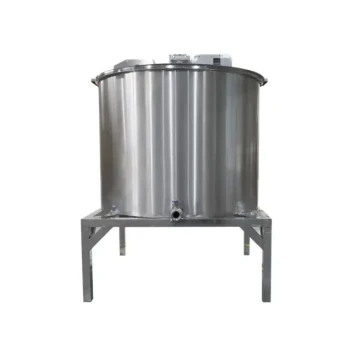
Filling equipment should be evaluated alongside tank capacity, filtration, transfer systems, container formats, labeling, and cleaning procedures. A high-speed filler cannot compensate for insufficient upstream processing or storage capacity.
Hygiene and Quality Requirements Matter
Commercial honey-processing lines must support clean handling and consistent product quality. Automated filling can help reduce unnecessary handling, but equipment selection must also consider food-contact materials, cleanability, maintenance access, and the buyer’s applicable quality requirements.
For distributors, offering compatible extraction, filling, and packaging components as a coordinated package creates more value than supplying isolated machines that may not integrate effectively.
Designing a Commercial Equipment Configuration
Build the System Around the Bottleneck
The most expensive limitation is often the slowest stage in the workflow. An apiary may have enough extractor capacity but insufficient filling capacity, or it may process honey efficiently while losing time to inconsistent hive assembly.
A practical equipment assessment should map the full sequence from hive component production and colony management through extraction, storage, filling, and dispatch.
Use Modular Equipment for Expansion
Operations in the 100–199 hive range may benefit from modular machinery that can be expanded as colony numbers and customer orders increase. This approach reduces the risk of purchasing an oversized system before demand justifies it.
Modularity should include compatible dimensions, electrical requirements, replacement parts, and control systems. Equipment that cannot integrate with later additions may limit the value of an initial investment.
Treat Sourcing as Part of the Solution
Commercial buyers often need more than a machine. They may also require frames, hive components, extractors, filling equipment, packaging machinery, spare parts, technical guidance, and rapid delivery during the harvest season.
A one-stop supplier or distributor can reduce procurement complexity by coordinating the product portfolio, confirming compatibility, and providing responsive after-sales support. This is especially valuable when downtime affects hundreds of colonies or an urgent customer shipment.
Understanding the Trade-offs
Automation Requires More Capital
Automated hive-making and honey-processing machinery requires a greater initial investment than manual tools. The financial case depends on utilization, labor savings, throughput, product demand, and the number of harvest cycles over which the equipment will operate.
A machine may be technically capable of high output but financially unsuitable if the apiary cannot use that capacity consistently.
Higher Capacity Can Create Imbalance
Installing a large extractor without sufficient tanks, pumps, filling equipment, storage, or labor can move the bottleneck rather than eliminate it. Capacity should be balanced across connected stages.
Buyers should compare the expected output of each major component and identify where queues, waiting time, or manual rework are likely to occur.
Maintenance and Training Are Essential
Automated equipment introduces motors, controls, sensors, and specialized components that require preventive maintenance and operator training. Poor maintenance can reduce availability during the most commercially important part of the year.
Suppliers should provide clear operating documentation, spare-parts access, service responsiveness, and realistic information about installation and operator requirements.
Standardization Can Reduce Flexibility
Standardized hive components improve interchangeability, but they may not suit every local hive design, material, or management method. Buyers should confirm dimensions and compatibility before ordering machinery.
This is a critical point for distributors serving multiple markets: a machine optimized for one hive format may require tooling changes or may be unsuitable for another.
Making the Right Choice for Your Goal
Equipment selection should connect the apiary’s current scale with its expected production and distribution requirements.
- If your primary focus is operating 100–199 hives: Prioritize standardized hive-making equipment, an appropriately sized electric extractor, and modular filling machinery that addresses peak-season labor bottlenecks.
- If your primary focus is rapid business expansion: Choose scalable equipment with compatible dimensions, upgrade paths, accessible spare parts, and sufficient capacity for projected hive growth.
- If your primary focus is wholesale or export supply: Emphasize hygienic processing, precise filling, consistent packaging, reliable production scheduling, and equipment support that protects delivery commitments.
- If your primary focus is distribution or resale: Offer a coordinated portfolio of hive-making, extraction, filling, packaging, monitoring, and replacement components supported by fast response and dependable fulfillment.
- If your primary focus is minimizing capital risk: Match automation to the actual bottleneck and utilization rate instead of purchasing the highest-capacity system available.
The right machinery configuration turns hive scale from a labor burden into a controllable, standardized, and commercially reliable production system.
Summary Table:
| Hive Scale | Recommended Equipment | Key Considerations |
|---|---|---|
| Small (<10) | Manual tools | Low cost, simple maintenance |
| Commercial (100-199) | Automated hive-making, electric extractors, modular filling | Standardization, peak season bottlenecks |
| Large (300+) | High-capacity integrated systems | Scalability, balanced workflow, hygiene |
Ready to scale your apiary with the right equipment? Contact HONESTBEE today (#ContactForm) for a tailored solution that boosts efficiency and profitability. As a one-stop supplier for commercial apiaries and distributors, we offer a comprehensive range of beekeeping machinery, from hive-making to honey-processing, with OEM/ODM support, fast delivery, and dedicated service. Let's maximize your operational potential!
Related Products
- Fully Automatic Honey Filling Packaging Machine for Processing Line
- Automatic Honey Filling and Filtering Machine for Beekeeping Bottle Filling
- Stainless Steel Manual 8 Frame Radial Honey Extractor Machine for Beehives
- Automatic High-Speed Bee Hive Box Stapling Machine
- Manual Honey Filling Machine Bottling Machine for Honey
People Also Ask
- Why are fully automatic honey filling and packaging lines essential? Boost Your Honey's Market Value and Quality
- What is a fully-automatic honey filler? Streamline Your Production with High-Precision Automation
- How do automated honey filling and packaging machines affect profitability? Boost Margins with HONESTBEE Technology
- How do automated honey filling and packaging machines contribute to the market value of honey products? Maximize Your ROI
- How do industrial-grade automated honey filling and packaging machines mitigate the risk of physical contamination?