Honey bee queen breeding requires a specialized relationship model, not a direct livestock template. The key differences are that drones are haploid, queens are typically polyandrous, and selection is often made on future matings before the candidate queen’s colony performance is known. As a result, commercial breeders must calculate relationships among queens, drones, worker subfamilies, and colonies differently from conventional cattle, sheep, or pig programs.
Core takeaway: Honey bee genetic evaluation must account for identical paternal gametes from each drone, unknown or mixed paternity caused by polyandry, and colony-level selection. These factors change the relationship matrix, the Mendelian variance matrix, and the breeding objective used to calculate EBVs.
Why Livestock Relationship Models Do Not Transfer Directly
Traditional livestock assume diploid sires
In conventional livestock, both the sire and dam are diploid. A sire produces genetically different sperm cells through meiosis, so full siblings receive different paternal gametes on average.
Standard relationship models therefore treat Mendelian sampling among full siblings as largely independent, apart from their expected shared ancestry.
Honey bee drones are haploid
A drone develops from an unfertilized egg and carries one set of chromosomes. Its sperm cells carry the same paternal genome because the drone does not undergo the usual diploid meiosis that creates alternative paternal gametes.
Workers or queens fathered by the same drone can therefore share an identical paternal gamete across the genome. This is substantially different from full-sib relationships in traditional livestock.
Female offspring share a common biological origin
Worker bees and queens both develop from fertilized, diploid eggs. Their caste difference is primarily determined by larval nutrition and rearing conditions, including intensive royal jelly provisioning in a queen cell.
For genetic evaluation, this means a virgin queen and her worker sisters can be viewed as female offspring from the same maternal line, while their paternal contribution depends on which drone fertilized each egg.
How Haploid Drones Change Genetic Relationships
Full sisters can have stronger paternal identity
When one drone mates with a queen, all offspring fathered by that drone receive the same paternal genome. These offspring form a patriline, or paternal subfamily, within the colony.
Two queens or workers from that subfamily share more than the ordinary livestock interpretation of paternal inheritance would suggest. Their maternal relationship still depends on the dam, but their paternal gamete is identical.
The Mendelian variance matrix is different
In animal breeding, the Mendelian sampling term represents the random genetic deviation an offspring receives from its parents. For ordinary full siblings, these deviations are generally modeled as independent after accounting for parental breeding values.
In honey bees, full siblings sharing one drone can have non-zero covariance between their Mendelian sampling terms because they received the same paternal gamete. Consequently, the off-diagonal elements of the Mendelian variance, or D, matrix, cannot simply be set to zero for these relatives.
Relationship coefficients need biological interpretation
A pedigree record that says two individuals share a dam but omits the drone can be misleading. Their actual genetic relationship depends on whether they belong to the same paternal subfamily.
For commercial breeding databases, the pedigree should therefore distinguish:
- Dam or queen identity
- Drone identity, where known
- Drone-producing queen or maternal drone family
- Mating group or apiary
- Colony and worker subfamily membership
This information improves the relationship matrix and reduces error in EBVs.
How Polyandry Complicates Paternity
Queens mate with multiple drones
A queen normally mates with multiple drones during mating flights. Her colony therefore contains several worker subfamilies, each associated with a different drone.
This is called polyandry, and it means that the colony is not genetically equivalent to a single-sire livestock family.
Individual fathers are often unknown
In open mating, the identity of the specific drone that fertilized an egg is usually unavailable. A breeder may know the queen that produced the drones, but not which individual drone supplied the sperm.
The genetic model must therefore represent mixed semen and related drone families, rather than assigning one known male parent to every offspring.
Drone-producing queens become important pedigree units
Because a drone is haploid and its genome comes from its mother, the queen that produced the drone population is a critical source of pedigree information.
When individual drone identity is unavailable, the model may need to track the drone-producing queen line or the mating population as a group. Controlled mating systems, isolated mating yards, and instrumental insemination can improve the accuracy of these assignments.
Why Selection Targets Matings and Colonies
Selection happens before performance is fully known
A virgin queen must mate early in life. At that point, her future colony has not yet produced complete records for honey yield, temperament, survival, or disease resistance.
The breeder cannot always wait for direct performance data before deciding which queen should be mated or released.
The mating decision becomes the selection unit
Commercial breeders therefore select a mating combination, not only an individual queen. The expected genetic merit of a future queen depends on the breeding values of both parental lines and on the expected Mendelian contribution from their mating.
In simplified form, the target breeding value reflects:
- One-half of the breeding value of the maternal line
- One-half of the breeding value of the paternal or drone line
- The appropriate shared Mendelian sampling contribution
The resulting target is intended to represent the genetic merit of the future queen’s colony, rather than merely the merit of the virgin queen as an isolated individual.
Phenotypes are usually recorded at colony level
Honey production, overwintering, swarming tendency, docility, and disease resistance are generally measured from the colony, not from a single queen or worker.
A colony phenotype is influenced by the queen, multiple drone families, worker composition, environment, management, and sometimes the surrounding apiary. EBV calculations must separate these effects as far as the data allow.
What This Means for Commercial Breeding Operations
Pedigree quality becomes a production asset
Accurate pedigree tracking is not an administrative detail. It directly affects the reliability of relationship calculations and the ability to identify superior queen and drone lines.
Useful records include queen origin, graft source, mating method, drone-line identity, mating location, colony environment, and performance measurements.
Controlled mating improves genetic control
Drone-exclusion systems, isolated mating yards, mating nuclei, and instrumental insemination can reduce uncertainty about paternal origin.
These tools do not eliminate the need for specialized models, but they make the assumed genetic relationships more accurate and improve the repeatability of selection decisions.
Queen-rearing equipment supports, but does not replace, genetic evaluation
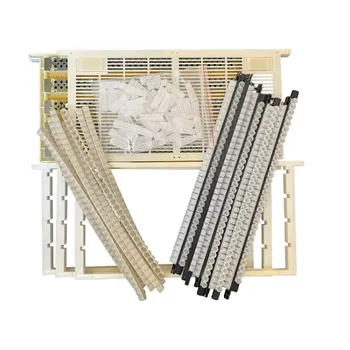
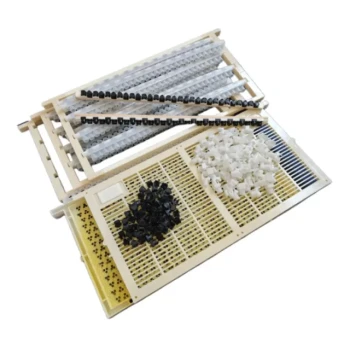
Grafting tools, artificial cell cups, cell-builder colonies, and correctly oriented queen cells enable controlled production of queens from selected larvae.
They help standardize queen production and preserve elite maternal lines, but the resulting genetic gain still depends on mating control, pedigree information, colony testing, and appropriate EBV calculations.
Understanding the Trade-offs
More precise models require more detailed records
A honey bee relationship model can reflect haploid drones, paternal subfamilies, and polyandry, but only when the breeding program collects sufficient mating and pedigree information.
If paternity is unknown, the model must use assumptions about drone populations or drone-producing queen families. Those assumptions introduce uncertainty.
Open mating is practical but less predictable
Open mating is often economical and can preserve genetic diversity. However, it provides limited control over the paternal contribution and makes individual-parent relationships harder to establish.
This can reduce EBV accuracy and make selection response less predictable, particularly for high-value nucleus or breeder colonies.
Colony performance is not purely genetic
A strong colony record does not automatically prove that its queen has superior genetics. Nutrition, weather, disease pressure, beekeeper management, colony size, and apiary location can all influence the phenotype.
Performance comparisons should therefore use standardized environments and appropriate contemporary-group or management adjustments where possible.
Aggressive selection can narrow diversity
Selecting heavily for honey yield, docility, or another commercial trait can increase inbreeding or reduce useful genetic variation if the breeding population is small.
Commercial programs should balance genetic gain with colony vitality, disease resistance, reproductive fitness, and long-term population diversity.
Making the Right Choice for Your Goal
Use the breeding system and data structure that match the level of genetic control your operation requires.
- If your primary focus is accurate EBVs: Record queen, drone-line, mating, colony, and worker-subfamily information, and use a model that includes non-zero Mendelian covariance among offspring sharing a drone.
- If your primary focus is predictable queen production: Combine selected maternal lines with controlled mating yards, mating nuclei, or instrumental insemination to reduce uncertainty about paternal origin.
- If your primary focus is rapid commercial supply: Use standardized grafting and cell-builder systems, but recognize that efficient queen production does not by itself provide accurate genetic evaluation.
- If your primary focus is long-term genetic gain: Evaluate colonies under comparable conditions and balance productivity traits with docility, disease resistance, survival, and genetic diversity.
- If your primary focus is operational simplicity: Open mating may be suitable, but EBVs should be interpreted with greater uncertainty because individual paternity is usually unknown.
A commercial queen program gains the most when reproductive biology, mating control, pedigree data, and colony-level performance evaluation are designed as one integrated system.
Summary Table:
| Aspect | Traditional Livestock | Honey Bees |
|---|---|---|
| Ploidy of sires | Diploid | Haploid (drones) |
| Mating system | Typically monogamous or controlled | Polyandrous (queen mates with multiple drones) |
| Paternal gametes | Genetically diverse | Identical within a patriline |
| Relationship matrix | Standard additive relationship | Must account for identical paternal gametes and mixed paternity |
| Mendelian sampling covariance | Independent among full sibs | Non-zero covariance for offspring sharing a drone |
| Phenotype unit | Individual animal | Colony (group of individuals) |
| Selection unit | Individual | Mating combination and colony |
Ready to elevate your queen breeding program with precise genetic evaluation? HONESTBEE offers premium bee breeding tools and equipment to support your success. From grafting tools to queen cages, we provide the essentials for controlled mating and colony management. Our one-stop sourcing, rapid delivery, and expert support help you achieve your breeding goals. Contact us today for a tailored solution.
Related Products
- Honey Bee Lifecycle Model: A Detailed Honeycomb Display of Bee Development
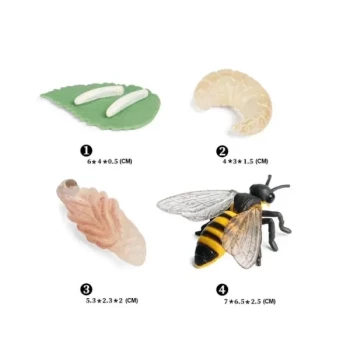
- Honey Bee Life Cycle Model 4 Stage Educational Set for Kids Learning
- Automatic Heat Preservation 6 Frame Pro Nuc Box for Honey Bee Queen Mating
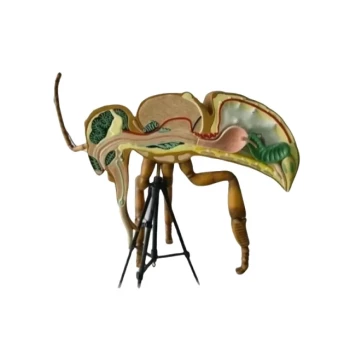
- HONESTBEE Anatomy Bee Model Detailed Anatomical Display for Education and Study
- Twin Queen Styrofoam Honey Bee Nucs Mating and Breeding Box
People Also Ask
- Are honey bees good to have around? The Essential Role and Ecological Impact of Bees
- Why does standardized equipment lower honey bee winter loss? Master Large-Scale Beekeeping Success
- Do honey bees leave their hives? Understanding the Critical Role of Swarming
- What activities require a lot of energy for honey bees? Understanding the Colony's Energy Budget
- How do honey bees develop from egg to adult? The Complete 4-Stage Metamorphosis Guide