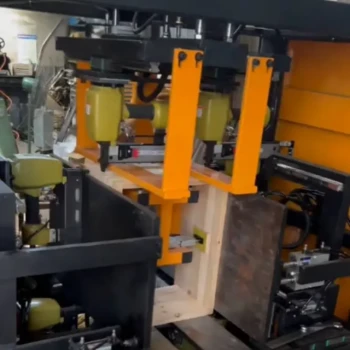
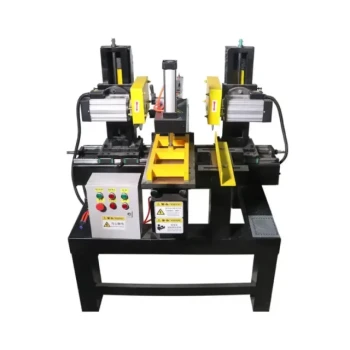
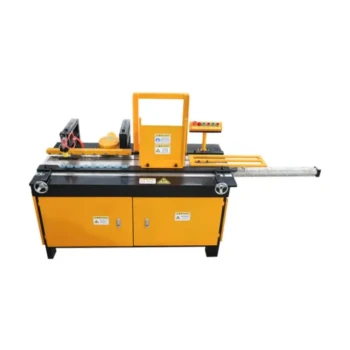
Industrial-grade beehive manufacturing machinery serves as the critical foundation for large-scale apiculture by enabling the rapid production of standardized, durable hives that align with a forest's specific carrying capacity. This technology allows operators to deploy infrastructure at the speed and volume necessary to accommodate tens of thousands of colonies, converting raw nectar potential into maximized yields per unit area.
Core Takeaway: Efficient large-scale honey production is not just about biology; it is a logistics challenge. Industrial hive-making machinery solves this by ensuring structural uniformity, which optimizes bee health, simplifies maintenance, and enables the rapid scaling required to fully exploit an environment's natural resources.
The Mechanics of Scalability
Matching Forest Carrying Capacity
The primary function of this machinery is to synchronize infrastructure supply with ecological potential. To achieve high yields, operations must accommodate tens of thousands of colonies based on the "carrying capacity" of the forest.
Industrial machinery allows for the rapid supply of these units, ensuring that the number of hives never bottlenecks the harvest potential of the land.
Standardizing for Durability
Large-scale operations expose equipment to diverse and often harsh forest environments.
Machine-manufactured hives are built to a standard of durability and applicability that ensures they withstand these conditions longer than variable, hand-built alternatives. This longevity turns the hive into a stable, long-term asset rather than a consumable resource.
Utilizing Sustainable Resources
These machines are designed to process local timber or sustainable materials efficiently.
By leveraging local resources for mass production, projects can achieve rapid scaling and systematic layouts in regions undergoing afforestation or resource expansion without relying on complex external supply chains.
Enhancing Yields Through Precision
Optimizing the Internal Microclimate
Honey quality depends on the bees' ability to evaporate moisture, reducing water content to approximately 20 percent.
Professional hive-making machines create structures with high-precision ventilation and thermal insulation. This creates an ideal environment for bees to process nectar efficiently, directly impacting the quality and stability of the final product.
Protecting Chemical Integrity
The physical structure of the hive acts as a barrier against external contaminants.
Precision-manufactured hives feature tight seals and accurate designs that protect bee products from environmental pollution during collection. This secures the physical and chemical indicators of the honey, ensuring it remains pure at the source.
Controlling Forage and Bioactivity
Standardized hives assist beekeepers in precise forage management and flowering period control.
By managing the hive environment accurately, beekeepers can better direct foraging behaviors, reducing the mixing of non-target pollens. This preserves the specific antioxidant and bio-active benefits associated with premium floral sources like Manuka or Tualang.
Operational Efficiency and Research
The Value of Interchangeability
In an apiary of ten thousand hives, custom-fitted parts are a logistical nightmare.
Industrial machinery ensures high-precision component consistency, meaning parts are interchangeable across the entire operation. This drastically simplifies daily maintenance and component replacement, reducing labor costs and downtime.
Eliminating Variables for Research
For sustainable urban beekeeping and scientific research, hardware variables can skew data.
Standardized processing eliminates variables caused by hardware differences. This makes quantitative assessments of colony density and urban carrying capacity scientifically comparable, providing a reliable baseline for data analysis.
Understanding the Trade-offs
The Cost of Inconsistency
While the initial investment in industrial machinery is significant, the alternative—manual or non-standard construction—introduces "hidden" costs that undermine large projects.
Without the structural consistency provided by industrial machines, hives may suffer from variable insulation or poor ventilation. This leads to inconsistent colony health and unpredictable honey yields, making it impossible to accurately forecast production or manage contracts.
Hardware Limitations
Reliance on standardized machinery means committing to a specific ecosystem of parts.
While this ensures efficiency, it requires that the operator maintain the integrity of the specific design standards chosen at the outset. Mixing machine-made components with non-standard parts can negate the benefits of interchangeability and thermal seal.
Making the Right Choice for Your Goal
- If your primary focus is Commercial Yield: Prioritize machinery that guarantees component interchangeability, as this reduces maintenance overhead and ensures high yields per unit area through consistent insulation.
- If your primary focus is Scientific Research: Select machinery that delivers absolute structural uniformity to eliminate hardware variables, ensuring your data on colony density and carrying capacity is statistically valid.
- If your primary focus is Agritourism or Education: Utilize machinery capable of producing specialized observation hives with transparent windows to reduce infrastructure costs while supporting educational programs.
Ultimately, industrial hive manufacturing transforms beekeeping from a variable craft into a predictable, scalable science.
Summary Table:
| Key Feature | Benefit for Large-Scale Operations | Impact on Honey Quality |
|---|---|---|
| Structural Uniformity | Enables interchangeability and simplifies maintenance for 10,000+ colonies. | Ensures consistent microclimates for optimal nectar evaporation. |
| High-Precision Seals | Reduces labor costs and downtime through easy part replacement. | Protects honey from environmental contaminants and pollution. |
| Rapid Scaling Capacity | Synchronizes infrastructure supply with the forest's nectar carrying capacity. | Maintains stable bioactive indicators by optimizing hive environments. |
| Sustainable Processing | Efficiently utilizes local timber to reduce supply chain dependency. | Secures pure, source-specific antioxidant properties. |
Scale Your Honey Production with HONESTBEE Professional Solutions
Transition from variable craft to predictable science with HONESTBEE. As a premier partner for commercial apiaries and distributors, we provide the specialized hardware and industrial-grade machinery needed to build robust honey production infrastructure.
Our value to your business includes:
- Comprehensive Wholesale Offering: A full spectrum of beekeeping tools, from hive-making machinery to honey-filling systems.
- Precision Infrastructure: Standardized hardware that ensures durability, interchangeability, and maximized colony health.
- Industry Expertise: Essential consumables and honey-themed cultural merchandise to diversify your portfolio.
Ready to maximize your yield per unit area and streamline your maintenance logistics? Contact our experts today to discuss how our machinery and equipment can drive your large-scale success.
References
- Ersin Güngör, Gökhan Şen. SELECTING SUITABLE FOREST AREAS FOR HONEY PRODUCTION USING THE AHP: A CASE STUDY IN TURKEY. DOI: 10.1590/01047760201824012511
This article is also based on technical information from HonestBee Knowledge Base .
Related Products
- High-Efficiency Pneumatic Bee Hive Making Machine for Rapid Box Assembly
- HONESTBEE Top Bar & Bottom Bar Forming Machine | Bee Frame Machine
- Automatic High-Speed Bee Hive Box Stapling Machine
- Beehive Machine Double End Saw for Precision Hive Component Manufacturing
- Mini Desktop Bee Hive Frame Forming Making Machine
People Also Ask
- How does the introduction of professional beehive-making machinery benefit sustainable beekeeping? Scale Your Apiary
- Why is specialized beehive-making machinery critical for low-defense breeding? Enhance Selection with Precision Tools
- How does the introduction of specialized beehive making machinery contribute to increasing the scale of regional beekeeping industries?
- What is the importance of specialized beehive making machinery in a circular bio-economy? Build Local Sustainability
- Why is specialized beehive-making machinery essential? Scale Your Apiary with Precision Industrial Standards