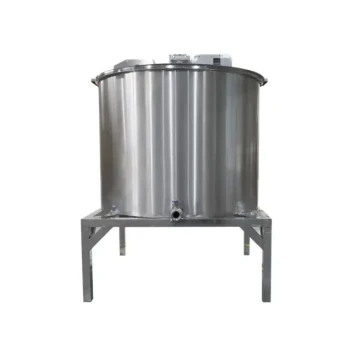
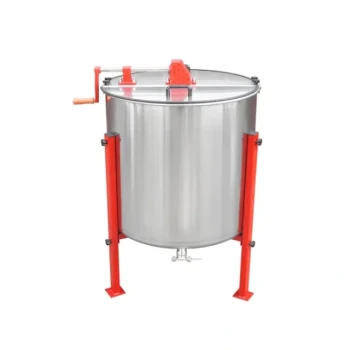
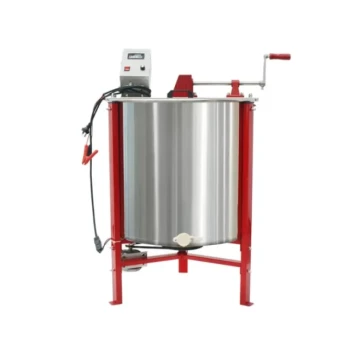
Professional honey extraction and processing machinery is the vital link that transforms raw conservation efforts into economically viable, self-sustaining enterprises. By ensuring honey meets rigorous commercial-grade standards, this equipment generates the critical income needed to maintain wildlife deterrents, such as beehive fences, and fund long-term ecological projects. This transition from subsistence activity to a professional industry provides the financial foundation for community-based conservation to thrive without relying solely on external aid.
The sustainability of community conservation relies on an "economic loop" where professional machinery converts honey into high-value commercial goods. This profit motive incentivizes local populations to protect bee habitats and wildlife corridors, ensuring both ecological and financial stability.
Converting Conservation Into Commercial Value
Meeting Global Market Standards
Professional extraction and filtration units are essential for removing impurities and ensuring honey meets the hygiene and quality standards required by international distributors. When honey is processed to a commercial grade, it commands a significantly higher price point than raw, unrefined products.
Funding Wildlife Protection
In many regions, "beehive fences" are used to reduce human-wildlife conflict by naturally deterring large animals like elephants. The income generated from the high-quality byproduct honey produced by these fences provides the necessary funds for their upkeep and the expansion of the conservation project.
Creating Long-Term Economic Incentives
Specialized equipment provides a tangible reason for local communities to remain engaged in conservation. When farmers see a direct correlation between healthy ecosystems and stable financial returns, their motivation to protect indigenous bee species and their environments increases dramatically.
Technical Superiority and Resource Preservation
Preserving Colony Productivity
Industrial-grade centrifugal extractors separate honey without damaging the wax structure of the combs. By returning intact combs to the hive, bee colonies save the immense energy usually required to rebuild nests, allowing them to resume foraging and pollination immediately.
Protecting Bioactive Components
Modern machinery utilizes physical centrifugal methods that minimize exposure to heat and oxidation. This preserves the honey's natural enzymes, polyphenols, and vitamins, ensuring the final product retains the antioxidant and antibacterial characteristics that premium B2B buyers demand.
Increasing Industrialization Levels
The use of automated filling and processing lines reduces the labor cycle and lowers the overhead costs of large-scale colony breeding. This industrial foundation makes ecological compensation mechanisms, such as bee-facilitated landscaping, both feasible and profitable.
Understanding the Trade-offs
The Barrier of Initial Investment
While professional machinery ensures long-term sustainability, the high upfront cost can be a significant hurdle for community projects. Distributors play a critical role here by offering one-stop sourcing and efficient fulfillment to help these projects scale their infrastructure correctly from the start.
Maintenance and Technical Training
Advanced equipment requires a level of technical expertise to maintain, particularly in remote conservation areas. Success depends on access to dedicated customer service and rapid response times for parts and repairs to prevent production downtime during peak harvest seasons.
Balancing Volume and Quality
As projects scale, there is a risk of prioritizing volume over the delicate phytochemical profile of the honey. Utilizing premium trading services and expert industry knowledge is essential to ensure that the machinery is calibrated to protect the product's medicinal and nutritional value.
Making the Right Choice for Your Goal
As a distributor or wholesaler, your role is to provide the infrastructure that makes conservation-based beekeeping a viable business model.
- If your primary focus is rapid market entry for communities: Prioritize high-efficiency centrifugal extractors that allow for immediate, high-volume processing without compromising comb integrity.
- If your primary focus is maximizing product value: Invest in backend processing and automated filling machines that ensure hygiene standards and professional packaging for the premium retail sector.
- If your primary focus is supply chain reliability: Seek partners who offer a full-spectrum product portfolio and ultra-fast delivery to ensure conservation projects are never left without critical components.
By providing the right technical tools, you empower local communities to turn ecological preservation into a robust and profitable industry.
Summary Table:
| Feature | Impact on Conservation Projects | Value for Distributors & Wholesalers |
|---|---|---|
| Centrifugal Extraction | Preserves wax combs; bees resume foraging faster | Ensures high-volume, consistent honey supply |
| Advanced Filtration | Meets international hygiene & quality standards | Commands premium pricing and higher margins |
| Automated Processing | Lowers labor costs; scales ecological impact | Reliable product quality for large-scale retail |
| Hive-Making Machinery | Supports beehive fences for wildlife protection | Reduces equipment costs through one-stop sourcing |
| Efficient Fulfillment | Prevents downtime during peak harvest seasons | Guarantees rapid delivery and supply reliability |
Elevate Your Apiary Supply Business with HONESTBEE
Empower your clients and scale your operations with the industry's most reliable partner. HONESTBEE caters specifically to commercial apiaries and B2B distributors, offering a comprehensive one-stop sourcing experience.
From specialized hive-making and honey-filling machinery to a full spectrum of beekeeping tools and essential consumables, our portfolio is engineered to maximize your profit margins. We provide deep professional expertise, OEM/ODM support, and ultra-fast delivery to ensure your orders are fulfilled with peak efficiency.
Ready to transform ecological initiatives into robust commercial success? Contact our expert team today to discover how our premium trading services and dedicated customer support can grow your business!
References
- Lucy King, Iain Douglas‐Hamilton. Impact of drought and development on the effectiveness of beehive fences as elephant deterrents over 9 years in Kenya. DOI: 10.1111/csp2.13242
This article is also based on technical information from HonestBee Knowledge Base .
Related Products
- Honey Concentrating and Filtering Dehumidifier Machine 2T Capacity for Honey
- Stainless Steel Manual 8 Frame Radial Honey Extractor Machine for Beehives
- Fully Automatic Honey Filling Packaging Machine for Processing Line
- Double Wall Honey Heating Stirring Homogenizer Mixing Machine with Various Capacity
- 32 Frame Commercial Electric Honey Extractor for Beekeeping and Honey Production
People Also Ask
- What heating methods can be used with the honey concentrating equipment? Electric vs. Boiler Options
- How does honey filtration and processing machinery transform raw honey? Scale Your Production for Global Markets
- What maintenance should be performed when the honey concentrating equipment is not in use? Key Safety & Care Tips
- What electrical safety precaution is necessary when operating the honey concentrating equipment? Essential Grounding Tips
- What are the main functions of the honey concentrating equipment? Essential Machinery for Commercial Quality