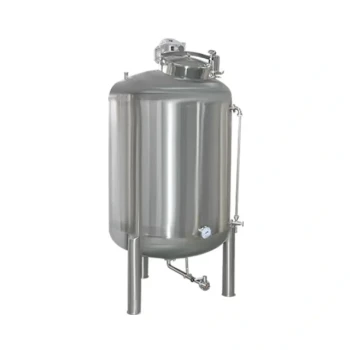
Honey concentrating equipment performs three essential functions: melting crystallization, filtration sterilization, and moisture concentration. Collectively, these processes ensure that raw honey meets rigorous quality standards and possesses the stability necessary for long-term commercial preservation.
By integrating thermal treatment and filtration, this equipment transforms raw harvest into shelf-stable, commercial-grade honey. It creates a product that is free of impurities, resistant to fermentation, and visually appealing to consumers.
Core Functional Capabilities
Melting and Decrystallization
Raw honey naturally tends to crystallize, which can affect its visual appeal and texture. Melting crystallization uses controlled heat to dissolve these sugar crystals, returning the honey to a smooth, liquid state.
This process is critical for standardization, ensuring every batch has a consistent viscosity. It prepares the honey for packaging by preventing immediate re-crystallization, which is often undesirable in commercial retail products.
Filtration and Sterilization
Once the honey is fluid, the equipment performs filtration sterilization. This step mechanically removes physical impurities such as wax cappings, bee parts, and other debris that may remain after extraction.
Beyond visible particles, this process is designed to reduce yeast activity. By filtering out potential contaminants, the equipment ensures the honey adheres to strict food safety and hygiene standards required for pharmaceutical and food industries.
Moisture Concentration
The defining function of this machinery is concentration, also known as moisture removal. Excess water in honey can lead to fermentation and spoilage.
The equipment reduces water content to a safe level, inhibiting the growth of yeast and bacteria. This extends the shelf life significantly, allowing for long-term storage without compromising the integrity of the product.
Homogenization and Blending
Supplementary to the core functions, these machines often facilitate universal mixing and blending. This ensures a uniform distribution of flavor and color throughout a large batch.
This capability allows producers to blend different harvests to achieve a consistent product profile. It eliminates stratification, ensuring the first bottle filled is identical in quality to the last.
Understanding the Trade-offs
Balancing Heat and Nutrition
While heating is necessary for melting crystals and reducing moisture, it presents a significant processing trade-off. Excessive heat can destroy heat-sensitive nutrients, such as natural enzymes (like diastase) that give honey its nutritional value.
Precision vs. Speed
High-quality concentrating equipment is designed to minimize this risk through precise temperature controls. However, operators must balance the speed of processing with the need to preserve the honey's natural biological properties. Over-processing to achieve faster concentration can result in a loss of sensory quality and nutritional benefits.
Making the Right Choice for Your Goal
When selecting or operating honey concentrating equipment, your specific production goals should dictate your approach.
- If your primary focus is Shelf Life: Prioritize the concentration and moisture removal settings to ensure water content is low enough to prevent fermentation completely.
- If your primary focus is Product Appearance: Focus on the filtration and decrystallization capabilities to ensure a clear, liquid product that appeals to retail consumers.
- If your primary focus is Nutritional Value: Invest in equipment with advanced temperature regulation to process honey gently, preserving enzymes while still achieving stability.
Ultimately, the right equipment allows you to transition from traditional beekeeping to modern industrial operations without sacrificing the natural quality of the honey.
Summary Table:
| Function | Core Process | Key Benefit |
|---|---|---|
| Decrystallization | Controlled Thermal Melting | Returns honey to a smooth liquid state for standardization. |
| Filtration | Physical Impurity Removal | Eliminates wax, debris, and yeast to meet hygiene standards. |
| Concentration | Moisture Reduction | Lowers water content to inhibit fermentation and extend shelf life. |
| Homogenization | Mixing & Blending | Ensures uniform flavor, color, and viscosity across large batches. |
Scale Your Honey Production with HONESTBEE
At HONESTBEE, we understand that transitioning from traditional beekeeping to industrial excellence requires the right technology. We provide commercial apiaries and distributors with high-performance honey concentrating equipment, honey-filling machines, and specialized hardware designed to preserve nutritional value while maximizing shelf life.
Whether you are looking for a complete machinery overhaul or essential industry consumables, our comprehensive wholesale offering is tailored to your success. Contact us today to optimize your honey processing workflow!
Related Products
- Honey Concentrating Vacuum Heating Thickening Machine Dehumidifier for Honey
- Honey Concentrating and Filtering Dehumidifier Machine 2T Capacity for Honey
- Small Honey Filling Machine Sachet Packing Equipment Single Nozzle
- Double Nozzle Small Honey Filling Machine Honey Sachet Packing Packaging Equipment
- Electric Double Wall Honey Filtering Machine Purifier Equipment for Honey Processing Plant
People Also Ask
- What should be observed during the feeding process of the honey concentrator? Master Honey Processing Efficiency
- What are the advantages of using a honey concentrator machine in apiculture? Boost Quality & Shelf Life
- What are the benefits of a honey concentrator? Elevate Your Honey Quality and Market Value
- What electrical safety precaution is necessary when operating the honey concentrating equipment? Essential Grounding Tips
- What maintenance should be performed when the honey concentrating equipment is not in use? Key Safety & Care Tips