Worker bee hind legs are the biological template for pollen-harvesting equipment. The hind leg’s corbicula, hair combs, and pollen press allow a forager to compress pollen into stable pellets and carry them back to the hive. Commercial pollen traps use this predictable leg anatomy and entry behavior to dislodge those pellets as bees pass through a calibrated screen, collecting the pollen in a drawer while allowing the bee to enter the hive.
The central design principle is controlled interference: a pollen trap must contact and remove the pollen load without trapping, injuring, or seriously disrupting the returning worker bee.
How Hind-Leg Anatomy Enables Pollen Collection
The corbicula acts as a transport basket
The corbicula, commonly called the pollen basket, is a concave area on the outer surface of each worker bee’s hind tibia. Fringe hairs and a supporting bristle help hold a compact pollen pellet in place during flight.
The basket is not a separate container. It is an anatomical surface that depends on the surrounding hairs, pellet density, and the bee’s leg movement to retain the load.
Hair combs gather and organize pollen
Worker bees use stiff, comb-like hairs on their legs to remove pollen from their bodies and transfer it toward the hind legs. These structures function like grooming brushes, concentrating loose grains into manageable masses.
Pollen may initially adhere to the bee’s branched body hairs, which can retain particles through physical and electrostatic effects. The legs then comb and consolidate that material.
The pollen press compresses the load
Near the hind-leg joint, the pollen press helps compress pollen into a denser pellet. Nectar or regurgitated fluid may help bind the grains, making the load more stable during the return flight.
This compression is important for equipment design: the trap is generally removing a firmly packed pellet, not loose pollen dust.
How Equipment Uses This Anatomy
The hive entrance is the natural harvesting point
Returning foragers must pass through the hive entrance, making it the most practical location for a pollen trap. A trap installed at this point can intercept pollen loads without requiring changes to the bees’ collection behavior.
The equipment typically combines an entrance passage, a perforated or grid section, and a collection drawer positioned below the bees’ route.
Calibrated openings dislodge the pellets
As a loaded bee passes through the screen, the openings make controlled contact with the pollen baskets. The grid is sized so the bee can navigate through while the larger pollen pellets are scraped or stripped from the hind legs.
The critical engineering balance is opening size, spacing, surface finish, and passage geometry. An opening that is too large may allow pollen to pass through; one that is too small or poorly finished may obstruct legs, wings, or the bee’s body.
The collection drawer preserves handling efficiency
Once removed, the pellets fall into a collection drawer beneath the entrance mechanism. A well-designed drawer keeps the product separate from hive debris and makes removal, cleaning, and transfer more efficient.
For commercial operations, drawer access matters as much as the scraping action. Fast removal reduces labor time and supports consistent harvesting schedules across many hives.
What Commercial Apiaries Must Optimize
Harvest efficiency versus colony nutrition
Pollen is a major protein and nutrient resource for the colony, particularly for developing brood. Trapping too aggressively or continuously can reduce the pollen available to the hive.
Commercial operators therefore need equipment and operating schedules that balance product recovery with colony health. Trap use should account for forage availability, colony strength, season, and the bees’ need to replenish stored pollen.
Bee passage and safety
The trap must allow returning workers to pass through without damaging their legs, wings, or body. Smooth materials, stable mounting, and correctly aligned openings reduce the risk of snagging or crushing.
A trap that causes congestion at the entrance can also interfere with normal traffic. Mechanical fit and bee-flow management are therefore part of harvesting performance, not merely installation details.
Product cleanliness
Because the pollen falls directly into a collection drawer, the trap’s internal layout influences product quality. The collection area should limit contact with soil, excessive hive debris, moisture, and contaminated surfaces.
Removable components and washable materials are valuable for distributors and apiaries that need repeatable sanitation procedures across a full equipment portfolio.
Standardization across hive formats
Entrance dimensions vary by hive design and equipment configuration. A trap that fits one hive style may require an adapter, alternate entrance plate, or different mounting system for another.
For wholesalers and resellers, compatibility information is commercially important. Clear specifications, replacement parts, and multiple format options reduce ordering errors and improve fulfillment efficiency.
From Bee Mechanics to Equipment Features
The equipment should work with natural bee behavior
Worker bees already return to the hive carrying pollen on their hind legs. Effective harvesting equipment uses this established route rather than forcing bees into unfamiliar handling systems.
This makes entrance traps relatively simple in principle, but precision remains essential because the device interacts directly with moving insects and delicate appendages.
Geometry determines the stripping action
The screen must contact the pollen basket at an angle and height that removes the pellet while leaving the leg free. Small changes in grid geometry can affect both collection rate and bee movement.
Equipment specifications should therefore describe more than general dimensions. Buyers should evaluate opening design, material thickness, edge smoothness, entrance alignment, and drawer placement.
Maintenance protects performance
Pollen residue can accumulate on screens and within drawers, altering the effective opening size and restricting airflow or bee passage. Regular inspection and cleaning help preserve the intended interaction between the trap and the hind-leg anatomy.
Replacement screens, drawers, fasteners, and seals are practical value-adds for commercial customers. A reliable supply of these components can be as important as the initial trap sale.
Understanding the Trade-offs
Higher recovery is not always better
A trap designed to remove nearly every pollen load may generate more product initially, but it can place greater nutritional pressure on the colony. Continuous use can also increase entrance congestion and behavioral disruption.
The best operating strategy is usually selective and monitored rather than purely maximized.
Aggressive contact increases risk
Tight openings or rough edges may improve stripping in theory but increase the possibility of catching legs or damaging wings. Equipment should remove the pellet through controlled contact, not force.
Claims about “maximum collection” should therefore be evaluated alongside bee-safety design, not considered in isolation.
Low-cost construction can raise operating costs
Inexpensive materials may deform, corrode, retain moisture, or develop rough edges. These failures can reduce collection consistency and create replacement or labor costs.
For B2B buyers, total value includes durability, cleanability, compatibility, spare-part availability, and response time—not only the initial unit price.
Propolis equipment serves a different collection mechanism
Propolis traps and flexible mats also exploit worker bee behavior, but they do not operate by stripping pollen from the corbiculae. They encourage bees to deposit resin into gaps or openings, where it can later be removed.
This distinction matters when building a product range: pollen traps are entrance-based load-removal devices, while propolis accessories are deposition and scraping systems.
Making the Right Choice for Your Goal
The most suitable equipment depends on whether the priority is product recovery, colony protection, operational scale, or supply reliability.
- If your primary focus is pollen yield: Choose a precisely calibrated entrance trap with efficient pellet removal, a clean collection drawer, and geometry matched to the target hive format.
- If your primary focus is bee safety: Prioritize smooth openings, unobstructed passage, stable mounting, and a design that removes pellets without trapping legs or wings.
- If your primary focus is commercial apiary efficiency: Select durable, easy-clean equipment with accessible drawers, standardized dimensions, and readily available replacement components.
- If your primary focus is distribution and resale: Build a full product offering around compatible traps, adapters, spare screens, drawers, and cleaning accessories, supported by accurate specifications and rapid fulfillment.
- If your primary focus is colony health: Use traps selectively and monitor forage conditions, colony strength, brood development, and stored pollen before increasing harvest intensity.
When equipment is designed around the worker bee’s hind-leg anatomy, pollen harvesting becomes a controlled, repeatable process rather than a disruptive intervention.
Summary Table:
| Aspect | Bee Anatomy | Equipment Design |
|---|---|---|
| Pollen Transport | Corbicula (pollen basket) on hind tibia holds pellet | Screen or grid strips pellet from hind legs |
| Grooming | Hair combs gather and consolidate pollen | Calibrated openings dislodge pellets |
| Compression | Pollen press compresses pollen | Trap removes firmly packed pellets |
| Entry Point | Bees return to hive through entrance | Trap mounted at hive entrance |
| Safety | Legs and wings delicate | Smooth edges and aligned openings prevent injury |
| Efficiency | Bees pass naturally through entrance | Quick drawer removal preserves harvest efficiency |
Optimize Your Pollen Harvest with HONESTBEE
At HONESTBEE, we supply commercial apiaries and distributors with a comprehensive range of beekeeping tools and machinery, including precision-engineered pollen traps that work in harmony with bee anatomy. Our equipment ensures efficient pollen collection while prioritizing colony health and safety.
Why choose HONESTBEE?
- Full-spectrum product portfolio: From pollen traps to honey-filling machines, we cover all your beekeeping needs.
- Rapid response times and dedicated customer service: We value your business and act fast.
- Deep professional expertise: Our team understands beekeeping operations.
- Ultra-fast delivery with efficient order fulfillment: Minimize downtime and keep your apiary running smoothly.
For distributors and resellers, we offer competitive profit margins, OEM/ODM support, and certifications to ensure supply reliability.
Contact us today to discuss your requirements and discover how HONESTBEE can enhance your operations.
Related Products
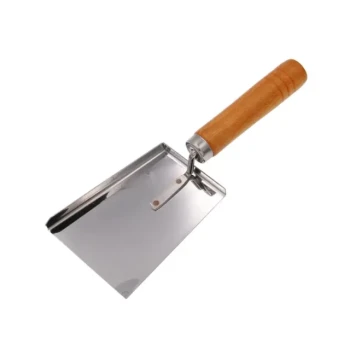
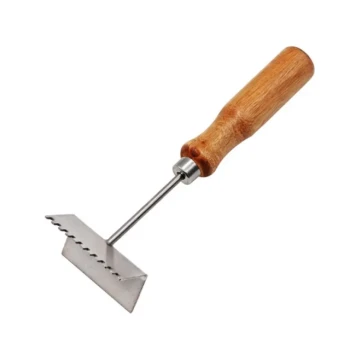
- Stainless Steel Pollen Shovel with Wooden Handle
- Heavy-Duty Ergonomic Grip Galvanized Pollen Shovel
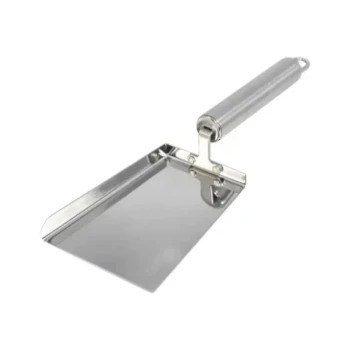
- Heavy-Duty Ergonomic Stainless Steel Pollen Shovel
- Removable Plastic Pollen Trap With Ventilated Tray for Bees Pollen Collector
- 30 cm Plastic Entrance Hole Bee Pollen Trap and Collector
People Also Ask
- How do bee pollen collection tools affect the quality of bee pollen used in functional dairy ice cream production?
- Why should commercial apiaries focus on the collection of diversified bee products? Maximize Your Hive’s Profit Potential
- How does a specialized pollen collector facilitate the harvesting of diverse bee products? Automate High-Value Yields
- What is the impact of pollen collectors and associated equipment on the cost structure of pollen production? Maximize ROI
- What is the technical significance of using specialized cutting tools for propolis? Master Precision Pollen Harvesting