Instrumental insemination equipment can improve commercial bee-pollen collection by giving breeders precise control over which drones sire their queens. Instead of relying on open mating, breeders can use semen from drones originating from high-performing pollen-collecting colonies. Controlled breeding trials cited in the reference produced F1 queens through multiple-drone instrumental insemination that achieved 2.74 times baseline daily pollen collection and 53% higher performance than free-mated queens within one generation.
Instrumental insemination improves pollen yield primarily by accelerating and concentrating genetic selection. The equipment does not increase collection by itself; it enables breeders to reproduce queens carrying traits associated with stronger pollen-foraging performance more reliably than open mating.
Why Open Mating Limits Genetic Control
Queens Mate With Uncontrolled Drones
In open mating, a queen mates with drones available in the surrounding population. Their genetic quality, pollen-foraging performance, disease resistance, and adaptation may vary considerably.
This makes it difficult to predict which traits will appear in the queen's offspring. Even when a breeder selects an excellent queen, uncontrolled drone mating can dilute the desired genetic combination.
Environmental Conditions Add Uncertainty
Natural mating is affected by weather, season, geography, and local drone availability. These factors can delay mating, restrict breeding windows, or expose the program to genetic material that the breeder did not select.
For commercial operations, this uncertainty complicates production planning and makes it harder to maintain consistent queen lines across locations.
Performance Becomes Less Consistent
Open-mated queens may produce colonies with uneven pollen-foraging behavior. Some colonies can perform well, while others require additional replacement, monitoring, or selective culling.
That variability matters to commercial bee-pollen producers because collection equipment and labor are most valuable when colonies perform consistently.
How Instrumental Insemination Improves Pollen Yield
It Selects Drones From Proven Stock
Instrumental insemination allows breeders to collect semen from drones associated with high-performing pollen-producing colonies. The queen is then inseminated with selected genetic material rather than mating randomly in the field.
This creates a direct breeding route for concentrating pollen-foraging traits within the next generation of queens.
Multiple-Drone Insemination Broadens Controlled Selection
The referenced trials used multiple-drone instrumental insemination to produce F1 queens. This approach retains controlled parentage while introducing genetic contributions from several selected drones.
The reported outcome was a 2.74-fold increase in daily pollen collection over baseline colonies, with the instrumentally inseminated queens outperforming free-mated queens by 53% in one generation.
It Accelerates Trait Consolidation
A commercial breeding program can repeatedly select queens and drones from colonies that demonstrate strong pollen collection. Instrumental insemination makes each pairing deliberate, allowing the program to consolidate desirable traits more rapidly than open mating.
The result is a shorter path from identifying a high-performing colony to distributing queens carrying the selected breeding characteristics.
It Supports More Predictable Colony Planning
Controlled parentage helps breeders produce queen lines with more consistent performance potential. That supports commercial decisions involving colony placement, pollen-trap deployment, labor scheduling, and inventory planning.
The technology is therefore valuable not only as a breeding tool, but also as a way to improve operational predictability.
What the Equipment Contributes
Precision Insemination Instruments
Specialized insemination instruments position and immobilize the queen while allowing the technician to introduce selected drone semen accurately. This reduces the uncertainty associated with natural mating and helps provide the queen with an adequate sperm reserve.
High-precision mechanical operation also helps minimize physical trauma and reduce the risk of problems caused by improper semen handling.
Micro-Syringes and Manipulation Devices
Micro-syringes enable controlled semen transfer into the queen's reproductive tract. Their accuracy is important because successful instrumental insemination depends on careful handling, dosage control, and technician skill.
For breeders serving commercial markets, consistent instrument quality is part of maintaining repeatable queen-production results.
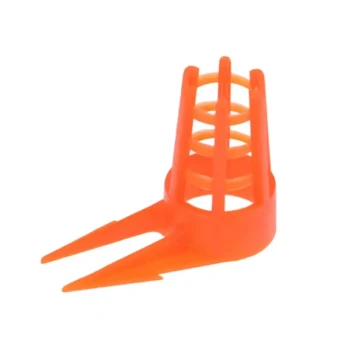
Hive Entrance Excluders
Hive entrance excluders can help maintain mating control in managed breeding environments. Used with insemination equipment and appropriate colony-management procedures, they reduce opportunities for unintended mating and support the integrity of the breeding program.
Supporting Queen-Rearing Tools
Grafting needles, cell cups, rearing frames, queen immobilization devices, and carbon dioxide narcosis apparatus support the wider breeding workflow. Instrumental insemination is most effective when these tools are integrated into a systematic queen-rearing and evaluation process.
For distributors and B2B resellers, this creates demand for a full-spectrum product portfolio rather than a single standalone instrument.
Why the Improvement Matters Commercially
Higher Output From Existing Colonies
When colonies collect more pollen per day, a commercial operation may increase output without expanding its entire apiary at the same rate. The cited trial results indicate that genetic improvement can produce a substantial yield difference within a single generation.
Actual commercial results will still depend on colony health, forage availability, pollen-trap management, and local conditions.
Greater Value From Queen Breeding
A queen line that reliably supports strong pollen collection can have value beyond the breeder's own operation. It may become a commercial product for beekeepers seeking specialized production traits.
Controlled insemination gives breeders stronger evidence that the line's performance derives from deliberate genetic selection rather than uncontrolled local mating.
Better Adaptation to Local Conditions
Instrumental insemination enables breeders to select for traits suited to particular climates and production environments. It can also support selection for disease resistance, hygienic behavior, gentleness, and other traits that protect colony productivity.
This is especially useful where natural geographic isolation is unavailable or where transporting colonies for isolated mating would add cost and risk.
More Reliable Supply and Fulfillment
Commercial breeding programs need dependable access to precision instruments, consumables, and queen-rearing equipment. Distributors that combine technical expertise, responsive service, and efficient order fulfillment can help reduce interruptions during tightly timed breeding cycles.
Rapid delivery is particularly relevant when replacement tools or consumables are needed during an active production schedule.
Understanding the Trade-offs
Equipment Does Not Guarantee Higher Yield
Instrumental insemination controls genetic pairing, but it does not independently create a high-yielding colony. Pollen production also depends on forage conditions, colony strength, queen quality, disease management, and the way collection equipment is operated.
The reported 2.74-fold and 53% improvements should therefore be understood as results from the cited controlled breeding trial, not as a universal guarantee for every apiary.
Technical Skill Is Essential
The procedure requires trained technicians who can handle queens, collect and preserve drone semen, operate micro-syringes, and manage insemination conditions precisely. Poor technique can reduce queen viability or compromise breeding outcomes.
Equipment selection should therefore include consideration of ergonomics, calibration, training support, replacement parts, and service responsiveness.
Controlled Breeding Requires Evaluation
Selecting parent colonies solely because they collect large amounts of pollen may overlook other important traits. A commercially useful queen line should also be evaluated for colony health, disease resistance, gentleness, reproductive performance, and adaptation to the target environment.
Without structured testing, a program may improve one production metric while creating weaknesses elsewhere.
The Process Requires More Infrastructure
Instrumental insemination adds specialized equipment and controlled handling steps to the breeding workflow. It may require investment in queen-rearing tools, semen-collection equipment, laboratory-style work areas, recordkeeping, and technician training.
The investment is easier to justify when the operation has sufficient scale or sells premium queens and breeding stock.
Genetic Control Must Be Maintained
Controlled insemination loses value if parentage records are incomplete or if later generations are allowed to mate openly without a defined breeding strategy. Maintaining genetic lines requires disciplined records, selected drone production, and continued performance evaluation.
The equipment is part of a breeding system, not a substitute for one.
Making the Right Choice for Your Goal
A practical breeding and sourcing decision should connect equipment capabilities with the operation's production objectives.
- If your primary focus is maximizing bee-pollen yield: Prioritize a complete instrumental insemination setup that supports repeated selection of drones from proven pollen-producing colonies and evaluate results against a free-mated control group.
- If your primary focus is genetic consistency: Use precision insemination instruments, queen immobilization devices, and reliable recordkeeping to maintain controlled parentage across breeding generations.
- If your primary focus is disease resilience and colony longevity: Combine pollen-foraging selection with screening for Varroa resistance, hygienic behavior, and other colony-health traits.
- If your primary focus is commercial queen sales: Build an integrated portfolio covering grafting, rearing, insemination, and replacement components, supported by responsive technical service and dependable fulfillment.
- If your primary focus is breeding in areas without geographic isolation: Use instrumental insemination to reduce dependence on local drone populations, weather windows, and costly relocation for natural mating.
Instrumental insemination gives commercial breeders the control needed to turn high-performing pollen-foraging traits into more consistent, scalable queen lines.
Summary Table:
| Aspect | Open Mating | Instrumental Insemination |
|---|---|---|
| Genetic Control | Limited; uncontrolled drone genetics introduce variability | Full control; select drones from proven high-pollen colonies |
| Consistency | Variable colony performance; uneven pollen foraging | More consistent performance; predictable queen lines |
| Speed of Genetic Improvement | Slow; trait consolidation takes many generations | Fast; can achieve 53% higher yield in one generation |
| Operational Predictability | Uncertain due to environmental factors | Improved planning and resource allocation |
| Infrastructure | Minimal special equipment | Requires precision instruments, training, and recordkeeping |
Enhance your queen breeding program with precision instrumental insemination equipment from HONESTBEE. We offer a comprehensive range of insemination instruments, micro-syringes, queen immobilization devices, and supporting queen-rearing tools. Designed for commercial apiaries and distributors, our solutions help you achieve genetic control, boost pollen yield, and ensure breeding success. Contact us today to discuss your needs and receive a tailored quote. Our expert team is ready to support you with fast delivery and dedicated service. Get in touch now!
Related Products
- Queen Bee Artificial Insemination Instrument Equipment for Instrumental Insemination
- Professional Queen Catcher and Introduction Queen Cage
- Retractable Chinese Queen Rearing Grafting Tools Equipment
- All-Stainless Steel Pivoting Honey Uncapping Fork for Beekeeping
- 5 Gallon Pail Opener Bucket Opener Tool for Honey Bucket
People Also Ask
- Why is maintaining sanitary conditions important during artificial insemination? Protect Your Queen from Fatal Infections
- Why are artificial insemination instruments critical in bee hybridization? Master Genetic Control & Pure Breeding
- What is the core value of bee artificial insemination instruments in breed improvement? Achieve Precise Genetic Control
- Why is professional bee artificial insemination equipment considered a core tool for genetic control in honeybee breeding? Ensure 100% Purity
- Why is high-purity CO2 used for queen bee artificial insemination? Unlock Precision Breeding & Faster Egg-Laying