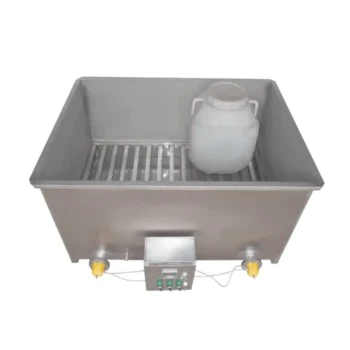
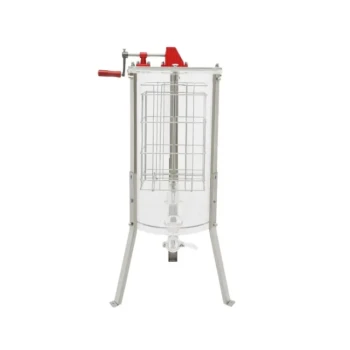
Professional honey processing equipment resolves market constraints and quality issues by standardizing production parameters. Through temperature-controlled dehydration, precision filtration, and automated filling, this machinery unifies finished product specifications to ensure the consistency required for high-end retail and international export.
While traditional methods often yield inconsistent results, professional equipment provides the necessary technological control over moisture and purity to transform raw honey into a commercially viable, shelf-stable product suitable for premium markets.
Achieving Standardization and Consistency
Unifying Product Specifications
Small-scale honey production often suffers from batch-to-batch variability. Professional equipment eliminates this by enforcing unified finished product specifications. This ensures that every jar meets the same strict criteria for viscosity, clarity, and chemical composition.
Reducing Human Error
Automated systems significantly reduce the reliance on manual labor and the potential for human error. By standardizing the workflow, producers can replicate high-quality results consistently, which is a prerequisite for entering large-scale commercial supply chains.
Extending Shelf Life Through Moisture Control
Preventing Spoilage and Fermentation
High moisture content is the leading cause of honey fermentation and spoilage. Professional processing units feature temperature-controlled dehydration systems that precisely lower moisture levels to safe standards without degrading the honey.
Managing Crystallization
Uncontrolled crystallization can make honey unappealing to general consumers. Professional equipment stabilizes the product, preventing premature crystallization and ensuring the honey remains in a liquid, marketable state for a longer duration.
Ensuring Hygiene and Purity
Advanced Filtration Capabilities
Industrial filtration systems utilize multi-stage precision filters. These effectively remove physical impurities, such as beeswax residues and particles, to ensure high transparency and sensory quality while preserving the honey's natural aroma.
Minimizing Contamination Risks
Automated filling and processing lines minimize direct human contact with the product. This reduces the risk of contamination, ensuring the final product meets rigorous international hygiene and safety standards required by regulatory bodies.
Understanding the Trade-offs
The Risk of Over-Processing
While equipment is essential for standardization, improper use can degrade quality. Excessive heating or ultra-filtration can strip honey of its bioactive components and natural enzymes.
Balancing Technology with Tradition
The goal of professional equipment is to refine, not sterilize. Operators must calibrate machinery to maintain the delicate balance between achieving commercial clarity and preserving the unique flavor profiles that drive consumer trust.
Making the Right Choice for Your Goal
To leverage professional equipment effectively, align your technology choices with your specific market objectives:
- If your primary focus is International Export: Prioritize equipment with advanced dehydration and automated filling capabilities to meet strict shelf-life and hygiene compliance standards.
- If your primary focus is Premium Retail: Focus on precision filtration systems that enhance clarity and texture without compromising the honey's natural aromatic profile.
- If your primary focus is Scaling Production: Invest in automated extraction and filling lines to reduce labor intensity and maximize volume output while maintaining consistency.
Success in the modern honey market requires moving beyond simple extraction to precise, technology-driven processing that guarantees quality at scale.
Summary Table:
| Solution Feature | Problem Addressed | Key Benefit |
|---|---|---|
| Precision Filtration | Physical impurities & beeswax | High clarity & sensory quality |
| Thermal Dehydration | High moisture & fermentation | Extended shelf life & stability |
| Automated Filling | Human error & contamination | Strict hygiene & safety compliance |
| Process Standardization | Batch-to-batch variability | Unified specifications for export |
Elevate Your Honey Production with HONESTBEE
Transitioning from traditional methods to industrial excellence requires the right technology. HONESTBEE specializes in supporting commercial apiaries and distributors by providing the industry's most reliable honey-making machinery and equipment. From automated honey-filling machines and dehydration units to specialized hive-making hardware and consumables, our comprehensive wholesale portfolio is designed to help you meet international export standards and premium retail demands.
Ready to scale your operation and guarantee product quality?
Contact us today to explore our full equipment spectrum
References
- Alemayehu Tolera, Simret Betsha. Honey Marketing Systems and Market Constraints in Horo District Oromia Regional State, Ethiopia. DOI: 10.26855/ijfsa.2021.12.024
This article is also based on technical information from HonestBee Knowledge Base .
Related Products
- Electric Double Wall Honey Filtering Machine Purifier Equipment for Honey Processing Plant
- Professional Stainless Steel Honey Filtering Machine with Water Bath Heating for Beekeeping
- Professional Honey Filter with Tripod Support Stand
- Professional Thermostatic Conical Honey Melter
- 0.5T Capacity Honey Dehumidifier Dryer with Vacuum Heating and Thickening Filtering Machine
People Also Ask
- What is the process of filtering honey? A Guide to Clean, Pure, and Market-Ready Honey
- What types of equipment are used in honey filtering? Build an Efficient System for Pure, Marketable Honey
- What is the overall importance of using the right equipment in honey filtering? Boost Quality & Marketability
- What is a potential concern associated with filtering honey? Balancing Clarity and Pollen Preservation
- What role do professional honey harvesting and filtering equipment play in meeting honey market quality standards? Boost ROI