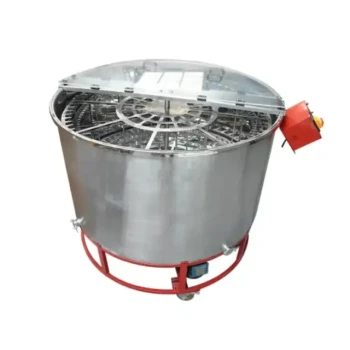
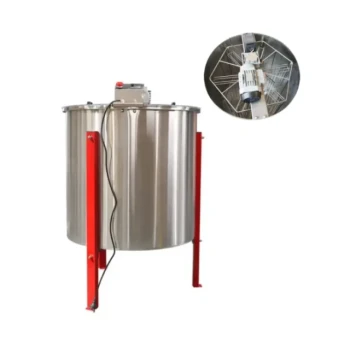
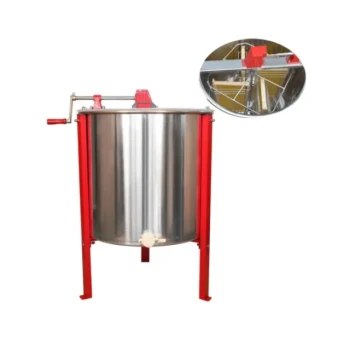
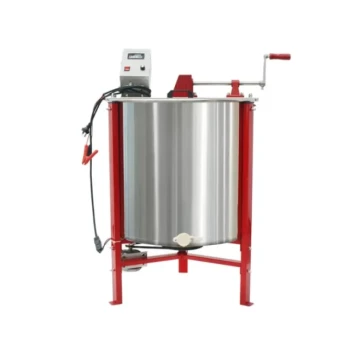
To operate a honey extractor, you place uncapped frames into the device's central wire basket and rotate them rapidly using a hand crank or motor. This rotation generates centrifugal force, which flings the liquid honey out of the cells and against the extractor's inner walls. The honey then drains down the sides by gravity to pool at the bottom for collection through a spigot.
The core advantage of using a honey extractor over other methods is the preservation of the drawn comb. By separating the honey via centrifugal force rather than crushing the wax, you return intact frames to the hive, allowing bees to refill them immediately without expending energy to rebuild the wax.
Preparing the Frames and Equipment
Uncapping is Essential
Before placing frames in the extractor, you must remove the wax cappings from both sides of the honeycomb. If the cells remain sealed, the honey is physically locked inside and no amount of spinning will release it.
Loading the Wire Basket
Once uncapped, place the frames vertically into the metal mesh or wire baskets located inside the extractor drum. It is critical to ensure the frames fit securely within the guides of the basket.
The Importance of Balance
You must load the extractor in a way that balances the weight evenly across the central axis. An unbalanced load will cause severe vibration or "walking" during the spin cycle, potentially damaging the machine or the comb.
The Extraction Cycle
Applying Centrifugal Force
Close the lid and begin rotating the basket using the hand crank (or engaging the motor). As the basket spins, centrifugal force pulls the honey out of the cells, throwing it against the inside wall of the drum.
Managing Spin Duration
According to standard manual operation procedures, you should spin the frames for approximately 20 to 30 seconds. This duration is generally sufficient to empty the majority of the honey from the outward-facing side of the comb.
Flipping the Frames
In many standard extractors, the basket holds the frames tangentially to the drum wall, meaning only one side is extracted at a time. Once the first side is empty, you must stop the machine, turn the frames around to expose the opposite side, and repeat the spinning process.
Post-Extraction Collection
Gravity Drainage
As the honey hits the inner walls, it drips down to the bottom of the drum. It accumulates here until it is released through a gate or spigot at the base of the extractor.
Filtering Impurities
After leaving the extractor, the honey is typically passed through a sieve or strainer. This final step removes any bits of wax capping or debris resulting from the uncapping process before the honey enters the final bottling bucket.
Operational Considerations and Trade-offs
Handling Fragile Combs
If you are extracting from foundationless frames or natural comb, the wax is significantly more fragile. You must operate the extractor at a much lower speed to prevent the centrifugal force from blowing out or collapsing the comb structure.
Manual vs. Electric Input
Manual hand cranks provide excellent control and are cost-effective for hobbyists, but they require physical labor and time. Electric motors offer consistency and ease for larger volumes but remove the tactile feedback that helps you sense if a comb is about to break.
Extraction vs. Crush-and-Strain
While extractors preserve the comb, they are specialized, single-purpose tools. If preserving the drawn wax is not a priority, the "crush-and-strain" method creates a similar product without the need for mechanical equipment.
Optimizing Your Harvest
To get the most out of your extraction process, tailor your approach to your specific equipment and goals:
- If your primary focus is comb preservation: Start spinning at a slow speed to release the bulk of the honey before increasing velocity to dry the cells.
- If your primary focus is efficiency: Ensure your load is perfectly balanced before spinning to avoid stopping for readjustments.
- If your primary focus is hygiene: Keep the extractor lid closed during spinning to prevent dust or debris from entering the high-velocity airflow inside the drum.
Correctly operated, an extractor turns a labor-intensive harvest into a streamlined process that benefits both the beekeeper and the colony.
Summary Table:
| Step | Action | Key Benefit |
|---|---|---|
| Uncapping | Remove wax seals from both sides | Unlocks honey for extraction |
| Loading | Balance frames evenly in basket | Prevents machine vibration and damage |
| Spinning | Apply centrifugal force (20-30s) | Flings honey out without crushing comb |
| Flipping | Turn frames (for tangential models) | Ensures both sides are fully emptied |
| Collection | Drain through spigot and filter | Removes wax debris for pure honey |
Maximize Your Harvest Efficiency with HONESTBEE
At HONESTBEE, we understand that commercial success in beekeeping depends on speed, reliability, and equipment durability. We provide a comprehensive range of professional-grade beekeeping tools and machinery—from high-capacity honey-filling machines to industrial extractors—tailored specifically for commercial apiaries and global distributors.
Whether you are scaling your production or supplying the next generation of beekeepers, our wholesale portfolio offers everything from hardware to honey-themed cultural merchandise. Partner with a supplier that values your productivity as much as you do.
Ready to upgrade your apiary? Contact us today for a wholesale quote!
Related Products
- HONESTBEE 72 Frame Industrial Electric Honey Extractor for Beekeeping
- Commercial Electric 12 Frame Honey Extractor Spinner Motorized Honey Extractor
- HONESTBEE 3-Frame Manual Acrylic Honey Extractor
- electric honey extractor honey centrifuge 3 frame honey extractor stainless steel honey frame extractor
- HONESTBEE 6 Frame Self Reversing Electric Honey Extractor for Beekeeping
People Also Ask
- What is the importance of balancing honeycomb frames within a honey extractor? Ensure Stability and Protect Machinery
- How is honey separated from the frames after they are uncapped? Efficient Extraction Methods for High Yields
- What are the main benefits of using a honey extractor? Maximize Yields and Protect Your Honeycomb
- What are the recommended methods for removing honey from the honeycomb? Top Extraction Techniques for Maximum Efficiency
- How do manual honey extractors compare to electric honey extractors? Choosing the Right Tool for Your Apiary Growth