Swarming turns colony biology into an equipment-planning problem. When a queen and a large cluster of workers leave an established hive, a commercial apiary must be able to capture, house, split, feed, transport, and expand colonies quickly. This requires ready-to-use hive assemblies, spare components, swarm-control equipment, queen-rearing supplies, and standardized hardware that can be deployed during short periods of peak spring activity.
The central requirement is operational readiness: commercial beekeepers need enough modular hive equipment and consumables to convert natural or artificial swarming into productive colonies rather than lost livestock.
Why Swarming Drives Hardware Requirements
Swarming creates sudden demand for hive capacity
A natural swarm can leave the parent colony with little warning. If replacement equipment is unavailable, the beekeeper may lose the swarm, delay colony establishment, or compromise the apiary’s seasonal production plan.
Commercial operators therefore need a reserve of bottom boards, brood boxes, frames, foundation, inner covers, outer covers, and feeders. These components must be ready for immediate assembly rather than ordered after the swarm appears.
Colony growth is seasonal but equipment demand is concentrated
Swarming is most closely associated with rapid spring population growth. This creates a concentrated demand for hardware before and during the main reproductive period.
For distributors and wholesalers, this means inventory planning must anticipate seasonal surges, not simply average annual consumption. Fast fulfillment is particularly valuable when beekeepers need to deploy equipment within hours or days.
Modular equipment supports repeated colony division
Standardized hive bodies and frames allow a commercial beekeeper to divide colonies, add brood chambers, install supers, and reconfigure equipment across multiple apiary sites.
This modularity is essential because swarming management is not a one-time intervention. Large operations may repeat splits and colony installations across hundreds or thousands of hives.
Equipment Required for Natural Swarm Capture
A complete swarm-hive assembly
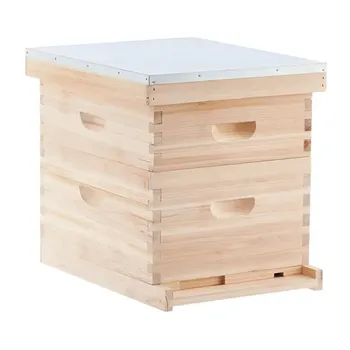
A captured swarm requires a secure cavity where bees can establish comb and begin brood rearing. A practical complete assembly includes:
- Bottom board
- Deep hive body
- Ten frames with foundation
- Inner cover
- Outer cover
- Hive-top feeder
The assembly should be prepared in advance so the swarm can be installed without delay.
Swarm traps and collection equipment
Commercial apiaries also need equipment for locating and collecting swarms, including:
- Swarm traps
- Swarm nets
- Nucleus boxes
- Protective bee veils
- Smokers
- Hive tools
These items support safe handling and reduce the risk that a swarm will escape before it can be housed.
Entrance and installation accessories
A newly captured swarm should generally have a wide-open entrance initially, without an entrance reducer. A simple wooden plank or sheet can act as a ramp and help bees find the entrance.
A hive-top feeder can supply sugar syrup when nectar is limited. This supports comb production and helps the swarm establish itself on the foundation frames.
Hardware Required for Artificial Swarming
Nucleus boxes and spare hive bodies
Artificial swarming allows the beekeeper to divide a thriving colony before it issues a natural swarm. The queen, brood, and nurse bees can be allocated to a separate nucleus box or hive body.
This requires spare housing capacity even when no natural swarm has yet occurred. Nuc boxes are particularly useful for smaller splits, queen production, temporary holding, and colony expansion.
Frames, foundation, and brood chambers
The split requires a brood chamber containing suitable frames and foundation. Standardized frame dimensions are important because they allow components to move between colonies and reduce operational complexity.
A reliable supply of brood frames, foundation, and replacement hive bodies also supports queen rearing, disease management, and the repair of damaged equipment.
Feeders and crown boards
Artificially divided colonies may temporarily have reduced foraging strength. A rapid feeder, feeder frame, or hive-top feeder provides supplemental nutrition while the colony establishes or raises a replacement queen.
The broader hive assembly may also require a crown board, roof, and queen excluder, depending on the chosen management method and hive configuration.
Queen-management equipment
Swarming control depends on managing queen placement and queen production. Commercial operations may therefore require:
- Queen gates or queen excluders
- Queen-rearing supplies
- Queen cells or queen-holding equipment
- Marked-queen handling tools
The exact equipment mix depends on whether the objective is to retain the original queen, raise a replacement, produce increase colonies, or maintain honey production.
How Swarming Shapes Apiary Inventory Planning
Readiness is more important than minimum stock
A commercial apiary should not stock only the number of hives currently in use. It needs a buffer of unused equipment for:
- Planned artificial splits
- Unexpected natural swarms
- Replacement of damaged hive components
- Colony failures and re-establishment
- Expansion during favorable nectar flows
The appropriate buffer depends on colony count, swarm pressure, seasonal conditions, and the operator’s ability to replenish equipment quickly.
Standardization reduces labor and purchasing complexity
Using compatible hive bodies, frames, covers, feeders, and stands simplifies every stage of swarm management. Beekeepers can assemble replacement hives faster and interchange components across locations.
For B2B suppliers, a full-spectrum product portfolio is more valuable than isolated product availability. A customer who can source complete hive assemblies, consumables, protective equipment, and handling tools from one supplier can reduce procurement delays and compatibility problems.
Hive-making machinery supports scale
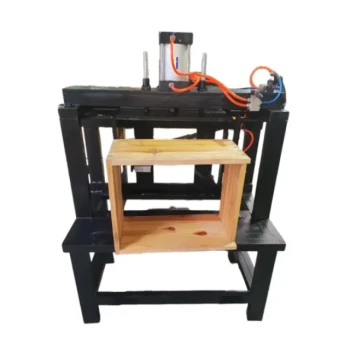
At commercial volume, hand-building every hive component can create a bottleneck. Efficient hive-making machinery and standardized production processes help suppliers and large apiaries maintain consistent dimensions and replenish stock rapidly.
This is especially important before the spring swarming period, when demand for ready-to-use boxes, frames, and related hardware can rise sharply.
Equipment Beyond the Initial Swarm
Stands and site infrastructure
Once colonies are established, they require durable support equipment. Hive stands with features such as ant wells help protect colonies and improve working access.
Stands also support standardized placement across apiary sites, which is valuable for inspection, transport, feeding, and harvesting.
Transport hardware for migratory operations
Commercial migratory beekeeping adds another equipment requirement: colonies must be moved safely between locations and nectar flows.
Durable hive hardware, secure loading systems, and appropriate transport equipment help prevent damage, reduce colony stress, and improve logistics across operations managing approximately 100 to 1,000 or more hives.
Feeding and consumable supplies
Splits, captured swarms, and colonies during nectar dearths may require supplemental feeding. Apiaries therefore need a dependable supply of feeders, syrup-handling equipment, and feeding consumables.
Feeding capacity must be planned alongside hive capacity. A new hive without an appropriate feeder may be technically complete but operationally unready.
Inspection, pest-control, and treatment tools
Swarming management does not remove the need for routine colony health management. Commercial equipment must support inspections, parasite control, disease treatment, and hygienic colony maintenance.
High-quality modular hives provide access to brood chambers and supers without requiring the entire colony to be dismantled.
Honey-processing and storage equipment
Swarm management is ultimately tied to production continuity. When colonies are split or captured, the apiary still needs equipment for harvesting and storing honey, including:
- Honey extractors
- Bulk storage drums
- Honey supers
- Food-safe handling equipment
This connects colony-management hardware with downstream processing capacity.
Understanding the Trade-offs
Keeping excess equipment ties up capital
Maintaining spare hive bodies, frames, nuc boxes, and feeders improves response time but increases inventory investment. The right stock level should reflect colony scale, seasonal swarm risk, supplier lead times, and available storage.
For distributors, this is a balance between carrying high-demand seasonal products and avoiding excessive slow-moving inventory.
Standardization can limit operational flexibility
Standardized hardware improves interchangeability, but a beekeeper may still operate different hive formats or management systems. A supplier should confirm frame dimensions, hive-body specifications, feeder compatibility, and cover types before fulfilling large orders.
Compatibility errors can create more disruption than a temporary equipment shortage.
Rapid delivery does not replace preparedness
Fast delivery is valuable, but it cannot always solve a same-day swarm event or a remote-apiary requirement. Commercial operators still need a core reserve of assembled or immediately assemblable equipment at the apiary.
The strongest supply model combines local readiness, reliable replenishment, and responsive customer service.
Artificial swarming requires skilled handling
Artificial swarming can retain livestock and distribute colony strength, but incorrect queen transfer, poor timing, inadequate feeding, or weak hive placement can reduce its success.
Equipment should therefore be supplied alongside clear technical guidance and, where appropriate, professional support.
Making the Right Choice for Your Goal
The equipment strategy should match the apiary’s operating model, colony count, and response-time requirements.
- If your primary focus is natural swarm capture: Maintain complete hive assemblies, swarm traps, nuc boxes, feeders, frames, foundation, and protective handling equipment in ready-to-deploy condition.
- If your primary focus is artificial swarming: Stock spare brood chambers, nuc boxes, standard frames, queen-management equipment, covers, roofs, and rapid feeders.
- If your primary focus is large-scale commercial production: Prioritize modular hardware, hive-making machinery, transport systems, feeding equipment, pest-control tools, and bulk honey-processing capacity.
- If your primary focus is distribution or wholesale supply: Offer a compatible, full-spectrum product range supported by accurate specifications, rapid response, dependable fulfillment, and seasonal inventory planning.
- If your primary focus is migratory beekeeping: Select robust hive components and transport equipment designed for repeated movement, while maintaining sufficient feeding and replacement supplies.
A commercial apiary converts swarming from a source of loss into a source of growth when its equipment, inventory, and supply chain are prepared before the bees are.
Summary Table:
| Equipment/Factor | Natural Swarm | Artificial Swarm | Inventory Planning |
|---|---|---|---|
| Hive assemblies (bottom board, brood box, frames, covers) | Ready-to-use for capture | For splits | Buffer stock for rapid deployment |
| Nucleus boxes & nuc frames | For temporary housing | For splits and queen rearing | Seasonal demand planning |
| Feeders (hive-top, rapid) | Essential for establishment | Support new colonies | Plan feeding capacity |
| Frames & foundation | Standardized for all colonies | Standardization simplifies splits | Compatible across sites |
| Queen management (gates, excluders, rearing supplies) | Less critical | Critical for controlled splits | Import for artificial swarming |
| Protection & handling (smokers, veils, tools) | Needed for capture | Needed for handling | Stock for safety and efficiency |
| Swarm traps & nets | For collection | Not typically used | Keep available in spring |
| Transport & stands | Stable platforms | For moving splits | Durable for migratory ops |
| Honey processing (extractors, supers) | Downstream support | Necessary for production | Plan with expansion |
| Hive-making machinery | For scale | For scale | Enable rapid replenishment |
At HONESTBEE, we understand that timely swarm management is critical. Our comprehensive wholesale supply includes ready-to-use hive assemblies, nucleus boxes, feeders, frames, and queen-management tools—all from one source. We cater to commercial apiaries and distributors, offering OEM/ODM support, certified quality, and rapid delivery with efficient fulfillment. Ensure your apiary is prepared for every swarm event. Contact us today for a tailored equipment plan that enhances your operational readiness and profitability.
Related Products
- High-Efficiency Pneumatic Bee Hive Making Machine for Rapid Box Assembly
- Mini Desktop Bee Hive Frame Forming Making Machine
- Assembled Wooden Bee Frames with Plastic Foundation for Durability and Convenience by HONESTBEE
- HONESTBEE Wired and Assembled Wooden Bee Frames Foundation for a Thriving Hive
- Semi-Auto Bee Frame Assembly and Stapling Machine for Bee Frame
People Also Ask
- How does the introduction of professional beehive-making machinery benefit sustainable beekeeping? Scale Your Apiary
- Why is specialized beehive-making machinery critical for low-defense breeding? Enhance Selection with Precision Tools
- How does the introduction of specialized beehive making machinery contribute to increasing the scale of regional beekeeping industries?
- What is the importance of specialized beehive making machinery in a circular bio-economy? Build Local Sustainability
- Why is specialized beehive-making machinery essential? Scale Your Apiary with Precision Industrial Standards