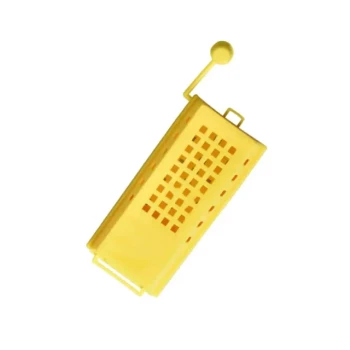
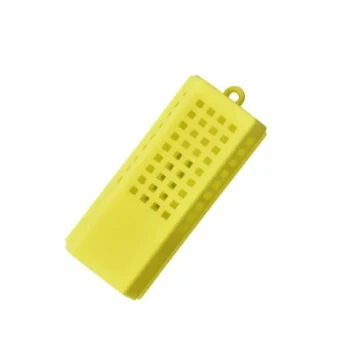
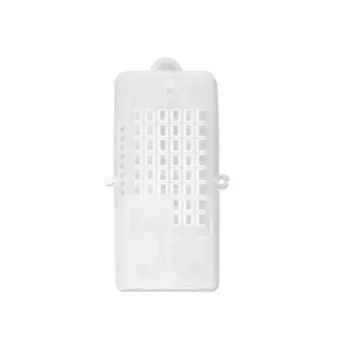
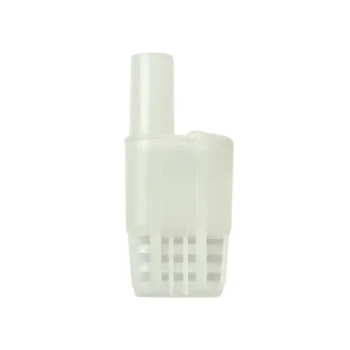
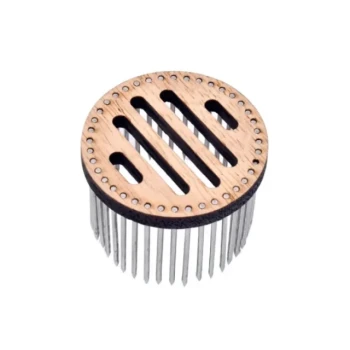
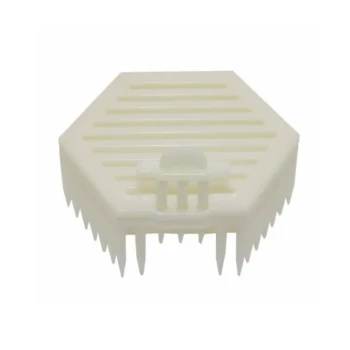
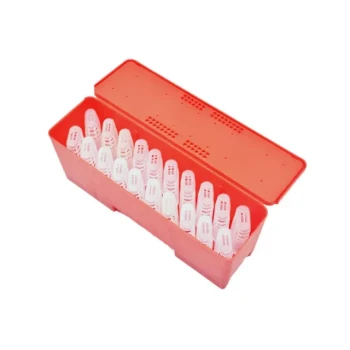
The safe introduction of a home-raised queen relies on a protective queen cage acting as a physical barrier within the hive. This device, which frequently resembles a large clamp, is inserted between the frames of the hive to separate the new queen from established workers while facilitating the transfer of pheromones.
Indirect introduction is the gold standard for queen acceptance because it mitigates the colony’s natural defensive instincts. The cage provides a mandatory "truce period," allowing the colony to acclimate to the new queen's scent without the ability to physically attack her.
The Mechanics of Indirect Introduction
Positioning the Cage
For the standard "clamp" style cage mentioned in primary guidelines, the device is placed directly between the frames of the brood nest.
This location is critical because it places the queen in the center of the colony's warmth and activity.
It ensures that the maximum number of worker bees encounter her scent, accelerating the acceptance process.
The Role of Physical Protection
The primary function of the cage is to prevent the existing workforce from balling (attacking) and killing the new queen.
Without this barrier, the colony often perceives the new queen as a foreign invader.
The cage allows worker bees to interact with the queen through the mesh or bars, feeding her and investigating her, without the ability to sting.
Pheromone Integration
Success depends on the queen's pheromones spreading throughout the hive.
During confinement, the queen's scent slowly overrides the lingering scent of the old queen or the colony's sense of queenlessness.
Once the workers stop biting the cage and begin feeding the queen through the mesh, it indicates that chemical integration is successful.
Advanced Technique: The Press-In Cage
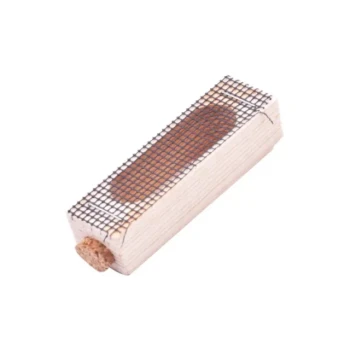
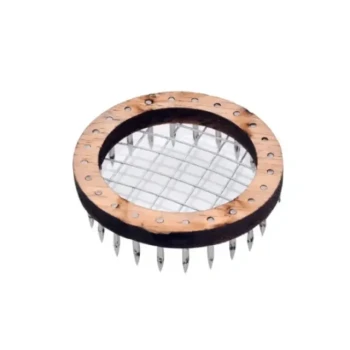
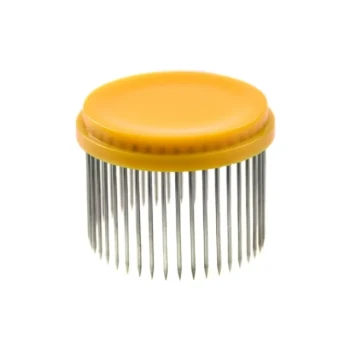
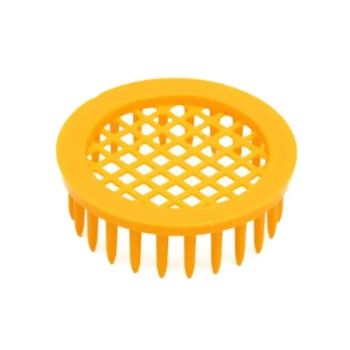
While the clamp-style cage is common, the "press-in" or "push-in" cage is a highly effective variant for home-raised queens.
Selecting the Ideal Comb
To use a press-in cage (typically a 4x4 inch screen box), you must select a frame containing emerging brood, open cells for egg-laying, and honey.
The cage is pressed firmly into the comb, encompassing these resources.
It is vital to choose a section of comb without holes to prevent aggressive adult bees from tunneling under the cage.
Leveraging Emerging Brood
The press-in method relies on trapping the queen with brood that is just about to hatch.
Newly hatched bees have no allegiance to the previous queen and will accept the confined queen immediately as their mother.
These young bees become her first attendants, feeding her and preparing cells for her to lay eggs within the safety of the cage.
Common Pitfalls and Trade-offs
The Risk of Premature Release
The most significant risk in queen introduction is impatience; releasing the queen before the colony is calm can lead to her death or flight.
If the queen flies away upon release, the introduction process must be restarted entirely.
This not only wastes time but also stresses the colony, making them more difficult to requeen subsequently.
Structural Integrity
When using a press-in cage, the seal against the comb must be perfect.
If the comb is uneven or has tunnels, hostile workers can enter the cage and kill the queen.
Always verify that the mesh is pressed deep enough to the midrib of the comb to create a secure quarantine zone.
Making the Right Choice for Your Goal
When introducing your home-raised queen, choose the method that aligns with your resources and risk tolerance:
- If your primary focus is simplicity and speed: Use the standard clamp-style cage placed between frames, as it requires less manipulation of the comb structure.
- If your primary focus is maximum acceptance rates: Utilize the press-in cage over emerging brood, as this allows the queen to begin laying eggs before she is even released to the general population.
The goal is never just to put a queen in a box, but to carefully manage the biological transition so the colony adopts her as their own.
Summary Table:
| Introduction Method | Primary Mechanism | Best For | Key Advantage |
|---|---|---|---|
| Clamp-Style Cage | Physical barrier between frames | Simplicity & Speed | Fast setup with minimal comb disruption |
| Press-In Cage | Confinement over emerging brood | Maximum Acceptance | Allows queen to lay eggs before release |
| Pheromone Sync | Gradual scent integration | Home-raised Queens | Reduces colony defensive instincts |
Maximize Your Apiary Productivity with HONESTBEE
At HONESTBEE, we understand that successful queen introduction is the heartbeat of a thriving apiary. Whether you are a commercial beekeeper or a specialized distributor, we provide the professional-grade tools you need to succeed. Our comprehensive wholesale catalog includes:
- Precision Beekeeping Tools: High-quality queen cages, hive-making machines, and protective gear.
- Industrial Machinery: Advanced honey-filling and processing equipment for commercial scale.
- Consumables & Merchandise: Essential industry supplies and honey-themed cultural goods.
Ready to scale your beekeeping operations? Contact us today to discover how HONESTBEE’s premium equipment and wholesale expertise can streamline your production and boost your bottom line.
Related Products
- Durable Galvanized Steel Spring Queen Bee Cage
- Classic Wooden and Mesh California Queen Cage
- Professional Queen Bee Introduction and Transport Cage
- Professional Queen Cage with Sliding Gate and Feeder Plug
- Professional Multi-Compartment Queen Cage with Sliding Lid
People Also Ask
- Why are specialized queen bee cages used for the banking of mated queen bees? Maximize Commercial Apiary Storage Efficiency
- What is the mechanism of action for using temporary queen bee cages? Master Successful Queen Introduction
- What is the step-by-step process for installing a queen bee's cage onto a frame? Ensure Hive Acceptance Safely
- What is the optimal placement for a queen bee cage? Essential Strategies for Successful Re-queening
- What are the advantages and disadvantages of introducing a queen bee by embedding the cage? Boost Your Queen Acceptance