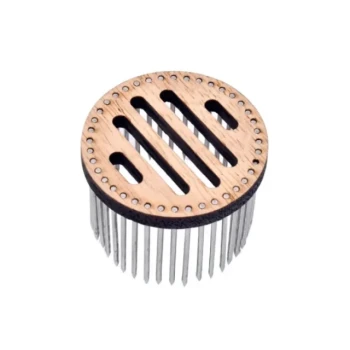
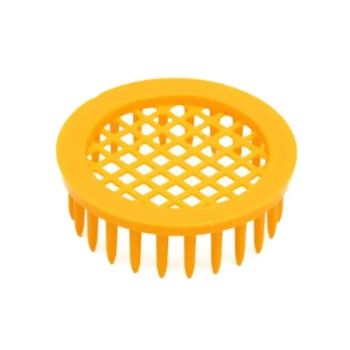
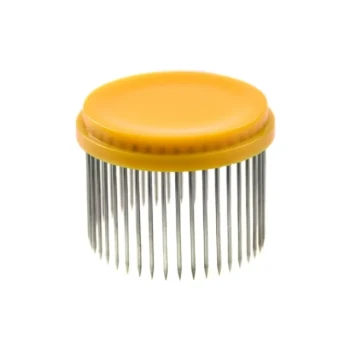
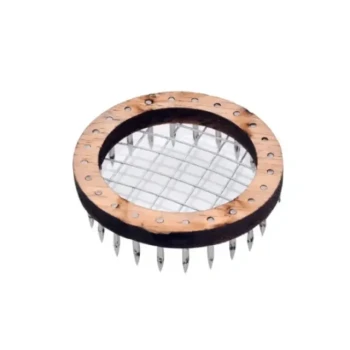
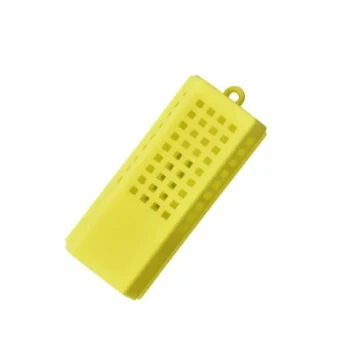
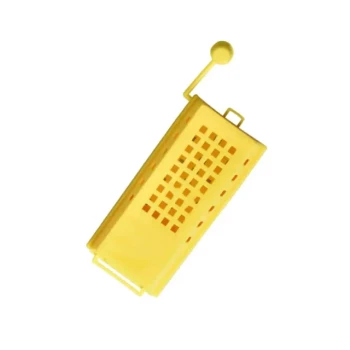
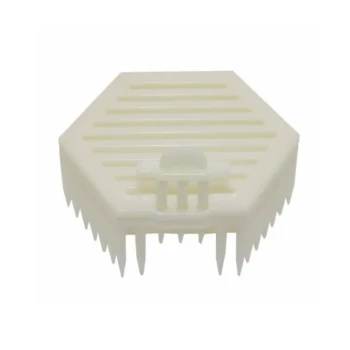
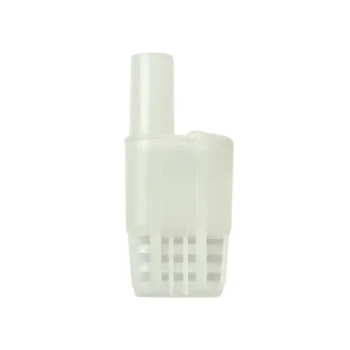
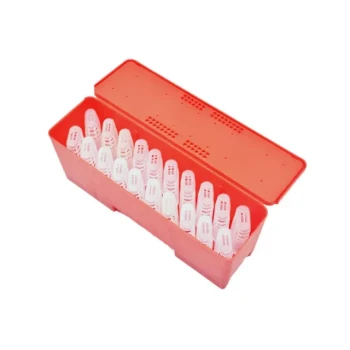
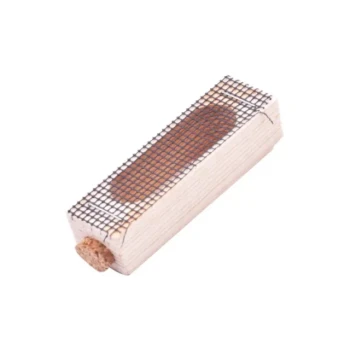
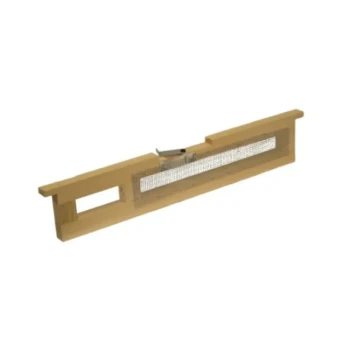
Push-in cages are the primary mechanism for ensuring experimental integrity during the honeybee emergence phase. They provide immediate physical isolation on the comb surface, preventing young bees from wandering and mixing with the general hive population or other test groups. This containment is the only way to guarantee that emerging adults are correctly attributed to their specific source comb.
By physically isolating bees on the comb, push-in cages eliminate cross-contamination between treatment groups. This ensures that data regarding emergence times and survival rates remains distinct and verifiable for every individual bee.
Preserving Data Integrity
Preventing Group Mixing
In a strictly controlled experiment, maintaining the distinction between treatment groups is vital. Without physical barriers, emerging bees would immediately interact with the colony.
Push-in cages create a distinct boundary. This prevents bees from different experimental treatments from physically mixing after they emerge.
Accurate Source Tracking
Scientific rigor requires that every data point be traceable to its origin.
By confining bees to their specific area of the comb, researchers can track the source comb of every single adult bee. This eliminates ambiguity regarding which experimental conditions produced a specific bee.
Enabling Precise Measurement
Recording Emergence Times
Accurate biological data often depends on precise timing.
The isolation provided by these cages allows for the separate recording of emergence times. Researchers can observe exactly when bees from specific groups emerge without the confusion of a crowded, mixed hive environment.
Monitoring Initial Survival
The period immediately following emergence is critical for data collection.
Cages allow for the assessment of initial survival status for each experimental group. This ensures that mortality or health data is recorded before the bee is exposed to external hive variables.
The Consequence of Omission
The Risk of Data Contamination
It is a common error to underestimate the mobility of newly emerged bees.
Without the physical isolation of a push-in cage, treatment groups will inevitably mix. This renders it impossible to distinguish between groups, invalidating the separation required for comparative analysis.
Loss of Individual Granularity
Aggregate data is often insufficient for detailed studies.
Failing to use isolation cages forces researchers to rely on generalized observations. This prevents the separate recording of specific metrics—such as exact emergence timestamps—that are necessary for high-resolution analysis.
Making the Right Choice for Your Experiment
To ensure your data withstands scrutiny, apply the use of push-in cages based on your specific analytical needs:
- If your primary focus is treatment comparison: Use cages to strictly prevent the mixing of groups, ensuring no variable cross-contamination.
- If your primary focus is developmental timing: Use cages to isolate the comb, allowing you to log precise emergence timestamps for each specific bee.
The push-in cage transforms the chaotic environment of a hive into a controlled setting, turning observation into verifiable data.
Summary Table:
| Feature | Benefit for Observation | Impact on Data Accuracy |
|---|---|---|
| Physical Isolation | Prevents young bees from mixing with the colony | Eliminates cross-contamination between test groups |
| Source Tracking | Confines bees to their specific comb area | Guarantees 100% traceability to experimental origins |
| Timing Control | Allows for separate recording of emergence | Provides high-resolution timestamps for biological analysis |
| Survival Monitoring | Isolates bees for initial health checks | Captures critical mortality data before external exposure |
Elevate Your Apiary Research with HONESTBEE
Precision in the field requires precision in your equipment. At HONESTBEE, we specialize in supporting commercial apiaries and distributors with high-quality, professional-grade beekeeping solutions. Whether you are scaling up with our advanced hive-making and honey-filling machinery or maintaining experimental rigor with our specialized beekeeping tools and hardware, we provide the comprehensive wholesale support you need.
From essential industry consumables to unique honey-themed cultural merchandise, HONESTBEE is committed to delivering value through durability and innovation. Contact us today to discuss how our full spectrum of equipment can optimize your operations and research outcomes!
References
- Judy Y. Wu, Walter S. Sheppard. Sub-Lethal Effects of Pesticide Residues in Brood Comb on Worker Honey Bee (Apis mellifera) Development and Longevity. DOI: 10.1371/journal.pone.0014720
This article is also based on technical information from HonestBee Knowledge Base .
Related Products
- Premium Wood and Steel Push In Queen Cage
- Durable Plastic Push In Queen Bee Cage
- Professional Round Push-In Queen Cage with Metal Tines
- Wood and Mesh Push-In Queen Cage
- JZBZ Style Push-In Cell Protector for Professional Queen Rearing Kits
People Also Ask
- What advantages do push-in queen cages offer? Boost Acceptance Rates for Artificially Inseminated Queens
- What is a push-in queen cage and how does it differ from a standard queen cage? Boosting Your Queen Acceptance Rates
- What is a push-in queen cage and how does it differ from standard cages? Achieve Higher Queen Acceptance Rates
- How can a beekeeper obtain a push-in queen cage? DIY vs. Professional Sourcing Guide
- When is a queen introduced with a push-in cage ready for full release? Key Signs for Maximum Colony Acceptance