To produce 'cut-comb' honey, the process involves removing the entire honeycomb structure from the hive frame and slicing it into smaller, consumer-ready sections. These sections are then packaged in specialized containers to preserve the comb's structure and the honey contained within.
Core Takeaway Producing quality cut-comb honey requires specific preparation before the bees even start building, most notably the use of extra-thin foundation. Furthermore, a critical post-harvest freezing step is mandatory to ensure the product remains free of pests like wax moths.
The Production Workflow
Starting with the Right Foundation
The process begins with the specific equipment placed inside the hive. You must use a special extra-thin foundation in your frames.
Because the consumer eats the wax along with the honey, the foundation must be delicate. Standard foundation is too thick and tough for a pleasant eating experience.
Harvesting and Sectioning
Once the bees have drawn out the comb, filled it with honey, and capped it, the harvesting process begins. The entire comb is cut directly from the wooden frame.
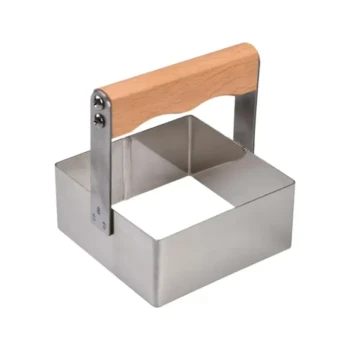
This large sheet of honeycomb is then carefully sliced into smaller, uniform pieces. Great care must be taken to keep the cells intact to minimize leaking.
Packaging for Retail
The sticky and delicate nature of cut comb requires specific handling during packaging.
The sectioned pieces are placed into special plastic boxes. These containers are designed to display the comb while securely containing any honey that naturally drains from the cut edges.
Critical Preservation Steps
Eliminating Pests
There is a vital safety step between packaging and selling that must not be skipped. You must freeze the comb honey overnight before offering it to customers.
Why Freezing is Necessary
This freezing process is the only way to ensure the destruction of wax moth eggs and larvae.
These pests can be present in the comb without being immediately visible. Failing to freeze the product risks the eggs hatching later, which would ruin the product and damage your reputation.
Understanding the Trade-offs
Equipment Specificity
Producing cut-comb honey limits your equipment flexibility. You cannot repurpose standard frames with heavy foundation; you must invest in and manage inventory for extra-thin foundation specifically for this product.
Processing vs. Extraction
While you avoid the cost and labor of centrifugal extraction machinery used for liquid honey, you trade it for more labor-intensive manual handling.
Cutting and packaging individual comb sections requires precision and time. Additionally, the requirement to freeze every unit adds a logistical step and requires freezer space that liquid honey production does not demand.
Ensuring a Market-Ready Product
Producing cut-comb honey is less about mechanical extraction and more about careful material selection and biological control.
- If your primary focus is product texture: Ensure you install extra-thin foundation so the center of the comb is palatable and not tough or waxy.
- If your primary focus is product safety: Strictly adhere to the overnight freezing protocol to guarantee the elimination of wax moth infestations.
By combining the correct foundation with rigorous temperature control, you deliver a premium, raw product that is both authentic and safe.
Summary Table:
| Step | Key Requirement | Purpose |
|---|---|---|
| Preparation | Extra-thin foundation | Ensures a delicate, edible texture for the consumer |
| Harvesting | Manual slicing | Maintains cell integrity and creates uniform retail portions |
| Packaging | Specialized plastic boxes | Protects the fragile comb structure and contains leaks |
| Preservation | Overnight freezing | Eliminates wax moth eggs and larvae for product safety |
Elevate Your Apiary's Output with HONESTBEE
Are you looking to scale your cut-comb honey production or optimize your commercial apiary? HONESTBEE is your dedicated partner for high-quality beekeeping excellence. We provide a comprehensive range of solutions tailored for commercial apiaries and distributors, including:
- Precision Machinery: Advanced honey-filling and hive-making machines to streamline your operations.
- Professional Tools: A full spectrum of beekeeping hardware and specialized consumables.
- Retail Support: Everything from production equipment to honey-themed cultural merchandise.
Whether you are a large-scale distributor or a commercial beekeeper, our wholesale offerings are designed to enhance your efficiency and product quality.
Ready to upgrade your equipment? Contact us today and let HONESTBEE provide the tools you need to succeed!
Related Products
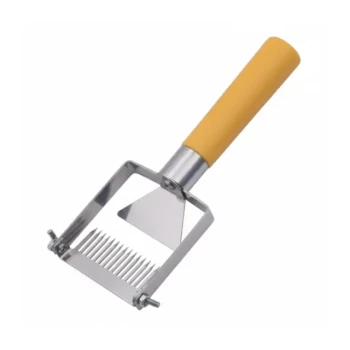
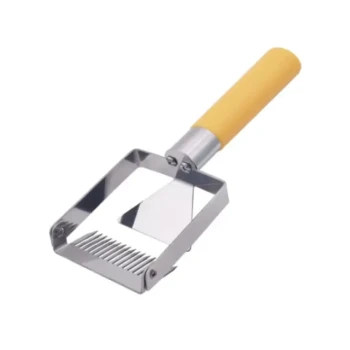
- Heavy Duty Stainless Steel Honeycomb Cutter
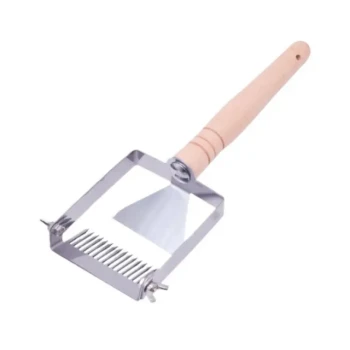
- Professional Honey Uncapping Fork Tool with Customizable Tine Options
- Professional Bent Tine Honey Uncapping Fork with Ergonomic Grip
- Professional Customizable Honey Uncapping Fork with Adjustable Tine Options
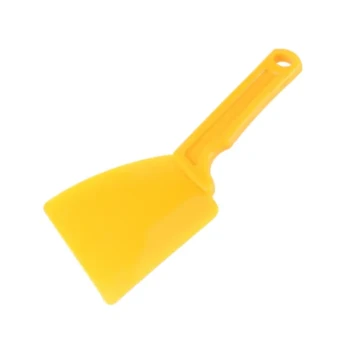
- Professional Wide Blade Honey Scraper for Beekeeping and Honey Processing
People Also Ask
- How is a comb cutter used to produce cut comb honey? Master the Art of Precision Harvesting
- Why is the comb-cutting technique preferred for Apis cerana queen rearing? Boost Success with Natural Bee Biology
- What is the cut comb honey method? A Guide to Pure, Artisanal Honey Production
- How is the cut comb method used to harvest honey? Master the Art of Premium Unprocessed Honey Production
- What is cut comb honey, and how is it prepared? Experience Honey in Its Purest Form