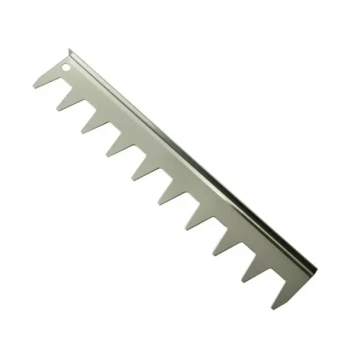
A standard Langstroth beehive box is engineered to accommodate exactly 10 frames. However, due to weight considerations, an 8-frame version has gained significant popularity among modern beekeepers. Both configurations rely on the same internal spacing principles to allow for the removal and inspection of individual honey or brood frames.
While the 10-frame configuration remains the historical industry standard for maximum volume, the 8-frame alternative is a widely accepted variation designed specifically to reduce lifting weight and improve manageability for the beekeeper.
The Two Main Configurations
The Industry Standard: 10 Frames
The 10-frame Langstroth box is the most common hive type used globally. It provides the maximum amount of internal volume per box for brood production and honey storage.
Because this size is ubiquitous, finding compatible accessories—such as feeders, queen excluders, and bottom boards—is rarely an issue. This configuration is often preferred by commercial operations prioritizing volume and standardization.
The Popular Alternative: 8 Frames
The 8-frame box is simply a narrower version of the standard Langstroth hive. It utilizes the same length and depth of frames as the 10-frame box but holds two fewer frames to reduce the overall width.
This reduction is primarily ergonomic. When filled with honey and bees, a 10-frame box can be exceptionally heavy; the 8-frame version offers a lighter alternative that retains the benefits of the Langstroth system.
Exceptions: The Nuc Box
It is important to distinguish standard hives from "nuc" (nucleus) boxes. As noted in beekeeping references, a wooden nuc box is designed to hold a smaller colony, typically containing between three and five frames.
These are used primarily for starting new colonies, catching swarms, or queen rearing, rather than for permanent, full-sized colony housing.
How Box Height Affects Frames
Consistent Frame Counts
Regardless of the box's vertical height, the frame count remains constant based on the width of the equipment (10 or 8).
Varying Frame Sizes
While the number of frames fits the box width, the frames themselves come in different vertical sizes to match the box:
- Deep boxes hold deep frames (usually for brood).
- Medium and Shallow boxes hold shorter frames (usually for honey storage).
The Role of Foundation
Most frames used in these boxes include a wax or plastic foundation. This sheet guides the bees to build straight comb within the frame borders, ensuring the beekeeper can remove frames for inspection without damaging the colony structure.
Understanding the Trade-offs
Weight vs. Height
The primary trade-off is lifting weight versus stack height. A 10-frame deep box full of honey is significantly heavier than an 8-frame equivalent, which can be a strain on the back during inspections.
However, because 8-frame boxes hold less volume, you may need to stack them higher (adding more boxes) to provide the same total storage space for the colony compared to a 10-frame setup.
Equipment Compatibility
While frames are generally interchangeable between 8 and 10-frame boxes (since the depth is standard), the external components are not.
You cannot mix 8-frame and 10-frame boxes in the same stack. Covers, bottom boards, and queen excluders must match the specific width (frame count) of the boxes you choose.
Making the Right Choice for Your Goal
When selecting between these configurations, consider your physical capabilities and long-term goals.
- If your primary focus is heavy production and standardization: Choose the 10-frame configuration, as it allows for fewer boxes to manage and aligns with the widest range of commercial accessories.
- If your primary focus is ergonomics and ease of lifting: Choose the 8-frame configuration, as it significantly reduces the weight of each individual box, protecting your back during harvest and inspections.
- If your primary focus is starting a new small colony: Begin with a 5-frame Nuc box, then transfer the frames into your chosen 8 or 10-frame equipment once the colony expands.
Select the equipment width that you can lift comfortably, as successful beekeeping requires frequent manipulation of these boxes.
Summary Table:
| Hive Configuration | Typical Frame Count | Primary Use Case | Key Advantage |
|---|---|---|---|
| Standard Langstroth | 10 Frames | Commercial Production | Maximum volume & accessory compatibility |
| 8-Frame Langstroth | 8 Frames | Ergonomic Beekeeping | Reduced lifting weight; easier to handle |
| Nucleus (Nuc) Box | 3 - 5 Frames | Colony Starting/Swarms | Portability for small or new colonies |
| Deep/Medium/Shallow | Varies by width | Brood or Honey Storage | Consistent width regardless of box height |
Scaling Your Beekeeping Operation? Partner with HONESTBEE
Whether you are managing a large-scale commercial apiary or supplying the next generation of beekeepers as a distributor, HONESTBEE provides the professional-grade infrastructure you need to succeed.
We offer a comprehensive wholesale portfolio, including:
- Precision Machinery: Hive-making and honey-filling machines for high-efficiency production.
- Complete Equipment: A full spectrum of 8-frame and 10-frame Langstroth tools, hardware, and essential consumables.
- Retail-Ready Goods: Honey-themed cultural merchandise to diversify your product line.
Maximize your apiary’s efficiency and profitability today. Contact our wholesale experts now to discuss custom equipment solutions and bulk pricing.
Related Products
- Stainless Steel 9 Frame Hive Spacer Durable Precise for Commercial Beekeeping
- JZBZ Langstroth Queen Rearing Frame for Beekeeping
- Wooden Bee Hive Frames for Beekeeping and Wholesale
- 5 Frame Langstroth Poly Nuc Corrugated Plastic Nuc Boxes
- Plastic Honey Comb Frames Cassette Box for Honey
People Also Ask
- What is the function of Langstroth frames in comb foundation construction? Optimize Your Apiary's Structural Integrity
- What are the specific dimensions for the wooden parts of Langstroth beehive frames? Precision Guide for All Sizes
- How are Langstroth beehive frames assembled? A Step-by-Step Guide for a Durable Hive
- What is the purpose of Langstroth beehive frames in beekeeping? Key to Professional Hive Management & Scaling
- What is the purpose of Langstroth beehive frames? Unlock the Key to Modern Beekeeping