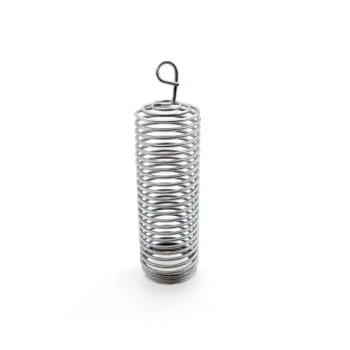
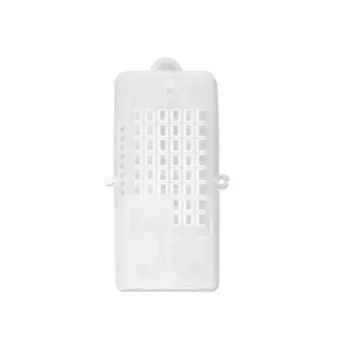
Mature queen cells require exceptional care during transport because the developing queens inside are extremely fragile. To ensure their survival, you must maintain them in their natural vertical position and provide a smooth journey free from shaking or jarring. Furthermore, they must be strictly shielded from environmental extremes, specifically direct hot sunlight and cold temperatures.
The viability of a developing queen relies entirely on physical stability and temperature control. Transporting cells successfully involves maintaining a vertical orientation and a shock-free environment to prevent irreversible physical damage to the sensitive nymph.
Preserving Physical Integrity
Maintaining Vertical Orientation
In the hive, queen cells hang vertically. During transport, you must replicate this natural alignment as closely as possible.
Keeping the cell upright ensures the developing nymph remains in the correct position relative to its food source and the cell walls.
Ensuring a Smooth Journey
The developing queen nymph is highly susceptible to physical trauma. You must ensure the transport vehicle or container provides a smooth ride.
Avoid any shaking, jarring, or sudden impacts. Even minor vibrations can be detrimental to the delicate structure of the developing queen.
Controlling the Environment
Protection from Direct Sunlight
Exposure to hot, direct sunlight is fatal to queen cells. You must shield the cells completely to prevent overheating.
Rapid temperature spikes caused by solar radiation can kill the nymph inside the wax cell very quickly.
Preventing Cold Exposure
Just as heat is a danger, cold temperatures pose a significant threat. The cells must be insulated or kept in a climate-controlled environment to prevent chilling.
Cold stress can arrest development or damage the queen, resulting in failure to hatch or poor performance later.
Common Pitfalls to Avoid
The Danger of Rough Handling
The most common mistake is underestimating the fragility of the cell. Treating a queen cell like a standard frame of brood can lead to significant losses.
Any rigorous movement or accidental drops will likely result in a damaged or dead queen.
Ignoring Ambient Conditions
Failing to account for the weather during the actual moment of transport is a critical error.
Leaving cells exposed on a truck bed or in a non-climate-controlled area, even for a short duration, exposes them to the temperature extremes mentioned above.
Ensuring Queen Survival
If your primary focus is maximum viability: ensure cells are secured vertically in a cushioned container that dampens vibration.
If your primary focus is logistics: plan your route and timing to avoid rough terrain and extreme weather conditions that could penetrate your transport container.
Treat every cell as a living investment that requires stability and shelter to succeed.
Summary Table:
| Transport Requirement | Key Action for Success | Why It Matters |
|---|---|---|
| Physical Orientation | Maintain strictly vertical position | Mimics natural hive state and protects the nymph. |
| Shock Absorption | Use cushioned containers; avoid jarring | Prevents physical trauma to the fragile developing queen. |
| Temperature Control | Insulate against heat and cold | Avoids fatal temperature spikes or developmental arrest. |
| Sunlight Protection | Shield cells from direct radiation | Prevents rapid overheating within the wax structure. |
Maximize Your Apiary's Success with HONESTBEE
At HONESTBEE, we understand that every queen cell is a vital investment in your colony's future. As a leading partner for commercial apiaries and distributors, we provide the precision tools and machinery needed to maintain the highest standards of bee health and honey production.
Whether you require specialized beekeeping hardware, advanced honey-filling machines, or essential industry consumables, our comprehensive wholesale offering is designed to scale your operations efficiently.
Ready to elevate your beekeeping business? Contact us today to explore our full spectrum of professional equipment and learn how HONESTBEE can streamline your success.
Related Products
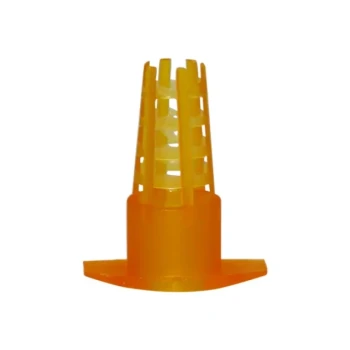
- JZBZ Style Shipping Cell Protector for Queen Rearing Kit
- Portable Queen Bee Incubator with 12V Car Adapter for Safe Transport
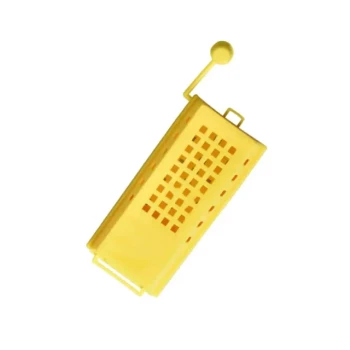
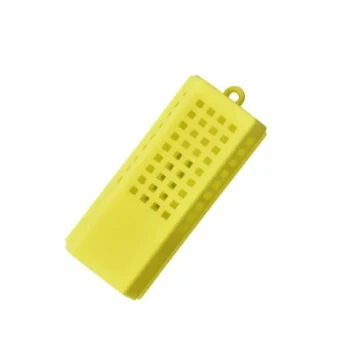
- Professional Queen Bee Introduction and Transport Cage
- Professional Queen Cage with Sliding Gate and Feeder Plug
- JZBZ Style Professional Battery Box with 20 Shipping Cages
People Also Ask
- What is the purpose of queen cell protectors? Safeguard Your Queen Rearing Success
- How can aluminum foil be used to protect a queen cell? Low-Cost Shielding for Queen Introduction
- What are some methods and types of queen cell protectors? Safeguard Your Queen Introduction Process
- What is the primary reason for using queen cell protectors? Secure Your Yield with Proven Protection
- What is the role of queen cell protectors and emergence cages? Secure Your Genetic Stock and Hive Stability