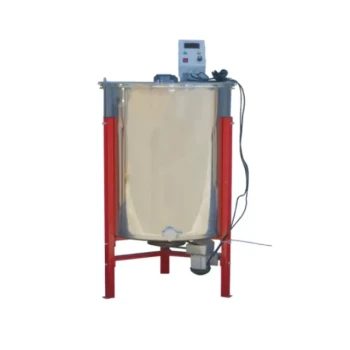
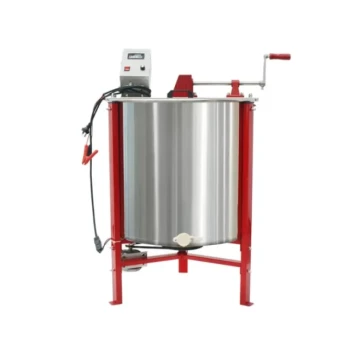
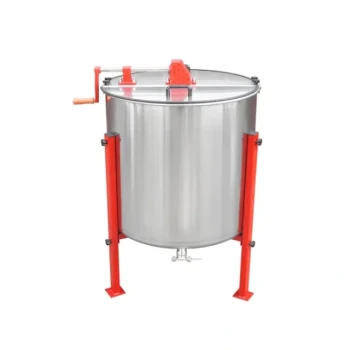
The financial decision between manual and electric honey extractors is ultimately a calculation of capital versus labor. Manual extractors offer a significantly lower initial purchase price, making them the most accessible option for strict budgets. However, automatic (electric) extractors often prove more cost-effective over the long term by drastically reducing the physical effort and time required to process your harvest.
The most economical choice depends on your scale: a manual unit saves money upfront, while an electric unit pays for itself over time through durability and critical labor savings.
Evaluating the Upfront Investment
The Cost of Entry
If your primary constraint is immediate cash flow, manual extractors are the advantageous choice. They require the lowest initial capital outlay, allowing hobbyists to enter the field without significant financial risk.
Material Durability vs. Price
The material you choose impacts both the sticker price and the lifespan of the tool. Stainless steel is the preferred material for its durability and ease of cleaning, though it commands a higher price.
Cheaper materials, such as plastic, reduce the purchase price further but may require replacement sooner. When budgeting, consider that a higher initial cost for stainless steel often negates the future cost of replacing a cracked or degraded plastic unit.
Analyzing Long-Term Operational Costs
The Value of Labor and Time
As the primary reference notes, the true cost of extraction includes the operator's time. Electric extractors automate the spinning process, which can take 5 to 6 minutes per load.
While an electric motor runs, you are free to uncap the next set of frames or filter previously extracted honey. This parallel processing capability significantly lowers the "labor cost" per pound of honey produced.
Capacity and Throughput
Long-term efficiency is also dictated by capacity—the number of frames a unit can hold. A small, inexpensive extractor requires many more reload cycles to process the same number of hives.
If you plan to expand your apiary, a low-capacity unit becomes a bottleneck. The time wasted on excessive loading and unloading cycles eventually outweighs the initial savings of buying a smaller unit.
Understanding the Trade-offs
The Risk of Over-Capitalization
Be wary of buying "too much gun" for your operation. If you manage only one or two hives, the time savings provided by an expensive electric extractor may never justify the hundreds of dollars in extra upfront cost. In this scenario, the labor savings are negligible because the total run-time is so short.
The "Buy Nice or Buy Twice" Dynamic
Conversely, under-investing often leads to higher long-term costs. Buying a manual extractor when you have ten or more hives can lead to operator fatigue and burnout.
Many beekeepers who start with an undersized manual unit eventually upgrade to an electric model within a few seasons. This renders the initial purchase a "sunk cost" that could have been avoided by purchasing the correct tier of equipment originally.
Making the Right Choice for Your Goal
To maximize your budget based on your specific operational goals, apply the following logic:
- If your primary focus is minimizing upfront risk (1-4 hives): Prioritize a manual stainless steel extractor, as the low purchase price aligns with the low volume of work.
- If your primary focus is long-term efficiency (5+ hives): Invest in an electric stainless steel extractor, as the higher price will be amortized quickly by significant savings in time and physical labor.
- If your primary focus is longevity: Avoid plastic components regardless of the drive type; the slight savings are rarely worth the reduction in lifespan and durability.
Select the tool that solves for your time constraints, not just your wallet.
Summary Table:
| Factor | Manual Extractor | Electric Extractor |
|---|---|---|
| Initial Investment | Low / Budget-friendly | Higher / Significant |
| Labor Intensity | High (Hand-cranked) | Low (Automated) |
| Ideal Scale | 1-4 Hives | 5+ Hives |
| Processing Speed | Slow / Linear | Fast / Parallel Processing |
| Long-term Value | High for Hobbyists | High for Commercial Growth |
| Durability | High (Stainless Steel models) | High (Motor & Body maintenance) |
Scaling Your Apiary? Partner with HONESTBEE Today!
As a dedicated partner to commercial apiaries and distributors, HONESTBEE understands that the right equipment is an investment in your productivity. We provide a comprehensive wholesale range, from high-capacity honey-filling machines to durable stainless steel extractors and essential consumables.
Whether you are looking to equip a professional operation or stock your distribution business, our expert team is here to help you select tools that minimize labor costs and maximize throughput.
Ready to upgrade your efficiency? Contact us today to explore our wholesale machinery and hive-making solutions!
Related Products
- HONESTBEE 72 Frame Industrial Electric Honey Extractor for Beekeeping
- Commercial Electric 12 Frame Honey Extractor Spinner Motorized Honey Extractor
- HONESTBEE 6 Frame Self Reversing Electric Honey Extractor for Beekeeping
- HONESTBEE 3-Frame Manual Acrylic Honey Extractor
- Stainless Steel Manual 8 Frame Radial Honey Extractor Machine for Beehives
People Also Ask
- What is the importance of balancing honeycomb frames within a honey extractor? Ensure Stability and Protect Machinery
- How is honey separated from the frames after they are uncapped? Efficient Extraction Methods for High Yields
- What are the main benefits of using a honey extractor? Maximize Yields and Protect Your Honeycomb
- What are the recommended methods for removing honey from the honeycomb? Top Extraction Techniques for Maximum Efficiency
- How do manual honey extractors compare to electric honey extractors? Choosing the Right Tool for Your Apiary Growth