For cold-climate beekeeping, a commercial hive should combine strong construction, controlled insulation, weatherproofing, and adjustable ventilation. Use kiln-dried pine or cedar, double-layer side walls and bottom boards, properly sized removable frame compartments, and an insulated but breathable top assembly. Protect the exterior with a wind-resistant wrap or finish, while keeping entrances and ventilation openings clear to prevent moisture buildup and colony suffocation.
The best severe-weather hive is not simply the most tightly sealed one. It is a durable, dimensionally stable hive that buffers temperature changes, blocks wind and rain, retains cluster heat, and safely releases excess moisture.
Design the Hive for Structural Stability
Select kiln-dried wood
Commercial hives should be manufactured from high-quality kiln-dried pine or cedar. Properly dried timber reduces warping, shrinking, cracking, and dimensional changes that can compromise hive joints and frame alignment.
Cedar offers natural weather resistance, while pine can provide a cost-effective and widely available commercial option when it is properly dried and finished.
Use double-layer walls and bottom boards
In severe climates, double-layered wooden side walls and bottom boards provide a practical thermal barrier against freezing temperatures and cold drafts. The cavity between layers can be designed to accommodate insulation while preserving the hive’s serviceability.
This construction also creates a more stable internal microclimate than a single thin wall, reducing the colony’s need to consume resources to regulate nest temperature.
Build modular, removable compartments
Hive bodies should be detachable and compatible with standard 435 × 230 mm wooden frames where that format is required. Modular boxes allow beekeepers to expand the colony, separate brood from honey supers, and adapt the hive to seasonal production needs.
For distributors and commercial users, standardized frame and box dimensions are especially important because they simplify inventory management, replacement ordering, and compatibility across apiaries.
Design Frames for Reliable Colony Management
Maintain accurate frame dimensions
Wooden frames must be manufactured to consistent dimensions so that they sit correctly in the hive body and maintain appropriate bee space. Poor dimensional accuracy can cause frames to bind, shift, or encourage excessive comb attachment.
The specified 435 × 230 mm frame format should be treated as a product standard requiring precise quality control, particularly when frames are supplied with wax foundation sheets.
Use wax foundation sheets
Wax foundation gives bees a guided starting pattern and supports more uniform comb construction. It also makes brood and honey comb easier to organize, inspect, remove, and replace.
For commercial supply, frames should be offered as a complete, compatible system: correctly sized wooden components, secure foundation installation, and hive bodies designed for the same frame standard.
Prioritize repairability and interchangeability
Frames should be easy to remove without damaging the hive or disturbing the colony more than necessary. Interchangeable components reduce downtime and allow beekeepers to replace damaged frames quickly during demanding seasons.
This is a significant commercial advantage for wholesalers and B2B resellers because customers generally value reliable replenishment and system compatibility as much as the initial product price.
Insulate the Hive Without Trapping Moisture
Insulate above the frames
The hive top should include a breathable layer over the frames, such as cotton cloth, beneath an insulating cushion made from natural materials such as sheep wool or cotton. This arrangement helps retain heat while allowing moisture vapor to move away from the colony.
The insulation should be fitted securely but remain removable for inspection, seasonal adjustment, and maintenance.
Add insulation to the side walls
Side-wall insulation reduces heat transfer through the hive body and helps stabilize the area around the winter cluster. In extremely cold conditions, additional inner packing can reduce unused air space around the cluster.
Suitable materials may include dried straw, sawdust, or thermocol sheets enclosed in protective bags. Materials must remain dry, clean, and physically separated from the bees to prevent contamination and moisture problems.
Preserve controlled ventilation
Insulation and sealing should be designed as a controlled system, not as an attempt to make the hive airtight. Upper ventilation points and the entrance must remain functional so that humid air can escape and the colony can receive adequate airflow.
Condensation is a major winter risk. A hive that retains heat but traps water vapor may expose bees to damp conditions, even when the measured internal temperature appears acceptable.
Protect the Hive From Severe Weather
Use weatherproof hive lids
Hive lids should be capped with metal sheets and protected with weather-resistant oil-based paint. The metal cap sheds rain and snow, while the finish protects the wood from repeated wetting, wind exposure, and temperature cycling.
The lid should overhang the hive sufficiently to reduce direct water entry around the walls and joints.
Add external wind protection
In freezing, windy regions, commercial hives can be covered with black tar paper or dark hive wraps. These materials act as windbreaks and absorb solar heat during winter daylight.
Wraps must not block the entrance or upper ventilation openings. They should also be installed so that water cannot become trapped against the wooden walls.
Keep the bottom board and stand protected
Cold drafts often enter from below, particularly where the hive is placed directly on an exposed stand. Insulation beneath the bottom board can reduce heat loss and limit wind penetration.
The hive should remain elevated, stable, and protected from standing water. Any lower insulation must not obstruct the entrance, drainage, or routine cleaning access.
Install rodent protection
A metal mouse guard across the lower entrance helps prevent rodents from entering during winter while preserving bee passage and airflow. The guard should be sized and fitted so that it does not create a harmful obstruction for the colony.
This small hardware component is important for complete winterization and should be included in severe-weather hive packages where appropriate.
Combine Hive Design With Proper Placement
Shelter colonies from strong winds
Even a well-insulated hive performs better when placed in a naturally protected location. Wind exposure increases heat loss and can damage lids, wraps, and external finishes.
Where possible, position hives behind suitable windbreaks while keeping the entrance clear and the flight path unobstructed.
Provide shade during hot weather
Cold-climate regions can still experience intense summer heat. Partial shade helps prevent overheating, especially when insulated hive walls and dark wraps absorb solar radiation.
The most versatile commercial designs therefore support seasonal insulation adjustment rather than permanent maximum insulation.
Maintain safe flight paths
The entrance should face an open, unobstructed flight path. Hive placement should also maintain appropriate separation from residential buildings and other areas where bee activity could create safety concerns.
Good siting reduces stress on the colony and limits the need to compensate for poor environmental conditions through excessive hive modification.
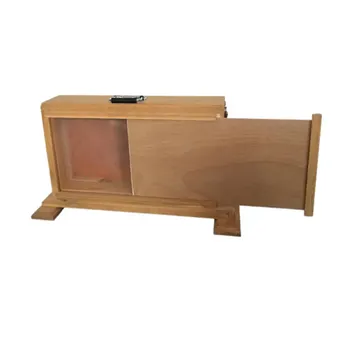
Use shuttered observation windows
Observation windows with shutters allow beekeepers to inspect internal colony conditions without opening the hive. This helps reduce heat loss and disturbance during cold, wet, or windy weather.
For commercial and remote apiaries, this feature can improve inspection efficiency while preserving the colony’s internal climate.
Understanding the Trade-offs
More insulation is not always better
Excessive insulation can restrict ventilation, increase condensation, and make seasonal management more difficult. The objective is to buffer temperature changes while maintaining safe humidity and airflow, not to eliminate all air exchange.
Insulation levels should therefore match the local climate, hive design, colony strength, and seasonal conditions.
Natural materials require moisture control
Sheep wool, cotton, straw, and sawdust can provide useful insulation, but they lose effectiveness when wet. They may also require protective covers or compartments to prevent contamination, settling, and pest access.
Commercial products should be designed for easy inspection and replacement of damp or degraded insulation.
Dark wraps have seasonal limitations
Black tar paper and dark wraps can absorb beneficial winter sunlight, but they may increase heat gain during sunny periods or warmer seasons. These wraps should be removable or adjustable, particularly in regions with large temperature swings.
A product intended for broad distribution should support clear seasonal instructions and practical reconfiguration.
Tight sealing can create hidden failures
Sealing gaps improves wind resistance, but blocking every opening can cause poor air exchange and moisture accumulation. Hive bodies, lids, wraps, and ventilation components must work together as a system.
Quality control should include checks for warped components, ineffective joints, blocked vents, and water entry—not only insulation thickness.
Standardization must match the market
A frame or box system is useful only when it matches the equipment already used by the customer. Before sourcing large quantities, distributors should confirm frame dimensions, box compatibility, foundation requirements, and replacement availability.
Offering multiple compatible formats may expand market reach, but it also increases inventory complexity and fulfillment requirements.
Making the Right Choice for Your Goal
The most effective commercial specification should balance colony protection, component compatibility, maintenance access, and dependable supply.
- If your primary focus is winter colony survival: Specify kiln-dried wooden hives with double-layer side walls and bottom boards, insulated tops, protected lower entrances, wind wraps, and clear ventilation paths.
- If your primary focus is commercial honey production: Choose modular hive bodies and standardized 435 × 230 mm frames with wax foundation so colonies can be expanded and brood and honey areas can be managed efficiently.
- If your primary focus is multi-season climate resilience: Select adjustable insulation, weatherproof metal-capped lids, controlled ventilation, and removable external wraps that can be adapted for both cold winters and hot summer conditions.
- If your primary focus is distribution and resale: Source a complete compatible product portfolio—including hive bodies, frames, foundations, insulation components, lids, wraps, mouse guards, and replacement parts—with consistent specifications and reliable fulfillment.
- If your primary focus is minimizing inspection disturbance: Consider shuttered observation windows and removable insulation systems that allow visual monitoring without repeatedly opening the hive.
A well-designed insulated hive protects colony energy, simplifies management, and gives commercial beekeepers a dependable platform for productivity across severe and changing weather conditions.
Summary Table:
| Feature | Design | Insulation | Weather Protection |
|---|---|---|---|
| Hive Body | Kiln-dried pine/cedar, double-layer walls | Side-wall insulation (straw, sawdust, thermocol) | Weatherproof lids with metal caps, wind wraps |
| Frames | Standard 435x230 mm, wax foundation | Insulating cushion above frames | Rodent guards, proper placement |
| Ventilation | Controlled airflow, upper vents | Breathable top layer, adjustable | Avoid airtight sealing, prevent condensation |
| Bottom Board | Double-layer, insulated | Insulation beneath, elevated stand | Water drainage, wind protection |
Protect your colonies this winter with HONESTBEE's commercial-grade insulated beehives, precision-crafted frames, and complete winterization kits. Our wholesale solutions include everything from hive bodies and frames to insulation wraps and ventilation accessories, ensuring supply reliability and fast delivery for distributors and commercial beekeepers. Benefit from our expert guidance and responsive support to maximize colony survival and productivity. Contact us today to discuss your bulk order and secure your apiary's future!
Related Products
- Wooden Bee Hive Frames for Beekeeping and Wholesale
- Assembled Wooden Bee Frames with Plastic Foundation for Durability and Convenience by HONESTBEE
- HONESTBEE Wired and Assembled Wooden Bee Frames Foundation for a Thriving Hive
- Assembled Wooden Bee Frames with Beeswax Foundation Ready to Use by HONESTBEE
- Wholesales Dadant Size Wooden Bee Hives for Beekeeping
People Also Ask
- How does balancing the number of frames impact hive productivity? Optimize Your Apiary's Biological Output
- How do wooden and plastic hive frames compare in terms of durability? Wood vs. Plastic Longevity & Repairability
- What are the main considerations when choosing between wooden and plastic bee hive frames? Optimize Your Apiary's Efficiency
- How should beehive frames be maintained to prolong their lifespan? 5 Pro Tips for Durable Beekeeping Equipment
- Can I reuse old beehive frames? Save Money and Boost Hive Productivity