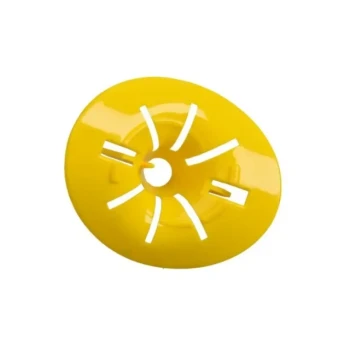
To maximize effectiveness in laboratory and storage settings, light traps must be positioned in shaded areas and organized in a linear sequence. This specific configuration minimizes ambient light interference, allowing wax moths to clearly distinguish the trap's wavelengths. By lining them up in darker zones, you create a guided path that directs pests away from stored honeycombs and toward the capture device.
Effective wax moth control relies on placing traps in a linear sequence within shaded environments to optimize visibility. This arrangement helps pests distinguish specific light wavelengths in the dark, ensuring thorough removal from sensitive storage areas.
Optimizing the Control Environment
To protect stored honeycombs, you must look beyond the hardware and focus on the spatial configuration of your traps. The environment dictates the success of the capture.
Utilizing Shaded Zones
Placing traps in shaded areas is critical for performance.
Darkness reduces visual noise, creating the necessary contrast for the wax moth to detect the trap's lure.
In a bright environment, the specific wavelengths emitted by the trap become difficult for the pest to distinguish, significantly lowering capture rates.
Implementing a Linear Sequence
Traps should not be scattered randomly; they must be arranged in a straight line.
This linear setup acts as a navigational guide for the moths in a dark environment.
It creates a clear vector that draws pests away from honeycombs and directs them sequentially toward the most attractive light source.
Common Pitfalls to Avoid
Even high-quality traps can fail if the installation logic is flawed. Understanding the limitations of light-based control is essential.
Ambient Light Interference
Avoid placing traps near windows or other strong, competing light sources.
Excessive background light washes out the trap's specific wavelength, rendering it essentially invisible to the moth.
Without a distinct light signal in a dark environment, the moths will remain on the honeycombs rather than moving toward the trap.
Disrupted Sequencing
Breaking the linear sequence disrupts the attraction path.
Random or staggered placement may leave "blind spots" where moths can bypass the control measures.
A fragmented layout fails to capitalize on the moth's tendency to follow the strongest light signals in a uniform direction.
Making the Right Choice for Your Storage Facility
To ensure the safety of your stored honeycombs, apply these placement principles to your specific environment.
- If your primary focus is maximizing attraction: Ensure the storage area is thoroughly darkened to maximize the contrast of the trap's specific wavelengths.
- If your primary focus is creating a defensive perimeter: Set up the traps in a strict linear formation to intercept moths and guide them away from storage racks.
By strictly adhering to a linear, shaded arrangement, you transform light traps from passive tools into an active defense system against wax moth infestation.
Summary Table:
| Arrangement Strategy | Key Implementation Detail | Impact on Pest Control |
|---|---|---|
| Spatial Lighting | Place in shaded or dark zones | Maximizes wavelength contrast for better attraction |
| Layout Pattern | Arrange in a strict linear sequence | Creates a guided navigational path away from honeycombs |
| Environmental Control | Minimize ambient/competing light | Prevents signal washout and ensures trap visibility |
| Installation Goal | Create a defensive perimeter | Intercepts moths before they reach sensitive storage racks |
Secure Your Apiary Investment with HONESTBEE
Protecting your valuable honeycomb storage requires more than just high-quality traps—it requires a comprehensive approach to apiary management. At HONESTBEE, we specialize in supporting commercial apiaries and distributors with a full spectrum of professional beekeeping tools, machinery, and essential consumables.
From advanced hive-making and honey-filling machines to specialized hardware and industry-standard supplies, we provide the equipment you need to scale your operations and defend your inventory against pests like the wax moth.
Ready to elevate your beekeeping business? Our team is dedicated to delivering value through high-performance wholesale solutions and expert equipment. Contact us today to discuss your requirements and let us help you build a more efficient and secure storage environment.
References
- Mahmoud Mabrouk, Mohamed Mahbob. Effect of Different Coloured Light Traps on Captures and Controlling Wax Moth (Lepidoptera: Pyralidae).. DOI: 10.21608/eajbsa.2015.12883
This article is also based on technical information from HonestBee Knowledge Base .
Related Products
- Professional Bucket Style Wasp and Moth Pheromone Trap
- Solar Powered LED Wasp Trap
- Compact Multi-Funnel Hanging Wasp Trap
- Gourd Shaped Hanging Wasp Trap Professional Wasp Catcher
- Removable Washable Hive Beetle Trap Attractants for Small Hive Beetles
People Also Ask
- What is the function of Pheromone Traps in the biosecurity monitoring of apiaries? Precision Tools for Pest Control
- What role do Pheromone Traps play in the IPM for Large African Hive Beetles? Essential Surveillance & Control Tips
- How do professional wasp traps function? Master Physical Control of Oriental Hornets to Protect Your Apiary
- What are the practical advantages of using professional wasp traps and protective equipment in apiary management? Scale Up
- Why replace sugar syrup bait in wasp traps every three days? Ensure Maximum Attraction and Catch Rates