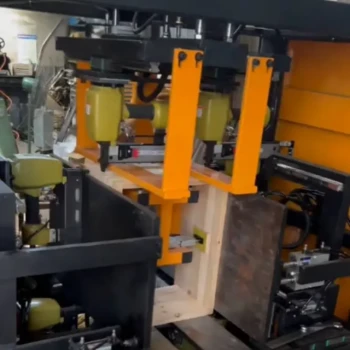
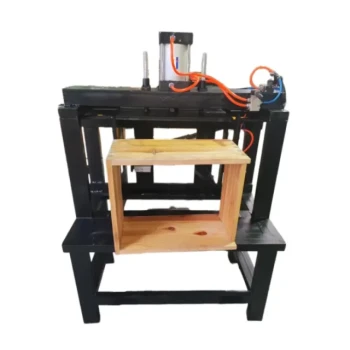
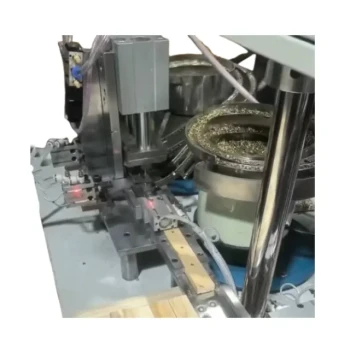
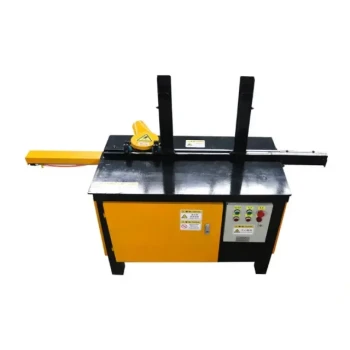
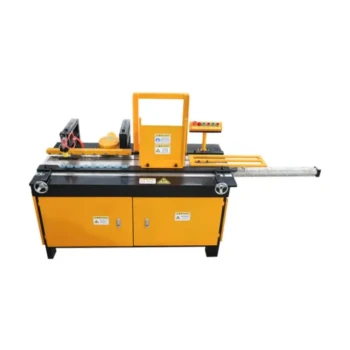
The Bee Box machine was designed over a period of nine months using 3D CAD software, specifically to fulfill a request from a local beekeeper seeking a superior manufacturing solution. The development process focused heavily on industrial durability and operational efficiency, resulting in a machine capable of handling high-volume production while managing the significant debris created during cutting.
Core Takeaway The machine is a custom-engineered solution that prioritizes consistent internal dimensions and tool longevity over standard off-the-shelf capabilities. It solves the specific problem of mass-producing accurate bee boxes by holding panels square and cutting both ends simultaneously to ensure precision.
The Development Framework
Driven by Specific Industry Needs
The machine’s inception was not a general R&D project but a direct response to a "market pull." A local beekeeper required a manufacturing method that exceeded current capabilities.
This user-centric approach dictated the timeline, which spanned approximately nine months.
Leveraging Modern Engineering Tools
The engineering team utilized 3D CAD software throughout the design phase. This digital modeling was essential for visualizing the complex interactions between the cutting heads and the clamping mechanisms before physical fabrication began.
Prioritizing Waste Management
A critical aspect of the design was the dust collection system. Cutting joints, rabbets, and handholds produces a massive volume of chips; the machine was engineered with an integrated system specifically designed to evacuate this waste efficiently to prevent jamming or downtime.
Mechanical & Electrical Engineering
High-Power Motor Configuration
The machine is powered by a robust multi-motor setup. It utilizes two 7.5 HP motors specifically to drive the dado heads, alongside two 3 HP motors for the rabbet and handhold operations.
A smaller DC motor is employed to precisely move the rabbet cutter into position.
Automation and Control
To ensure safety and consistency, a logic computer serves as the machine's brain. It controls the sequencing of operations, ensuring that clamping, cutting, and cycling occur in the correct order every time.
Tooling Specifications
The cutter design features dado blades bored to 1.250 inches to accommodate a larger arbor. The tooling set includes:
- Standard dado blades
- Offset dados
- A custom-built handhold cutter
- A 4-inch rabbet cutter
Solving the Precision Problem
Simultaneous Cutting Strategy
A significant engineering advantage of this machine is its ability to hold panels square and true while cutting both ends at the same time.
Decoupling Dimensions from Material Variances
The design ensures that the depth of the box joint fingers is not dependent on the pre-cut dimension of the panels.
This means that even if the raw lumber varies slightly, the interior dimensions of the finished boxes remain consistently accurate. This is critical for beekeepers, as frames must fit inside the boxes precisely.
Understanding the Trade-offs
Over-Engineering vs. Efficiency
While the machine uses 7.5 HP motors for the dado heads, operational data suggests this may be over-engineered. Electrical load readings during cutting were close to idle draw, indicating that 5 HP motors would likely be sufficient.
Setup Complexity vs. Longevity
The current tooling setup is highly durable—the first set of cutters lasted for 30,000 boxes without sharpening. However, the multi-piece dado stack can be complex to set up.
Initial Investment
Equipping the machine with the necessary tooling costs approximately $1800. While durable, this represents a significant upfront cost compared to standard woodworking setups.
Making the Right Choice for Your Goal
This machine represents a specialized manufacturing tier. Consider the following when evaluating this design approach:
- If your primary focus is Ease of Setup: Future iterations using one-piece cutters are recommended to simplify the tooling changes compared to the current stacked dado design.
- If your primary focus is Energy Efficiency: You can likely downsize the main drive motors to 5 HP without sacrificing cutting performance, based on load data.
- If your primary focus is Product Consistency: The mechanism of cutting both ends simultaneously is non-negotiable; it is the only way to guarantee true interior dimensions regardless of raw material variances.
Successful high-volume manufacturing requires prioritizing the consistency of the final assembly over the simplicity of the machine's initial construction.
Summary Table:
| Feature | Specification | Engineering Benefit |
|---|---|---|
| Development Time | 9 Months | Rigorous testing and 3D CAD modeling |
| Main Power | Dual 7.5 HP Motors | High-torque performance for dense lumber |
| Control System | Logic Computer (PLC) | Automated sequencing and operator safety |
| Tooling Life | 30,000 Boxes | Industrial durability with minimal sharpening |
| Precision Feature | Simultaneous Dual-End Cutting | Guarantees squareness and interior dimensions |
Scale Your Apiary Production with HONESTBEE
At HONESTBEE, we specialize in empowering commercial apiaries and distributors with the industrial-grade tools needed to lead the market. From custom-engineered hive-making machines to high-efficiency honey-filling equipment, our comprehensive wholesale portfolio covers your entire operational spectrum.
Whether you need robust hardware or essential consumables, we provide the expertise to optimize your manufacturing consistency and output. Contact us today to explore our wholesale solutions and see how our specialized machinery can transform your beekeeping business.
Related Products
- Automatic High-Speed Bee Hive Box Stapling Machine
- High-Efficiency Pneumatic Bee Hive Making Machine for Rapid Box Assembly
- HONESTBEE Top Bar & Bottom Bar Forming Machine | Bee Frame Machine
- Automatic Pneumatic Bee Frame Machine for Eyelet Insertion
- Professional Bee Frame Machine for Side Bar Shaping
People Also Ask
- How is the Bee Box machine adjusted for different box sizes? Maximize Your Woodworking Versatility and Precision
- How is the Bee Box machine operated? Optimize Your Commercial Hive Production with Scalable Staffing Solutions
- What is the production capacity of the Bee Box machine? Boost Output up to 1,000 Boxes Daily
- What are the power requirements and control system for the Bee Box machine? Optimize Your Apiary Equipment Production
- What are the details regarding the tooling and its maintenance on the Bee Box machine? High-Volume Durability Guide