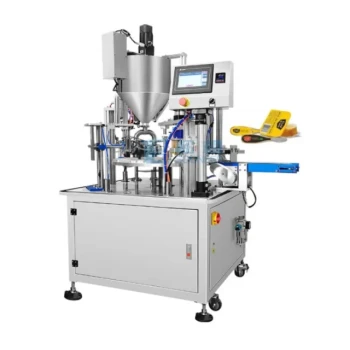
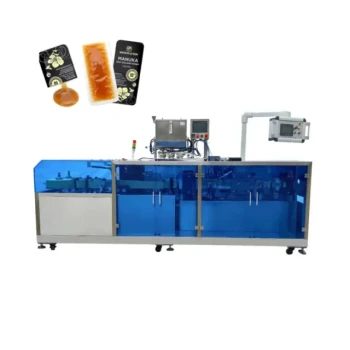
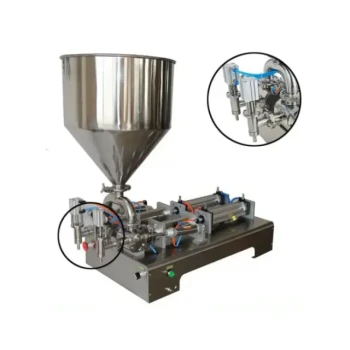
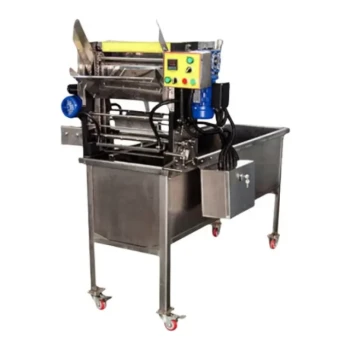
Automated honey filling and processing machines serve as the critical infrastructure that converts honey from a raw pollination byproduct into a standardized, high-value commercial asset. By introducing industrial precision and hygiene controls, these systems allow oil palm plantations to transition from selling low-margin bulk honey to marketing high-margin, retail-ready packaged goods, thereby establishing a sustainable secondary income stream.
Core Takeaway While beekeeping primarily serves to enhance crop yields through pollination, automated processing unlocks the honey's full economic potential. It transforms an agricultural variable into a consistent, shelf-ready product, enabling plantations to capitalize on a dual-revenue model of agricultural service and commercial retail.
Transforming Byproducts into Marketable Assets
Creating a Dual-Revenue Stream
For oil palm plantations, the primary value of beekeeping has traditionally been pollination services. Automated processing changes the economic equation by enabling deep processing of the honey produced during this service.
This establishes a robust dual-revenue model. The plantation benefits from the agricultural yield increase via pollination, while simultaneously generating direct income through the sale of processed honey products.
Capturing Market Added Value
Without automation, honey is often sold in bulk at lower prices due to inconsistencies in packaging and quality. Processing machines allow for the creation of branded, standardized products.
By controlling the packaging and presentation, operations can shift from wholesale commodity trading to the high-end retail market. This transition significantly increases the commercial added value of every kilogram of honey produced.
ensuring Standardization and Compliance
Precision and Consistency
Commercial retail markets demand uniformity. Industrial honey filling machines utilize high-precision pistons or metering pump systems to ensure every unit contains the exact same volume.
This consistency is essential for brand reputation. It eliminates the variations inherent in manual filling, ensuring that the consumer experience is identical across every batch.
Hygiene and Food Safety
To sell honey commercially, products must meet strict food safety regulations. Automated lines reduce human contact with the product, maintaining strict hygiene control throughout the packaging process.
This compliance is a prerequisite for entering high-value retail chains. It assures distributors and consumers that the product is safe, uncontaminated, and professionally processed.
Enhancing Operational Efficiency
Reducing Production Costs
Manual processing is labor-intensive and prone to product waste. Automated systems streamline the workflow, significantly shortening production cycles and reducing labor requirements.
By minimizing honey loss during filling and accelerating the packaging rate, the overall cost per unit decreases. This improves the profit margin on the final product, improving the overall economic efficiency of the operation.
Enabling Scalability
As beekeeping operations expand to cover larger plantation areas, processing volume increases. Automated machinery provides the industrial capacity needed to handle this growth without a proportional increase in management overhead.
This scalability incentivizes beekeepers to expand their hive count. They can be confident that increased honey production can be processed efficiently without creating a bottleneck.
Understanding the Trade-offs
While automated machinery increases commercial value, it introduces new operational considerations.
Capital and Maintenance Requirements
Implementing industrial-grade systems requires an upfront capital investment and a commitment to ongoing maintenance. The machinery is complex and requires technical oversight to ensure the metering systems and pistons remain accurate over time.
Shift in Management Focus
Adopting these machines shifts the operation from purely agricultural to manufacturing. Management must develop competencies in supply chain logistics, packaging material sourcing, and equipment upkeep, rather than focusing solely on hive health and crop yields.
Making the Right Choice for Your Goal
To maximize the value of beekeeping in your plantation, align your equipment choice with your specific commercial objectives:
- If your primary focus is High-End Retail: Prioritize machines with advanced hygiene controls and precision dosing to ensure your product meets strict regulatory and consumer standards.
- If your primary focus is Cost Reduction: Focus on high-speed automated lines that minimize labor inputs and reduce product waste to maximize margins on high-volume production.
By integrating automated processing, you evolve from simply managing a plantation to running a diversified agri-business.
Summary Table:
| Benefit Category | Impact of Automation | Commercial Value Addition |
|---|---|---|
| Revenue Model | From bulk commodity to branded retail | Creates high-margin dual-revenue streams |
| Product Quality | Precise metering & industrial hygiene | Ensures standardization & food safety compliance |
| Operational Cost | Reduced labor & minimized product waste | Increases profit margins through efficiency |
| Scalability | High-volume industrial throughput | Enables expansion without labor bottlenecks |
Scale Your Honey Business with HONESTBEE
Elevate your plantation's commercial output from raw honey to premium retail products. HONESTBEE empowers commercial apiaries and distributors with the industrial tools needed to capture maximum market value.
Our comprehensive wholesale offering includes:
- Advanced Machinery: High-precision honey-filling and hive-making machines.
- Beekeeping Equipment: A full spectrum of professional tools for large-scale operations.
- Essential Consumables: Every supply needed to maintain a productive commercial apiary.
- Merchandising: Honey-themed cultural products to diversify your brand.
Ready to transform your production efficiency and market reach? Contact HONESTBEE today to discuss how our tailored machinery solutions can scale your business.
References
- Dunsford, Brian, Jayarathne, Isuri. Evaluating Apis cerana (L.) beekeeping as a strategy to enhance pollination and yield in Sri Lankan oil palm plantations. DOI: 10.5281/zenodo.17736363
This article is also based on technical information from HonestBee Knowledge Base .
Related Products
- Fully Automatic Honey Filling Packaging Machine for Processing Line
- Automatic Honey Filling and Filtering Machine for Beekeeping Bottle Filling
- Precision Durable Efficient HONESTBEE Rotary Honey Filling Machine
- Precision Automated Packaging Turntable Honey Spoon Filling Sealing Packing Machine
- Automatic Single-Dose Snap & Squeeze Honey Sachets Packing Machine
People Also Ask
- Why are fully automatic honey filling and packaging lines essential? Boost Your Honey's Market Value and Quality
- What is a fully-automatic honey filler? Streamline Your Production with High-Precision Automation
- How do automated honey filling and packaging machines affect profitability? Boost Margins with HONESTBEE Technology
- How do automated honey filling and packaging machines contribute to the market value of honey products? Maximize Your ROI
- How do industrial-grade automated honey filling and packaging machines mitigate the risk of physical contamination?