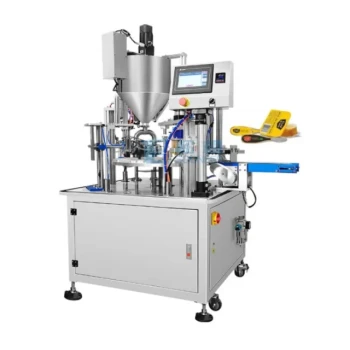
The biological activity of honey necessitates specific metallurgy. Because honeybee secretions contain sensitive antimicrobial enzymes like glucose oxidase and various peptides, commercial equipment must be constructed from high-grade food-grade stainless steel, specifically 316L. This material selection, paired with precision temperature control systems, is critical to prevent metal ion leaching and thermal degradation, which would otherwise inactivate the honey's natural defense mechanisms and preservation properties.
Core Takeaway Honey is an active biological substance, not merely a sugar solution. The enzymes responsible for its natural preservation are highly reactive to lower-grade metals and heat; therefore, the only way to maintain the product’s commercial value and shelf stability is by using non-reactive 316L stainless steel and strict thermal regulation.
The Chemistry of Equipment Interaction
The Biological Component
Honey is defined by its secretions, specifically antimicrobial peptides and enzymes like glucose oxidase.
These components are what give honey its natural preservation properties and health benefits.
If these enzymes are destroyed, the honey loses its "raw" or "bioactive" status and becomes a simple sweetener.
The Threat of Metal Ion Leaching
Standard metals, and even lower grades of stainless steel, can release metal ions when in contact with the acidic nature of honey.
These distinct ions chemically interact with honey's enzymes, effectively "turning them off" or denaturing them.
To prevent this chemical inactivation, the contact surface must be chemically inert relative to the honey's biological makeup.
Critical Equipment Specifications
Why 316L Stainless Steel is the Standard
The primary reference explicitly identifies 316L stainless steel as the required material for processing equipment.
Unlike standard 304 stainless steel, 316L contains molybdenum, which drastically increases resistance to corrosion and acidic reactions.
This ensures that no metal ions leach into the product, preserving the integrity of the glucose oxidase and antimicrobial peptides.
The Necessity of Precision Temperature Control
Preserving natural defense mechanisms requires more than just the right metal; it requires thermal management.
The enzymes in honey are heat-sensitive and will degrade rapidly if exposed to excessive temperatures during filling or dehydration.
Advanced processing equipment includes automated temperature regulation to keep the honey flowable without crossing the thermal threshold that kills bioactivity.
Operational Considerations and Hygiene
Preserving Flavor and Purity
Beyond enzymes, the equipment must preserve the unique flavors profile of the honey.
Industrial-grade machinery utilizes automated filtration and dehydration systems designed to remove impurities without stripping away these volatile flavor compounds.
This capability is essential for establishing a high-quality brand image suitable for wholesale distribution.
Flexibility in Processing
Natural beekeeping methods often result in fluctuating honey yields as bees prioritize colony defense over production.
Consequently, machinery must be selected for flexibility rather than just raw throughput.
This allows producers to handle variable volumes of high-value product efficiently, ensuring economic productivity even when yields are inconsistent.
Understanding the Trade-offs
Cost vs. Quality
Equipment manufactured from 316L stainless steel significantly increases the initial capital investment compared to standard food-grade options.
However, opting for cheaper materials risks producing a lower-value product that lacks the bioactive claims that drive premium pricing.
Throughput vs. Preservation
High-speed processing often generates friction and heat, which endangers the honey's enzymes.
Operators must often accept slightly lower processing speeds to maintain the strict temperature controls required to protect the honey's defense mechanisms.
Making the Right Choice for Your Goal
When selecting equipment, your business objectives dictate your technical requirements:
- If your primary focus is Premium/Medicinal Honey: Prioritize 316L stainless steel construction and advanced cooling jackets to guarantee zero enzyme loss.
- If your primary focus is High-Volume Table Honey: Ensure standard food-grade hygiene certification, but you may prioritize throughput speed over the most advanced metallurgical grades if bioactivity is not a marketing claim.
- If your primary focus is Natural/Organic Production: Select equipment with high flexibility to adapt to the lower, fluctuating yields caused by bee-centric colony management.
Invest in the material that respects the chemistry of the product, or risk selling a compromised commodity.
Summary Table:
| Feature | Requirement | Impact on Honey Quality |
|---|---|---|
| Material | 316L Stainless Steel | Prevents metal ion leaching and enzyme inactivation |
| Thermal Control | Precision Temperature Regulation | Protects heat-sensitive glucose oxidase and peptides |
| Chemical Resistance | Acid-Resistant Molybdenum | Ensures purity against honey's natural acidity |
| Equipment Focus | Flexibility & Bio-preservation | Maintains "raw" status and high-value medicinal properties |
Elevate Your Honey Quality with HONESTBEE
Preserving the delicate biological activity of your honey requires more than just standard machinery—it requires precision engineering and superior metallurgy. At HONESTBEE, we specialize in supporting commercial apiaries and distributors with high-grade 316L stainless steel equipment designed to protect your product's natural enzymes and flavor profiles.
From advanced honey-filling and dehydration machines to specialized hive-making hardware and cultural merchandise, our wholesale solutions are tailored to help you scale while maintaining premium standards. Don't compromise your bioactivity—contact us today to build a processing line that delivers true value.
References
- Rachel L. Vannette, Brian R. Johnson. Forager bees (Apis mellifera) highly express immune and detoxification genes in tissues associated with nectar processing. DOI: 10.1038/srep16224
This article is also based on technical information from HonestBee Knowledge Base .
Related Products
- Commercial Rotary Honey Filling Machine for Production
- Fully Automatic Honey Filling Packaging Machine for Processing Line
- Double Nozzle Small Honey Filling Machine Honey Sachet Packing Packaging Equipment
- Small Honey Filling Machine Sachet Packing Equipment Single Nozzle
- Automatic Honey Filling and Filtering Machine for Beekeeping Bottle Filling
People Also Ask
- What role do commercial honey filling machines play in honey distribution? Scaling Efficiency and Quality Control
- What technical support do commercial-grade filling machines provide? Convert Honey NTFPs into Marketable Commodities
- What is the significance of specialized honey filling equipment? Scaling from Beekeeping to Commercial Success
- Why is professional honey filling machinery critical for honey production? Scale Your Apiary's Profit & Efficiency
- Why is high-capacity honey filling machinery necessary for Giant Honey Bees? Solve the Apis dorsata Volume Crisis