Commercial honey-filling machines indirectly stabilize grain production by creating the financial incentive necessary for farmers to maintain honeybee populations. By transforming raw honey into a consistent, high-value commercial product, these machines make beekeeping a viable economic pillar alongside traditional farming. This ensures the continued presence of pollinators, which are essential for the ecological health and yield stability of the broader farm system.
The connection between packaging machinery and grain output is fundamentally economic. By maximizing the market value and process efficiency of honey, these machines encourage the diversification of agricultural operations, securing the pollination services required for long-term crop stability.
The Economic Bridge to Agricultural Stability
Creating Value to Sustain Pollinators
The stability of grain production often relies on the broader health of the farm ecosystem, which includes active pollinator populations.
Commercial filling machines act as a catalyst for this ecosystem by improving the processing quality and market value of honey.
When honey is processed efficiently and packaged professionally, it becomes a reliable revenue stream rather than a minor byproduct.
Incentivizing Diversification
Farmers are rational economic actors. They are more likely to invest in and maintain honeybee colonies if the return on investment is high.
The economic incentive provided by value-added honey products encourages farmers to keep apiaries alongside traditional grain crops like maize and wheat.
This diversification creates a buffer against market volatility in the grain sector while ensuring bees are present on the land.
Ensuring Reliable Cross-Pollination
The result of this machine-driven economic viability is a stable, resident population of bees.
These colonies provide a long-term and reliable source of cross-pollination for crops at the farm level.
Without the profitability enabled by efficient processing, beekeeping might decline, removing a critical layer of biological support for the farm's vegetation and crop rotation systems.
How Filling Technology Drives Viability
Precision and Quantitative Control
To compete in the commercial market, honey producers must meet strict distribution requirements.
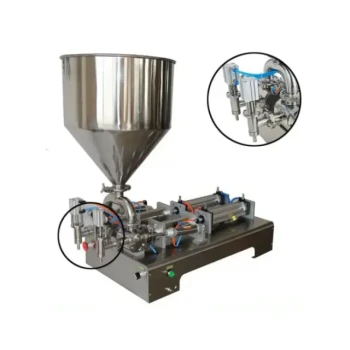
Commercial filling machines utilize high-precision quantitative controls to ensure accurate volumes.
This minimizes product overflow and waste, maximizing the yield from every hive and directly boosting the profit margin per batch.
Hygiene and Market Competitiveness
Manual packaging often limits a farmer's ability to reach high-value markets due to inconsistency or contamination risks.
Automated machines provide rigorous hygiene control, preventing secondary contamination from external impurities.
This mechanical precision allows local farmers to maintain purity standards that compete with large-scale or imported alternatives, securing their market position.
Scaling from Production to Consumption
Transitioning from small-scale beekeeping to a commercial operation requires overcoming bottlenecks in packaging.
High-efficiency automation meets the capacity demands of large-scale market supply.
This ensures a smooth transition of bee products from the apiary to the consumer, solidifying the revenue stream that keeps the bees on the farm.
Understanding the Trade-offs
The Barrier of Initial Investment
While these machines secure long-term stability, they represent a significant upfront capital expenditure.
Small-scale grain farmers may find the cost of high-precision filling equipment prohibitive without guaranteed market access.
Maintenance and Technical Requirements
Moving from manual filling to automated machinery introduces technical complexity.
Farmers must factor in the costs of maintenance and the potential need for skilled labor to operate rigorous hydraulic or pneumatic systems.
Reliability in the machinery is just as critical as reliability in the apiary; a breakdown during harvest season can negate the efficiency gains.
Making the Right Choice for Your Goal
Whether you are focusing on the agricultural output or the commercial viability of the apiary, understanding the role of this machinery is key.
- If your primary focus is Grain Stability: Recognize that investing in honey processing infrastructure is actually an investment in your farm's biological support system and pollination security.
- If your primary focus is Commercial Beekeeping: Prioritize machines that offer high-precision quantitative filling and hygiene control to maximize the market value of every ounce of honey produced.
Ultimately, the commercial honey-filling machine acts as the economic anchor that keeps bees on the farm, indirectly safeguarding the productivity of grain crops through sustained pollination.
Summary Table:
| Feature | Impact on Beekeeping Viability | Indirect Benefit to Grain Production |
|---|---|---|
| High-Precision Filling | Maximizes profit margins by reducing waste | Incentivizes farmers to maintain resident bee colonies |
| Hygiene Control | Increases market value and competitiveness | Ensures long-term financial stability of pollinator habitats |
| Automated Scaling | Enables transition to commercial operations | Provides a reliable and dense pollinator population for crops |
| Diversified Revenue | Buffers against grain market volatility | Maintains ecological health and cross-pollination security |
Secure Your Agricultural Ecosystem with HONESTBEE
At HONESTBEE, we understand that beekeeping is a vital pillar of agricultural stability. As a premier partner for commercial apiaries and distributors, we provide the industrial-grade machinery and beekeeping tools needed to transform honey production into a high-value enterprise.
Our comprehensive wholesale offering includes:
- Advanced Honey-Filling Machines: High-precision, hygienic automation to maximize your market reach.
- Full-Scale Equipment: From hive-making machinery to specialized honey-processing hardware.
- Essential Consumables: A complete spectrum of tools and merchandise to support your entire operation.
By empowering your beekeeping business with our professional equipment, you are not just selling honey—you are securing the pollination services that drive grain yields.
Ready to elevate your production and protect your farm's future?
Contact HONESTBEE Today
References
- Obed Nyangena, Rachel Ngesa. Linking Climate Change, Pollinators and Cereal Yields in Kenya. DOI: 10.4236/oalib.1106508
This article is also based on technical information from HonestBee Knowledge Base .
Related Products
- Commercial Rotary Honey Filling Machine for Production
- Precision Durable Efficient HONESTBEE Rotary Honey Filling Machine
- Fully Automatic Honey Filling Packaging Machine for Processing Line
- Economy Small Honey Filling Machine Honey Bottle Filler Packaging Machine
- Automatic Honey Filling and Filtering Machine for Beekeeping Bottle Filling
People Also Ask
- What role do commercial honey filling machines play in honey distribution? Scaling Efficiency and Quality Control
- What technical support do commercial-grade filling machines provide? Convert Honey NTFPs into Marketable Commodities
- What is the significance of specialized honey filling equipment? Scaling from Beekeeping to Commercial Success
- Why is professional honey filling machinery critical for honey production? Scale Your Apiary's Profit & Efficiency
- Why is high-capacity honey filling machinery necessary for Giant Honey Bees? Solve the Apis dorsata Volume Crisis