High-precision GPS positioning equipment transforms pollination management by establishing a rigorous, coordinate-based framework for hive deployment. Rather than relying on visual estimation, technicians use this technology to map the exact spatial coordinates of bee colonies relative to target trees. This data allows for the calculation of precise linear distances, enabling growers to scientifically adjust hive density and distribution to maximize pollination efficiency across a specific landscape.
By correlating exact hive locations with crop performance, you can move beyond generalized placement strategies. The core value lies in using spatial data to ensure every target tree falls within the optimal flight range of a colony, thereby scientifically maximizing yield.
Converting Spatial Data into Pollination Intelligence
Mapping Precise Coordinates
The foundation of optimization is the accurate recording of geographic positions. High-precision GPS units are used to log the specific coordinates of every honeybee colony and stingless bee nest introduced to the environment.
Calculating Linear Distances
Once coordinate data is collected, technicians calculate the precise linear distance between the bee colonies and the specific target trees. This metric is the primary variable used to evaluate coverage gaps in the orchard or field.
Analyzing Distance vs. Efficiency
With the distance data established, you can analyze the direct correlation between the proximity of a hive and the pollination success rate of nearby trees. This analysis reveals the "effective radius" of a colony, identifying exactly where pollination activity begins to decline.
Strategic Hive Deployment
Scientific Distribution Planning
Using the efficiency data derived from GPS analysis, you can transition to a scientifically planned distribution model. Instead of clustering hives at convenient access points, GPS data guides the dispersion of colonies to ensure uniform coverage across the entire agricultural area.
Optimizing Colony Density
To achieve pollination rates of 80% to 90% in crops like fruit trees or alfalfa, high density is often required. GPS tools help you visualize density hotspots and cold spots, ensuring that the number of hives per acre is sufficient to compensate for wild pollinator fluctuations.
Integrating Forage Maps (GIS)
Beyond just crop placement, professional-grade GPS allows for the mapping of surrounding forage plants. This data creates a Geographic Information System (GIS) for the apiary, helping you place hives where they can maximize honey collection efficiency without sacrificing crop pollination duties.
Understanding the Trade-offs
Linear Distance vs. Flight Path
While GPS provides accurate linear distances, it does not account for physical barriers. A hive may be geographically close to a tree, but separated by a windbreak or elevation change that alters the bees' actual flight path.
Complexity of Implementation
Moving to a GPS-based system requires a shift from manual labor to data management. The precision gained in placement efficiency requires an upfront investment in technical training and equipment that may not be cost-effective for low-margin crops.
Making the Right Choice for Your Goal
To apply this technology effectively, assess your primary objective:
- If your primary focus is maximizing crop yield: Use GPS to calculate linear distances to target trees and distribute hives to eliminate coverage gaps.
- If your primary focus is honey production efficiency: Utilize GPS to map forage plant locations and build a GIS to identify the most resource-rich zones for hive placement.
- If your primary focus is managing large-scale operations: Use coordinate data to verify that contracted hive densities have been met across vast acreages.
True optimization occurs when you treat hive placement not as a logistical task, but as a geometry problem solved with precise data.
Summary Table:
| Optimization Factor | GPS Application | Primary Benefit |
|---|---|---|
| Spatial Mapping | Log precise hive & tree coordinates | Eliminates coverage gaps |
| Density Analysis | Calculate hives per acre vs. flight radius | Ensures 80-90% pollination rate |
| GIS Integration | Map surrounding forage resources | Balances honey yield with pollination |
| Performance Tracking | Correlate hive location with crop yield | Data-driven placement strategies |
Maximize Your Apiary’s Potential with HONESTBEE
As a professional beekeeping distributor or commercial apiary, precision is your greatest asset. HONESTBEE is dedicated to supporting your growth by providing a comprehensive wholesale range of high-quality beekeeping tools, advanced honey-filling machinery, and hive-making equipment. Whether you are optimizing pollination density or scaling honey production, our specialized hardware and industrial consumables empower you to deliver superior results to your agricultural partners.
Ready to upgrade your operation? Contact us today to explore our wholesale offerings and see how we can help you lead the industry with efficiency and innovation.
References
- Kristin Marie Lassen, Erik Dahl Kjær. Honey bees are essential for pollination of Vitellaria paradoxa subsp. paradoxa (Sapotaceae) in Burkina Faso. DOI: 10.1007/s10457-016-0007-z
This article is also based on technical information from HonestBee Knowledge Base .
Related Products
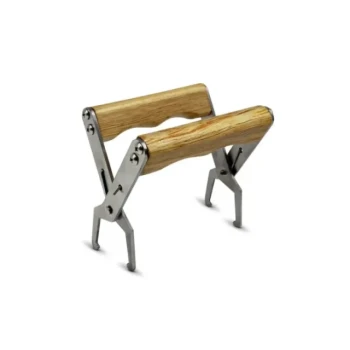
- Premium Frame Grip with Ergonomic Wood Handles
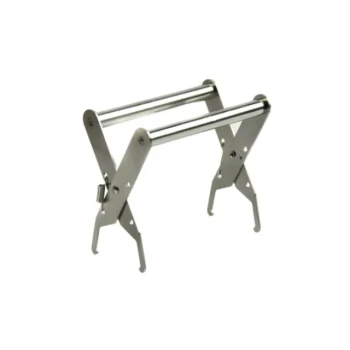
- Heavy-Duty Stainless Steel Frame Grip
- HONESTBEE Adjustable Voltage Wire Embedder with Digital Display
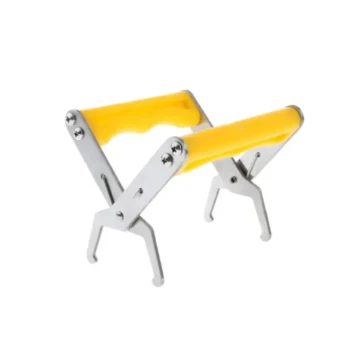
- Ergonomic High Visibility Plastic Frame Grip Handles
People Also Ask
- What is a frame grip and how is it used? Secure Your Hive Inspections with Ease
- What is the purpose of using frame grips in beekeeping operations? Elevate Your Apiary Precision & Hive Safety
- What are the benefits of using Frame Grips in beekeeping? Boost Efficiency & Protect Your Hive
- How should frame grips be cared for after use? Essential Cleaning & Storage Tips for Beekeepers
- What is the step-by-step process for using frame grips during a hive inspection? Master Safe Frame Handling Today