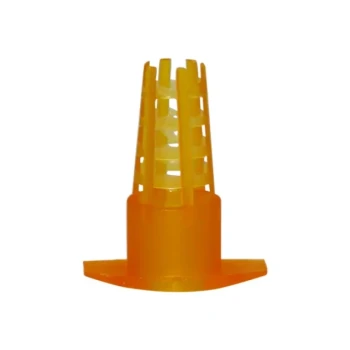
Acrylic Queen Cell Cups represent a significant shift from artisanal methods to industrial-grade precision in apiculture. They offer a rigid, standardized alternative to traditional wax, specifically designed to maximize hygiene, ensure consistent larval development, and streamline the harvesting of royal jelly.
Core Takeaway By replacing malleable wax with durable acrylic, producers gain a reusable, aseptic environment that stabilizes the variables of queen rearing. This material shift allows for precise weight measurement of royal jelly yields, higher hygiene standards through disinfection, and improved larval acceptance rates due to consistent cell geometry.
Hygiene and Operational Efficiency
The Advantage of Non-Porous Surfaces
The primary advantage of acrylic over wax is its surface texture. Acrylic cups feature a smooth, durable finish that does not absorb biological material. This facilitates the easy transfer of larvae and the efficient accumulation of royal jelly without the friction or absorption issues often found in natural materials.
Sanitization and Reusability
Unlike wax cups, which are often single-use or difficult to sterilize without deformation, acrylic is built for repeated cycles. The material withstands thorough cleaning and disinfection protocols. This capability ensures high hygiene standards, significantly reducing the risk of disease transmission between hives during large-scale production.
Standardization and Precision
Eliminating Physical Variability
Traditional wax cups are prone to deformation during handling and hive placement. Acrylic cups provide uniform physical specifications that never change. This structural integrity ensures that every cell maintains the exact geometric dimensions required for optimal placement on base bars and grafting frames.
Precision in Yield Measurement
For producers focused on royal jelly, the consistency of acrylic is vital for data accuracy. Because every cup has an identical weight, producers can perform accurate tare calibration. This allows for the precise weighing of royal jelly yields within individual cells, a task that is complicated by the weight inconsistencies of hand-dipped wax cups.
Optimizing Biological Success
Biomimetic Design
Despite being synthetic, these cups are engineered to effectively simulate the physical characteristics of natural queen cells. The standardized base mimics the natural shape required for proper larval attachment. This biomimicry acts as a guide for nurse bees, inducing them to accept the artificial cell and begin their feeding duties.
Improved Survival Rates
The stability of the acrylic cup creates a consistent developmental environment. By ensuring even spacing and geometric dimensions, the cups reduce developmental variations caused by irregular cell shapes. This structural consistency directly contributes to higher larval acceptance rates and improved survival for queen larvae.
Understanding the Trade-offs
The Necessity of Cleaning Protocols
While the reusability of acrylic is a benefit, it introduces an operational burden. You must commit to a strict disinfection cycle after every harvest. Unlike wax cups which can be melted down or discarded, acrylic cups that are not properly cleaned can become vectors for pathogens.
Material Rigidity
Acrylic offers zero malleability. While this prevents deformation, it also means the cups must be perfectly compatible with your grafting bars. You cannot "squeeze" an acrylic cup into a slightly undersized slot as you might with a wax cup.
Making the Right Choice for Your Goal
If your primary focus is Commercial Production:
- Leverage the reusability and durability of acrylic to lower long-term material costs and increase the speed of grafting operations.
If your primary focus is Royal Jelly Harvesting:
- Utilize the smooth interior surface to maximize extraction efficiency and the consistent cup weight for precise yield measurement.
If your primary focus is Queen Rearing Consistency:
- Rely on the standardized geometry of the cups to minimize developmental variations and ensure uniform queen quality across batches.
Switching to acrylic cups moves your operation from variable biological inputs to a controlled, standardized production process.
Summary Table:
| Feature | Acrylic Queen Cell Cups | Traditional Wax Cups |
|---|---|---|
| Durability | High; rigid and reusable | Low; single-use and fragile |
| Hygiene | Easy to sterilize/disinfect | Difficult to clean without damage |
| Geometric Consistency | 100% standardized dimensions | Variable based on manufacturing |
| Yield Measurement | Identical weight for easy tare | Inconsistent weight per cup |
| Surface Texture | Non-porous; easy jelly extraction | Porous; can absorb material |
| Operational Scale | Best for commercial & industrial | Best for artisanal/small-scale |
Scale Your Apiculture Success with HONESTBEE
Transitioning to industrial-grade precision is essential for modern commercial apiaries and distributors. HONESTBEE specializes in empowering your business with high-performance beekeeping tools, from advanced hive-making machinery to standardized consumables like acrylic queen cell cups.
Our comprehensive wholesale offering is designed to reduce operational variables and maximize your yield efficiency. Whether you are expanding your commercial queen rearing program or optimizing royal jelly extraction, our portfolio provides the specialized hardware and industry expertise you need to lead the market.
Ready to upgrade your apiary’s performance? Contact our expert team today to discuss wholesale solutions and discover the value of HONESTBEE precision equipment.
References
- Pedro Rosa Santos, Vagner de Alencar Arnaut de Toledo. Royal jelly production with queens produced by single and double grafting in Africanized honeybee colonies. DOI: 10.4025/actascianimsci.v41i1.45670
This article is also based on technical information from HonestBee Knowledge Base .
Related Products
- JZBZ Type Wide Base Plastic Queen Cell Cups for Base Mounting and Queen Rearing
- Clear Black Plain Polystyrene Queen Bee Grafting Cell Cups No Lug for Bee Queen Cup
- Brown Nicot Queen Cell Cups for Breeding Queen Bees Beekeeping
- 10-Cell Silicone Beeswax Bee Queen Cups Forming Mold
- Premium Nicot Style Cell Bar Holder and Queen Cell Cup Holder System
People Also Ask
- What are the primary advantages of using plastic queen cell cups? The Industrial Choice for High-Efficiency Apiaries
- What technical advantages do commercial plastic queen cell cups offer? Scale Your Queen Rearing for Maximum Efficiency
- What is the function of standardized plastic Queen Cell Cups? Boost Efficiency in Commercial Larval Grafting
- Why are standardized plastic queen cell cups preferred? Boost Commercial Queen Rearing Efficiency
- Why are standardized plastic queen cell cups typically used in large-scale queen bee production? Boosting Apiary Output