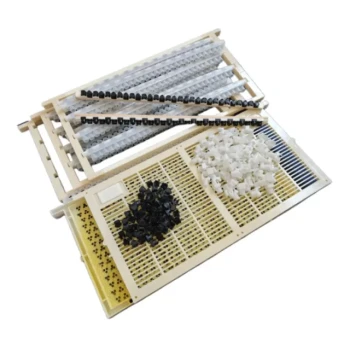
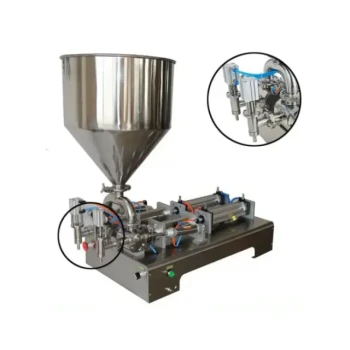
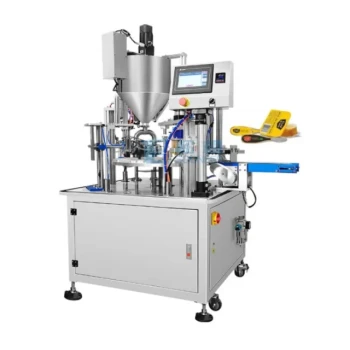
Industrial filling and mixing machines are critical for transforming volatile royal jelly into stable, effective commercial products. These systems utilize high-shear homogenization to achieve molecular-level uniformity while operating in sealed environments to drastically reduce the oxidative degradation that destroys nutrient potency.
Core Takeaway: The value of industrial automation lies in its ability to stabilize the complex colloidal structure of royal jelly against phase separation while simultaneously isolating it from air and moisture to preserve bioactivity.
Achieving Molecular-Level Stability
The primary challenge in formulating royal jelly products is blending its complex structure with other ingredients without losing consistency.
Overcoming Colloidal Challenges
Royal jelly possesses a complex colloidal structure that resists simple blending.
When mixed with viscous bases like honey, or particulate matter like pollen and propolis, standard mixing often results in uneven distribution.
The Role of High-Shear Homogenization
Industrial equipment uses high-shear homogenization to apply precise physical force to the mixture.
This process emulsifies the royal jelly, breaking down particle sizes to ensure they disperse uniformly with other ingredients.
Preventing Phase Separation
Without this level of mechanical intervention, royal jelly formulations are prone to stratification.
Industrial mixing prevents the ingredients from separating or precipitating during storage, ensuring the product remains shelf-stable.
Enhancing Nutrient Absorption
Uniform dispersion is not merely an aesthetic requirement; it is functional.
By ensuring active substances are distributed evenly, these machines improve the absorption efficiency of the nutrients when consumed.
Protecting Potency During Packaging
Once the product is mixed, the filling process presents the highest risk for chemical degradation.
Minimizing Environmental Exposure
Royal jelly is highly sensitive to oxidative degradation caused by exposure to air and moisture.
High-precision filling systems are designed to operate in sealed environments, drastically minimizing the contact area between the product and the atmosphere.
Ensuring Chemical Integrity
Manual or low-tech filling methods often trap air pockets within the container.
Industrial machines utilize precision dosing to eliminate voids, effectively preserving the bioactive properties of the royal jelly throughout the packaging process.
Understanding the Trade-offs
While industrial machinery provides necessary stability and protection, it introduces specific processing risks that must be managed.
The Risk of Thermal Degradation
High-shear homogenization generates friction, which creates heat.
Royal jelly is extremely heat-sensitive; if the mixing process is too aggressive or prolonged, the temperature spike can denature active enzymes.
Balancing Shear and Sensitivity
There is a delicate balance between achieving a stable emulsion and protecting the ingredient.
Operators must carefully calibrate shear rates to ensure sufficient emulsification without crossing the thermal threshold that damages the product.
Making the Right Choice for Your Production Line
To maximize the quality of your royal jelly formulation, align your equipment choice with your specific quality metrics.
- If your primary focus is shelf stability: Prioritize equipment with high-shear homogenization capabilities to prevent stratification and ensure long-term consistency.
- If your primary focus is bio-activity retention: Invest in filling lines that offer sealed, inert environments to completely mitigate the risks of oxidation and moisture contamination.
True quality control requires a holistic approach that protects the ingredient physically during mixing and chemically during filling.
Summary Table:
| Feature | Benefit for Royal Jelly | Mechanism |
|---|---|---|
| High-Shear Homogenization | Prevents phase separation | Breaks down particle sizes for molecular-level uniformity |
| Sealed Filling Environment | Minimizes oxidative degradation | Limits exposure to air and moisture during packaging |
| Precision Dosing | Extends shelf life | Eliminates air pockets and voids within the container |
| Calibrated Shear Rates | Protects nutrient potency | Balances emulsification with thermal sensitivity management |
Elevate Your Beekeeping Production with HONESTBEE
As a dedicated partner to commercial apiaries and global distributors, HONESTBEE understands that preserving the delicate potency of royal jelly requires precision. We provide a comprehensive wholesale range of specialized hardware, from advanced honey-filling machines to large-scale processing equipment, designed to maintain bioactivity and ensure product stability.
Whether you are scaling up your production line or sourcing high-quality beekeeping tools and consumables, our expertise in industrial solutions helps you deliver premium results. Enhance your efficiency and protect your product quality today—Contact our specialists now to explore our wholesale machinery and equipment portfolio.
References
- Ethem Akyol. ARI SÜTÜNÜN YAPISI, İNSANLAR VE ARILAR İÇİN ÖNEMİ. DOI: 10.31467/uluaricilik.377563
This article is also based on technical information from HonestBee Knowledge Base .
Related Products
- Economy Small Honey Filling Machine Honey Bottle Filler Packaging Machine
- Fully Automatic Honey Filling Packaging Machine for Processing Line
- No Grafting Queen Rearing Kit: System for Royal Jelly Production and Queen Rearing
- Automatic Honey Filling and Filtering Machine for Beekeeping Bottle Filling
- Double Nozzle Small Honey Filling Machine Honey Sachet Packing Packaging Equipment
People Also Ask
- Why is the hygiene and precision of honey filling machinery critical? Maximize Your Honey's Retail Value
- Why are professional honey filling machinery and specialized storage consumables vital? Ensure Quality & Scalability
- Why is high-precision honey filling machinery required for stingless bee honey? Ensure Stability and Market Value
- Why is high-capacity honey filling machinery necessary for Giant Honey Bees? Solve the Apis dorsata Volume Crisis
- Why is professional honey filling machinery critical for honey production? Scale Your Apiary's Profit & Efficiency