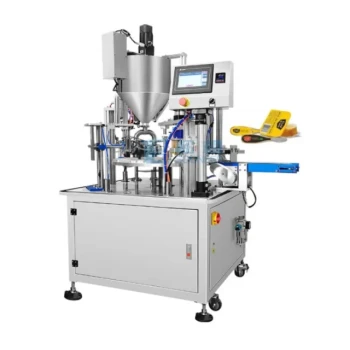
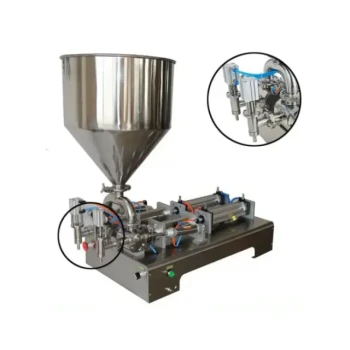
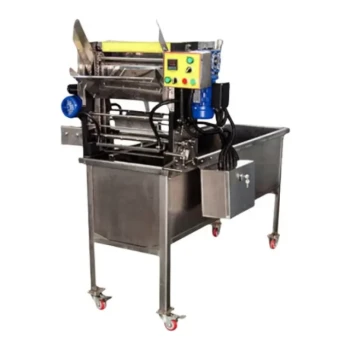
Automated honey-filling machines serve as the critical infrastructure for scaling commercial apiaries, bridging the gap between artisanal beekeeping and industrial manufacturing. These systems fundamentally alter the production landscape by ensuring processing efficiency, rigorous food hygiene, and precise dosage control. By integrating these machines, producers minimize the significant product loss associated with manual handling while satisfying the strict consistency requirements of the modern retail market.
Core Takeaway By replacing variable manual labor with precise automation, honey-filling machines ensure product consistency and safety while significantly reducing operational waste. This technology is the defining factor in transitioning an apiary from a labor-intensive operation to a standardized, scalable commercial business.
Maximizing Production Efficiency
Precision Dosage Control
The primary operational advantage of automated filling is accurate dosage control. Unlike manual pouring, which is prone to human error, these machines utilize precise metering to ensure every container receives the exact intended volume. This guarantees that net weight specifications are met consistently across thousands of units.
Minimizing High-Value Waste
Honey is a high-value commodity, and spills or overfilling represent direct revenue loss. Automated systems are designed to minimize honey loss during the packaging process. By strictly controlling the flow and fill levels, these machines eliminate the "giveaway" product that often occurs when filling jars by hand to ensure they look full.
Reducing Labor Reliance
Transitioning to automation significantly reduces labor costs associated with the packaging line. By automating the repetitive tasks of filling and sealing, commercial apiaries can reallocate human resources to hive management or sales, increasing overall output without a proportional increase in payroll.
Elevating Hygiene and Quality Standards
Sterile Filling Environments
Food safety is paramount in commercial distribution. Automated machines provide a sterile filling environment, drastically reducing the risk of contamination from human contact. This adherence to hygiene standards is often a prerequisite for entering major retail chains and complying with food safety regulations.
Closed-Pipe Protection
Advanced filling machines often feature a closed-pipe design. This isolates the honey from external air and impurities during the transfer process. By limiting exposure, the machinery prevents secondary contamination and ensures the final product remains pure.
Preserving Natural Characteristics
Contrary to the belief that industrialization degrades quality, modern filling machinery is designed to preserve active ingredients and flavor profiles. Unlike traditional manual crushing or open-air handling, which can introduce oxidation, automated filling maintains the honey's unique sensory characteristics and nutritional value.
Achieving Commercial Standardization
Product Consistency
Retail markets demand uniformity. Automated machines ensure consistency in appearance and net weight for every bottle. This reliability is essential for consumer trust; a customer expects the same experience with every purchase, which manual methods struggle to guarantee.
Brand Credibility
The professional appearance achieved through mechanized filling and sealing provides the technical assurance necessary for brand building. A standardized product signals reliability to distributors and consumers alike, enhancing the market competitiveness of the apiary.
Understanding the Trade-offs
The Cost of Consistency
While automation offers immense benefits, it represents a shift from "artisanal" variability to industrial standardization. For small-scale boutique producers, the slight variations of hand-filling can be part of the brand story. However, for commercial viability, this variability is viewed as an inconsistency. Producers must accept that moving to automation is a commitment to uniformity over individual jar uniqueness.
Equipment Complexity vs. Manual Simplicity
Adopting this technology requires a transition from simple manual tools to complex industrial machinery. While this reduces physical labor, it introduces a need for technical understanding regarding machine operation and maintenance to ensure the "precise metering controls" and "sealing processes" continue to function correctly over time.
Making the Right Choice for Your Goal
To select the right approach for your facility, assess your primary business objectives:
- If your primary focus is Market Expansion: Prioritize machines that offer high-precision quantitative filling to ensure the standardized net weights required by retail distributors.
- If your primary focus is Product Quality: Look for equipment with closed-pipe designs and sterile environments to minimize oxidation and preserve the honey’s natural flavor profile.
- If your primary focus is Profit Margins: Focus on systems with advanced dosage control to eliminate product waste and reduce the cost per unit.
Automating your filling process is not just about speed; it is the strategic step required to turn a raw agricultural product into a trusted commercial brand.
Summary Table:
| Key Feature | Benefit for Commercial Apiaries | Impact on Production |
|---|---|---|
| Precision Dosage Control | Eliminates manual error and overfilling | Consistent net weights and reduced product loss |
| Closed-Pipe Design | Minimizes exposure to air and contaminants | Preserves honey purity and extends shelf life |
| Sterile Environment | Meets strict food safety and retail standards | Enhances brand credibility and market access |
| Automated Sealing | Replaces repetitive manual labor | Increases output while lowering operational costs |
Elevate Your Honey Production with HONESTBEE
Transitioning from artisanal methods to industrial success requires the right infrastructure. HONESTBEE specializes in empowering commercial apiaries and distributors with high-performance honey-filling machines, hive-making equipment, and comprehensive beekeeping tools.
Our solutions are designed to eliminate waste, ensure sterile processing, and deliver the professional consistency your brand needs to thrive in the global market. Whether you are expanding your facility or seeking reliable wholesale consumables, we provide the technical expertise to scale your operations.
Ready to automate your success? Contact us today to explore our full equipment catalog!
References
- Ashok Yadav, Pradyumn Singh. Diagnosis of Insect Pests and Diseases of Apiary, Vegetable and Fruit Crops. DOI: 10.20546/ijcmas.2020.907.147
This article is also based on technical information from HonestBee Knowledge Base .
Related Products
- Fully Automatic Honey Filling Packaging Machine for Processing Line
- Automatic Honey Filling and Filtering Machine for Beekeeping Bottle Filling
- Precision Durable Efficient HONESTBEE Rotary Honey Filling Machine
- Semi Automatic Small Honey Bottle Filling Machine Honey Filler
- Precision Automated Packaging Turntable Honey Spoon Filling Sealing Packing Machine
People Also Ask
- Why are fully automatic honey filling and packaging lines essential? Boost Your Honey's Market Value and Quality
- What is a fully-automatic honey filler? Streamline Your Production with High-Precision Automation
- How do automated honey filling and packaging machines affect profitability? Boost Margins with HONESTBEE Technology
- How do automated honey filling and packaging machines contribute to the market value of honey products? Maximize Your ROI
- How do industrial-grade automated honey filling and packaging machines mitigate the risk of physical contamination?