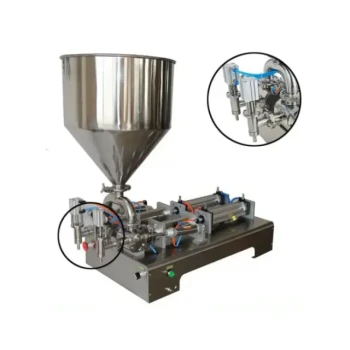
Honey-filling and processing machinery serves as a critical financial stabilizer for commercial pollination operations. It converts the byproduct of pollination—raw honey—into a high-value commercial asset, generating revenue that directly subsidizes the operational costs of managing large-scale bee colonies.
The Core Insight By transforming raw ecological byproducts into standardized, market-ready commodities, processing machinery creates a self-sustaining economic loop. The profit generated from processed honey provides the necessary capital to maintain professional beekeeping hardware and colony health, ensuring the continued availability of high-intensity pollination services for agriculture.
The Economic Feedback Loop
Subsidizing Service Costs
The primary function of this machinery within the economic cycle is cost subsidization. While pollination is the primary service provided to agriculture, the revenue from pollination fees alone often struggles to cover the full expense of maintaining large-scale colonies.
Processing machinery allows beekeepers to monetize the "waste" product of pollination—honey. The income derived from selling processed honey offsets the overhead of equipment maintenance, transportation, and colony health management.
Incentivizing Scale and Stability
This machinery creates a financial incentive for beekeepers to maintain larger, healthier apiaries than pollination contracts alone might justify.
The ability to process and sell honey means that maintaining local flora and bee populations becomes a profit-generating activity, rather than just a cost center. This ensures a stable supply of bees is always available for upstream agricultural demands.
Elevating Value through Standardization
Meeting Market Entry Requirements
Raw honey collected during pollination cannot typically enter high-value markets due to inconsistencies and hygiene risks. Industrial-grade machinery facilitates standardized filtration and sterilization, removing impurities and ensuring food safety compliance.
Without this machinery, beekeepers are limited to selling raw materials at low margins. With it, they can access global supply chains and premium retail markets that require strict certification standards.
Precision and Efficiency
Modern filling machines utilize volumetric or gravity-based principles to ensure consistent weight across large batches.
This precision is economically vital as it reduces material loss and maximizes the yield from a harvest. In regions where raw honey output is low, the efficiency gained through automated processing can compensate for volume shortages, maintaining overall profitability.
Understanding the Trade-offs
Capital Expenditure vs. Operational Return
While processing machinery unlocks downstream revenue, it introduces significant capital expenditure (CAPEX). Investing in food-grade stainless steel equipment and automated lines transforms a service-based business into a manufacturing operation.
Operational Complexity
Integrating processing equipment adds a layer of complexity to the business model. Beekeepers must manage equipment maintenance, hygiene protocols, and packaging logistics, which diverts resources from the core activity of apiary management. If the honey flow is poor in a given season, the return on investment (ROI) for this machinery may be delayed.
Making the Right Choice for Your Goal
To leverage processing machinery effectively within the pollination economy, consider your specific operational focus:
- If your primary focus is maximizing profit margins: Invest in high-precision, automated filtration and filling systems to enter premium retail markets where standardized packaging commands a higher price.
- If your primary focus is operational stability: Prioritize efficiency and waste reduction features to ensure that even low-yield honey harvests generate enough revenue to subsidize your pollination costs.
The most resilient commercial pollination services view processing machinery not as an optional add-on, but as the engine that funds their ability to serve the agricultural sector.
Summary Table:
| Feature | Economic Impact | Benefit to Commercial Apiaries |
|---|---|---|
| Cost Subsidization | Offsets overhead expenses | Converts honey byproducts into capital for colony maintenance. |
| Standardization | Enables market entry | Meets hygiene/safety standards for high-value retail distribution. |
| Automation/Precision | Reduces material waste | Maximizes yield from every harvest through accurate filling. |
| Scalability | Incentivizes larger apiaries | Ensures a stable bee supply for large-scale agricultural contracts. |
Scale Your Apiary Operations with HONESTBEE
At HONESTBEE, we understand that commercial pollination is a complex business. We empower commercial apiaries and distributors to close the economic loop by providing high-performance honey-filling machines, processing equipment, and specialized hive-making hardware.
Our comprehensive wholesale offering extends from industrial-grade machinery to essential consumables and honey-themed cultural merchandise, ensuring you have the tools to maximize every drop of honey and subsidize your pollination services.
Ready to enhance your efficiency and profitability? Contact our experts today to discover how our tailored equipment solutions can support your growth.
References
- Ruan Veldtman. Are managed pollinators ultimately linked to the pollination ecosystem service paradigm?. DOI: 10.17159/sajs.2018/a0292
This article is also based on technical information from HonestBee Knowledge Base .
Related Products
- Fully Automatic Honey Filling Packaging Machine for Processing Line
- Precision Durable Efficient HONESTBEE Rotary Honey Filling Machine
- Economy Small Honey Filling Machine Honey Bottle Filler Packaging Machine
- Automatic Honey Filling and Filtering Machine for Beekeeping Bottle Filling
- Small Honey Filling Machine Sachet Packing Equipment Single Nozzle
People Also Ask
- Why are fully automatic honey filling and packaging lines essential? Boost Your Honey's Market Value and Quality
- What is a fully-automatic honey filler? Streamline Your Production with High-Precision Automation
- How do automated honey filling and packaging machines affect profitability? Boost Margins with HONESTBEE Technology
- How do automated honey filling and packaging machines contribute to the market value of honey products? Maximize Your ROI
- How do industrial-grade automated honey filling and packaging machines mitigate the risk of physical contamination?