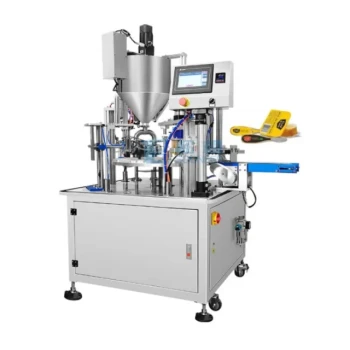
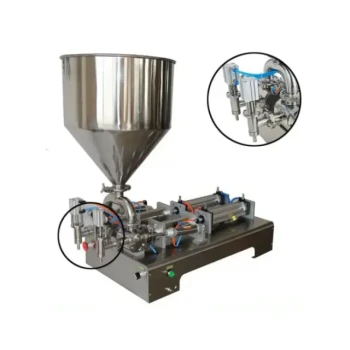
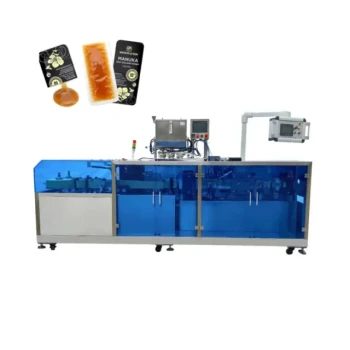
Industrial honey processing and filling machinery serve as the primary infrastructure for transforming raw apiary yields into compliant, export-grade products. These facilities establish a controlled hygienic environment that integrates precise filtration, dehydration, and sterile filling to strictly adhere to international quality frameworks such as NMX-F-036-NORMEX-2006.
By automating critical control points—from moisture reduction to sterile packaging—industrial hardware ensures honey retains its biological integrity while meeting the strict physical, chemical, and sanitary requirements necessary for global trade.
The Role of Controlled Hygiene and Sterility
Establishing a Contaminant-Free Environment
International standards demand zero tolerance for foreign matter or microbial contamination. Industrial facilities provide a controlled hygienic environment that effectively isolates the product from external pollutants.
Preventing Microbial Growth
Through sterile filling processes, specialized machinery inhibits microbial proliferation. This is essential for preserving the sensory characteristics of the honey and preventing spoilage during long-haul logistics.
Mitigating Cross-Contamination
Automated systems reduce human contact with the product. This minimizes the risk of introducing pathogens or allergens, ensuring the final product meets rigorous food safety regulations.
Achieving Physicochemical Compliance
Precision Dehydration and Moisture Control
Excess water content leads to fermentation and disqualification from export markets. Industrial processing equipment integrates dehydration functions to precisely control moisture levels, a critical chemical indicator for compliance.
Fine Filtration and Purity
To meet Non-Tariff Measures (NTMs), honey must be free of particulate matter like beeswax fragments or debris. Machinery utilizes centrifugal force and fine filtration to remove these impurities without compromising the honey's structural integrity.
Maintaining Chemical Indicators
Advanced filling machines ensure that processing does not alter key chemical markers, such as sucrose content. This guarantees that the honey falls within the specific ranges dictated by international trade laws.
Preservation of Sensory and Biological Integrity
Preventing Physical Shear
High-viscosity liquids are prone to damage during pumping. Specialized pneumatic or servo-controlled systems allow for quantitative filling without subjecting the honey to physical shear, which can induce unwanted crystallization or color changes.
Protecting Bio-active Ingredients
Over-processing can destroy the enzymes and nutrients that give honey its value. Modern equipment is designed to preserve active biological ingredients, enhancing shelf life and satisfying the requirements of high-end markets.
Ensuring Transparency and Texture
For premium varieties like Acacia honey, avoiding contact contamination is vital. Industrial machines utilize materials and processes that maintain the honey's natural transparency and purity.
Standardization and Trade Efficiency
Precision Metering and Weight Control
Global trade relies on accurate labeling. Industrial fillers ensure the net weight of every bottle meets stated standards, preventing legal disputes and ensuring fair trade practices.
Labeling and Seal Integrity
Automated lines ensure consistent seal integrity and labeling accuracy. This consistency helps products command higher premiums by signaling professional quality and security to the consumer.
Understanding the Trade-offs
The Balance of Filtration
While filtration is necessary for purity, over-filtration can remove pollen, which is often used to verify the honey's botanical and geographical origin. Operators must calibrate machinery to remove impurities without stripping the markers required for authenticity certification.
Viscosity vs. Speed
High-speed filling often requires heating or high pressure, which can degrade heat-sensitive enzymes (HMF levels). The trade-off requires selecting machinery that balances production throughput with gentle handling to maintain "raw" or "premium" status.
Making the Right Choice for Your Goal
To select the right infrastructure for your operation, consider your specific market objectives:
- If your primary focus is High-Volume Export: Prioritize automated lines with integrated dehydration and high-speed sterile filling to meet strict moisture and safety NTMs efficiently.
- If your primary focus is Premium/Artisan Markets: Choose pneumatic or servo-controlled equipment that emphasizes low-shear handling to preserve transparency, enzymes, and natural crystallization patterns.
Your machinery is not just a packaging tool; it is the gatekeeper of quality that determines your access to the global market.
Summary Table:
| Key Role | Impact on Quality | Compliance Goal |
|---|---|---|
| Moisture Control | Precision dehydration prevents fermentation | NMX-F-036-NORMEX-2006 Standards |
| Fine Filtration | Removes beeswax and debris via centrifugal force | Purity & Non-Tariff Measures (NTMs) |
| Sterile Filling | Eliminates microbes and prevents spoilage | Global Food Safety Regulations |
| Low-Shear Handling | Protects enzymes and biological integrity | Preservation of Bio-active Ingredients |
| Precision Metering | Ensures exact net weight and seal integrity | Consumer Trust & Labeling Laws |
Elevate Your Honey Quality with HONESTBEE Professional Solutions
At HONESTBEE, we understand that for commercial apiaries and distributors, the right machinery is the gatekeeper to global markets. We provide a comprehensive wholesale offering of beekeeping tools, honey-filling machines, and hive-making equipment designed to meet the most rigorous international standards.
Whether you are looking to scale up production with automated processing facilities or seeking premium hardware to protect the delicate enzymes of artisan honey, our portfolio of equipment and industry consumables ensures your product maintains its biological integrity and market value.
Ready to streamline your export operations? Contact us today to find the perfect machinery for your apiary!
References
- Ileana Mercedes Canepa-Pérez, Ricardo Dzul-Caamal. Análisis FODA de la apicultura en la península de Yucatán. DOI: 10.26359/52462.0608
This article is also based on technical information from HonestBee Knowledge Base .
Related Products
- Fully Automatic Honey Filling Packaging Machine for Processing Line
- Precision Durable Efficient HONESTBEE Rotary Honey Filling Machine
- Automatic Honey Filling and Filtering Machine for Beekeeping Bottle Filling
- Commercial Rotary Honey Filling Machine for Production
- Double Nozzle Small Honey Filling Machine Honey Sachet Packing Packaging Equipment
People Also Ask
- Why are fully automatic honey filling and packaging lines essential? Boost Your Honey's Market Value and Quality
- What is a fully-automatic honey filler? Streamline Your Production with High-Precision Automation
- How do automated honey filling and packaging machines affect profitability? Boost Margins with HONESTBEE Technology
- How do automated honey filling and packaging machines contribute to the market value of honey products? Maximize Your ROI
- How do industrial-grade automated honey filling and packaging machines mitigate the risk of physical contamination?