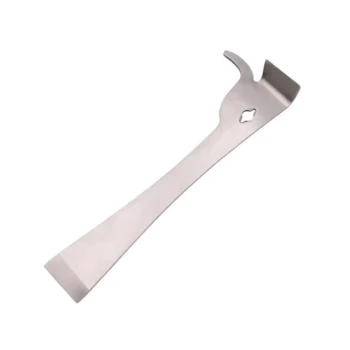
Quality variations in hive tools are significant, with issues frequently appearing in certain imported models that prioritize low manufacturing costs over precision. The most common defects found in these tools are sharp, unfinished edges on the handle and blunt working ends on the prying surface.
While a hive tool appears to be a simple lever, poor manufacturing leads to specific defects that compromise both user safety and the integrity of your hive equipment.
Identifying Common Defects
The Issue of Uncomfortable Ergonomics
In lower-quality tools, the metal is often stamped or cut without sufficient post-processing or smoothing.
This results in sharp edges along the handle or the shaft of the tool.
These unfinished edges make the tool uncomfortable to hold, digging into the beekeeper's hand during the repetitive prying and lifting required during inspections.
The Problem of Blunt Prying Ends
The primary function of a hive tool is to act as a wedge to separate propolized hive components.
Poorly made tools frequently feature blunt ends rather than a tapered, sharp wedge.
A blunt edge cannot easily slide into the tight seam between the mating faces of hive boxes, making the initial insertion difficult.
The Operational Risks of Poor Quality
Potential for Equipment Damage
When a tool is too blunt to slip easily between boxes, the beekeeper is forced to apply excessive pressure or leverage.
This struggle to push the tool into place often results in damage to the equipment.
The wooden faces of the hive boxes can be gouged, splintered, or compressed, shortening the lifespan of your woodenware.
Reduced Efficiency
Using a tool with these defects turns a quick inspection into a labor-intensive task.
The combination of hand discomfort from sharp handles and the mechanical inefficiency of a blunt wedge increases physical fatigue.
Making the Right Choice for Your Goal
To ensure you select a tool that aids rather than hinders your beekeeping, evaluate the finish of the metal carefully.
- If your primary focus is user comfort: Run your thumb along the shaft and handle to ensure the edges are smooth and free of burrs that could cut your skin.
- If your primary focus is equipment preservation: Inspect the working end to verify it is tapered and sharp enough to slide between boxes without requiring destructive force.
A quality hive tool should be sharp where it touches the hive and smooth where it touches your hand.
Summary Table:
| Quality Issue | Physical Symptom | Impact on Beekeeper | Impact on Hive Equipment |
|---|---|---|---|
| Unfinished Edges | Sharp burrs on handle/shaft | Hand discomfort and skin cuts | None (User safety risk) |
| Blunt Prying Ends | Thick, non-tapered wedge | Increased physical fatigue | Gouged and splintered wood |
| Low-Cost Stamping | Rough, unsmoothed metal | Repetitive strain and blisters | Difficulty separating boxes |
Optimize Your Apiary with HONESTBEE Quality
Don't let inferior tools slow down your commercial operations or damage your valuable woodenware. HONESTBEE specializes in supplying commercial apiaries and distributors with precision-engineered beekeeping tools, hive-making machinery, and essential consumables designed for durability and ease of use.
Whether you need bulk supplies of ergonomic hive tools or advanced honey-filling machines, our comprehensive wholesale portfolio has you covered. Contact us today to discover how our professional-grade equipment can enhance your efficiency and protect your investment.
Related Products
- HONESTBEE Professional Long Handled Hive Tool with Precision Cutting Blade
- Professional Multi-Function Stainless Steel Hive Tool
- HONESTBEE Premium Italian Style Hive Tool with Hardwood Handle
- Ergonomic Plastic Frame Spacer Tool for Rapid Hive Management Beekeeping
- Professional Grade Foldable Beehive Handles
People Also Ask
- Why are professional hive tools considered indispensable? Master Beekeeping Maintenance with Precision Leverage
- What is the role of professional hive tools in routine apiary maintenance? Expert Tips for Hive Health and Longevity
- What is a bee hive tool? Discover Why It’s the Most Essential Hand Tool for Every Beekeeper
- How do hive tools and queen rearing equipment facilitate the bee colony splitting process? Restore Your Apiary Faster
- Why are professional hive tools & observation equipment necessary for queen rearing evaluation? Master Your Quality