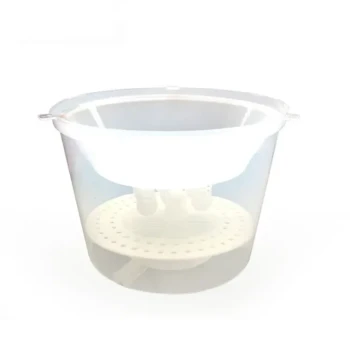
To minimize the impact of pollen collection, you must strictly limit the duration of harvesting to ensure the colony retains enough protein for its own survival. The most effective strategy is to keep pollen traps on a hive for no more than two weeks per season and to only collect during periods of varied and abundant plant bloom.
Pollen is the critical protein source required for rearing bee brood. To harvest sustainably without stunting colony growth, you must restrict trap usage to a maximum of two weeks per year and target only major pollen flows.
Managing Hive Nutrition and Colony Health
The Critical Role of Protein
Pollen is not merely a surplus product; it is the essential protein source for the hive. Specifically, it is required to feed and rear the brood (the developing larvae).
Depriving a hive of pollen directly impacts the colony's ability to reproduce and maintain its population.
Establishing Strict Time Limits
To prevent nutritional deficits, you must minimize the time a trap restricts the hive entrance.
According to best practices, you should keep pollen traps or screens on a hive for a very short duration. A suggested safety limit is a total of two weeks per hive for the entire season.
Strategic Timing for Collection
Targeting Major Pollen Flows
You should never collect pollen during a dearth (a shortage of nectar or pollen).
Instead, synchronize your collection window with a major pollen flow. This is when local flora is blooming abundantly, ensuring that the bees have access to surplus resources.
Reducing Foraging Stress
Collecting during a major flow benefits the individual bees as well as the colony.
When resources are abundant, bees do not have to travel far to find pollen. This reduced travel time and effort helps the colony compensate for the percentage of pollen lost to the trap.
Understanding the Trade-offs
Harvest Volume vs. Colony Strength
The primary trade-off in ethical pollen harvesting is volume versus vitality. By adhering to the two-week limit, you are voluntarily accepting a lower yield per hive to ensure the colony survives.
The Risk of Brood Stagnation
If you extend trapping beyond the recommended window, you risk "starving" the brood nest. Even a strong colony can suffer a population crash if the nurse bees cannot produce enough jelly to feed the larvae due to a lack of incoming protein.
Making the Right Choice for Your Apiary
To balance your need for pollen with the health of your bees, consider these guidelines:
- If your primary focus is Maximum Colony Growth: Avoid trapping altogether during the spring buildup or anytime the colony is rearing winter bees.
- If your primary focus is Sustainable Harvesting: Strictly adhere to the two-week limit per hive and only deploy traps during peak bloom when resources are abundant.
Sustainable pollen collection is less about how much you take, and more about knowing when to stop.
Summary Table:
| Best Practice | Actionable Step | Benefit for the Colony |
|---|---|---|
| Harvest Duration | Limit trap usage to max 2 weeks per season | Prevents protein deficiency and brood stagnation |
| Timing | Collect only during major floral blooms | Ensures abundant resources for both bees and harvest |
| Nutrition Focus | Avoid trapping during spring buildup | Supports population growth and healthy larva development |
| Colony Safety | Never collect during a pollen dearth | Reduces foraging stress and prevents colony population crashes |
Elevate Your Apiary's Productivity with HONESTBEE
At HONESTBEE, we understand that sustainable beekeeping requires the right balance of expertise and high-quality equipment. We specialize in supporting commercial apiaries and distributors by providing a comprehensive range of wholesale beekeeping tools, specialized hive-making machinery, and honey-filling systems.
Whether you are looking to scale your pollen collection or enhance your honey processing capabilities, our portfolio of industry-essential consumables and cultural merchandise is designed to help your business thrive. Partner with us to access professional-grade hardware that respects the health of your colonies.
Ready to upgrade your equipment? Contact us today to explore our wholesale offerings!
Related Products
- 30 cm Plastic Entrance Hole Bee Pollen Trap and Collector
- Removable Plastic Pollen Trap With Ventilated Tray for Bees Pollen Collector
- Plastic Bee Pollen Trap Strips Comb Catcher Collector
- High-Efficiency Diamond Maze Bee Escape for Clearing Supers
- HONESTBEE Professional Telescopic Pole Bee Swarm Catcher
People Also Ask
- What are the design principles and advantages of pollen traps in the collection of bee pollen? Boost Your Apiary Yield
- Why is frequent harvesting of bee pollen from traps necessary for quality control? Ensure Freshness and Prevent Mold.
- How often should bee pollen be harvested from a trap and why? Master Freshness and Prevent Spoilage
- What function do pollen traps serve in quantitative collection? Boost Your Apiary's Data & Production Efficiency
- What is the primary function of bee pollen traps? Optimize Your Pollen Harvest with Advanced Extraction Efficiency