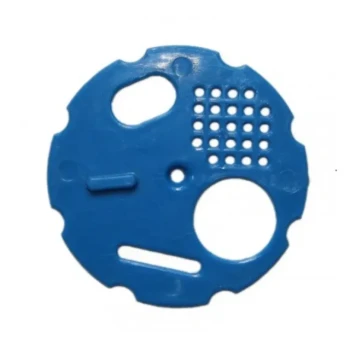
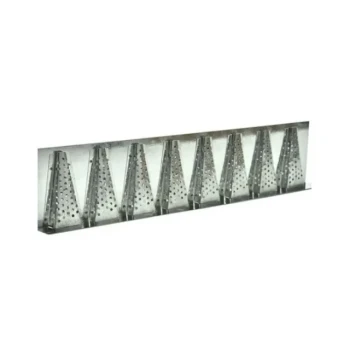
A top entrance is an auxiliary opening located in the honey supers or created by inserting a shim between hive boxes. While this configuration offers improved ventilation and winter accessibility, it fundamentally alters hive traffic patterns and requires careful management of colony defense and queen excluders.
Top entrances excel at maximizing airflow and preventing entrance blockages during heavy snowfall, but they compromise the hive's defensive perimeter. Success requires balancing the need for ventilation against the increased risk of robbing and the potential entrapment of drones below queen excluders.
Key Advantages of Top Entrances
Direct Foraging Efficiency
A top entrance provides foragers with a direct route to the honey supers. This efficiency means nectar-bearing bees do not have to traverse the congested broodnest to deposit their load. This can potentially speed up nectar storage during heavy flows.
Winter and Environmental Reliability
Bottom entrances are prone to obstruction by deep snow in winter or tall vegetation in summer. A top entrance remains accessible regardless of ground-level conditions. This ensures the colony always has a viable exit for cleansing flights and air exchange.
Enhanced Ventilation and Moisture Control
Top entrances significantly improve vertical airflow through the hive. In uninsulated hives, this is critical for venting moist air before it condenses on the inner cover and drips back onto the cluster. Reducing this internal "rain" is a primary strategy for winter survival in cold climates.
Understanding the Trade-offs
Compromised Colony Defense
Creating a second opening forces the colony to defend multiple fronts. This splits the guard bee force, making the hive more vulnerable to robbers, predators, and pests. Unlike a single bottom entrance, which can be easily narrowed with an entrance block to exclude intruders, managing multiple wide openings weakens the hive's security.
Pollen in Honey Supers
When bees enter directly into the supers, they may store resources where they land. This increases the likelihood of pollen being stored in honey frames. While not harmful to the bees, this can complicate extraction or affect the aesthetics of comb honey.
The Queen Excluder Trap
If you utilize a queen excluder, a top entrance introduces a critical mechanical risk. Drones hatched in the lower brood box may become trapped if they cannot exit through the bottom. Furthermore, a virgin queen may be unable to leave for her mating flight if her only path requires passing through an excluder to reach the top entrance.
The Impact of Hive Insulation
Ventilation vs. Heat Retention
While top entrances help vent moisture in standard wooden hives, the approach differs for modern, well-insulated hives. Beekeepers with high-insulation setups often report success using only bottom entrances. In these systems, the lack of a cold upper surface prevents condensation, rendering the heat-loss associated with a top vent unnecessary.
Making the Right Choice for Your Apiary
The decision to implement a top entrance depends heavily on your local climate and equipment configuration.
- If your primary focus is winter survival in snowy climates: A top entrance is highly recommended to prevent suffocation from snow-blocked bottom boards.
- If your primary focus is using queen excluders: You must ensure a viable bottom exit remains open to prevent trapping drones and preventing queen mating flights.
- If your primary focus is preventing robbing: Avoid top entrances, or use them cautiously, as they create an additional vulnerability that is difficult for the colony to defend.
- If your primary focus is moisture control in uninsulated hives: A top entrance provides the necessary draft to exhaust moist air and prevent dangerous condensation.
By matching the entrance configuration to your specific environmental challenges, you ensure the colony remains secure, dry, and efficient.
Summary Table:
| Feature | Advantages | Disadvantages |
|---|---|---|
| Ventilation | Improves airflow & reduces winter moisture | Excessive heat loss in some climates |
| Foraging | Direct access to honey supers; higher efficiency | Risk of pollen storage in honey frames |
| Accessibility | Remains clear of snow and tall grass | Vulnerable to robbing and pests |
| Management | Prevents suffocation in cold winters | Can trap drones below queen excluders |
Maximize Your Apiary Productivity with HONESTBEE
Choosing the right hive configuration is just the first step toward a successful harvest. At HONESTBEE, we specialize in supporting commercial apiaries and distributors with high-performance solutions. Whether you need specialized hive-making machinery, precision honey-filling equipment, or a steady supply of wholesale beekeeping tools and consumables, we deliver the quality you need to scale your operations.
From hardware to honey-themed cultural merchandise, our portfolio covers the full spectrum of the beekeeping industry. Partner with a supplier that understands the technical needs of modern beekeeping.
Ready to upgrade your equipment? Contact us today to discuss your wholesale needs!
Related Products
- Beehive Entrance Discs Plastic Bee Entrance Disc for Bee Hives
- Multi-Functional Sliding Hive Entrance for Beekeeping
- Professional Reversible Beehive Hive Entrance
- Beehive Entrance Reducer Guardian Metal Hive Entrance for Bees
- Professional Hive Front Entrance Bee Feeder
People Also Ask
- What is the best entrance for a bee hive? Maximize Colony Health & Honey Production
- What happens if you block the entrance to a bee hive? Avoid This Dangerous Mistake
- How does entrance configuration vary seasonally for beekeepers? A Guide to Year-Round Hive Health
- Why adjust beehive entrance size for humidity? Boost Honey Ripening and Varroa Control in Commercial Apiaries
- How big should a beehive entrance be? Optimize for Colony Health & Honey Production