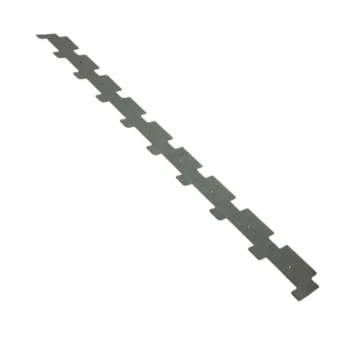
Standard commercial beekeeping equipment relies on precise vertical dimensions to ensure component compatibility and efficient management. Deep brood boxes typically feature a standard depth of 9 5/8 inches, while medium honey supers are shallower, measuring 6 5/8 inches in depth.
Standardization in hive dimensions is not merely about fit; it is the foundation of scientific hive management, allowing for the interchangeability of parts, optimized honey yields, and predictable structural integrity across the apiary.
Understanding Hive Box Standards
Deep Brood Boxes
The industry standard for the primary brood chamber is the deep box.
With a specific depth of 9 5/8 inches, these boxes provide the substantial volume required for the colony's population growth.
They are generally used as the permanent home for the bees, housing the brood (eggs, larvae, and pupae) and food stores for the colony's survival.
Medium Honey Supers
Honey supers are placed above the brood boxes to collect surplus honey for harvest.
These utilize a standard depth of 6 5/8 inches, making them significantly lighter and easier to handle when full of honey compared to deep boxes.
Frame Capacity Options
While depth is constant, the width of the equipment varies based on frame capacity.
Commercial hardware typically comes in 10-Frame and 8-Frame configurations.
Both deep and medium boxes are available in these capacities, allowing beekeepers to standardize their apiary based on weight preferences and management style.
Material and Structural Integrity
Durable Construction Materials
To withstand outdoor elements, these components are often crafted from durable woods, with cypress being a common choice.
This material choice ensures the boxes can endure rain, sun, and the internal humidity generated by the colony.
Internal Foundation Support
The frames placed inside these standardized boxes often utilize coated plastic foundations.
This combination ensures the structural integrity of the comb, which is particularly important during the mechanical stress of honey extraction.
Seasonal Maintenance
Preserving the dimensions and squareness of the boxes requires proper off-season care.
During winter, boxes should be stacked neatly to prevent warping and maintain their structural integrity for the following season.
Operational Trade-offs
Weight vs. Volume
The primary trade-off between deep (9 5/8") and medium (6 5/8") boxes is volume versus manageability.
Deep boxes maximize volume for the brood nest but become extremely heavy when filled with honey.
Medium boxes reduce the physical strain on the beekeeper during harvest but require more boxes to achieve the same total volume.
Consistency in Management
Mixing different depths within a single operation can complicate logistics.
Professional beekeeping relies on standardized hive-boxes to enable scientific management and periodic harvesting, unlike traditional wild harvesting.
Standardization ensures that any frame or box can be used on any hive, streamlining operations.
Making the Right Choice for Your Goal
Selecting the right combination of box depths depends largely on your physical capabilities and production goals.
- If your primary focus is brood management: Prioritize 9 5/8 inch deep boxes for the bottom chambers to provide an uninterrupted area for the queen to lay eggs.
- If your primary focus is harvesting ergonomics: Utilize 6 5/8 inch medium supers for all honey storage areas to reduce the weight you must lift during extraction.
- If your primary focus is equipment longevity: Invest in durable materials like cypress and ensure boxes are stacked precisely during winter storage to prevent warping.
By adhering to these standard dimensions, you ensure your operation remains compatible with the broader commercial beekeeping ecosystem.
Summary Table:
| Hive Component | Standard Depth | Primary Use | Capacity Options | Typical Weight (Full) |
|---|---|---|---|---|
| Deep Brood Box | 9 5/8 inches | Brood rearing & winter stores | 8-Frame / 10-Frame | Heavy (70-90 lbs) |
| Medium Super | 6 5/8 inches | Surplus honey storage | 8-Frame / 10-Frame | Moderate (40-60 lbs) |
| Shallow Super | ~5 11/16 inches | Specialty honey production | 8-Frame / 10-Frame | Light (30-40 lbs) |
Elevate Your Commercial Apiary with HONESTBEE Precision Equipment
Consistency is the backbone of a successful beekeeping operation. At HONESTBEE, we specialize in supporting commercial apiaries and distributors with high-quality, standardized hive components crafted for durability and efficiency.
Our extensive wholesale portfolio includes:
- Precision-Cut Hive Boxes: Deep brood boxes and medium supers in 8-frame and 10-frame configurations.
- Advanced Machinery: Honey-filling machines and specialized hive-making equipment to scale your production.
- Full Spectrum Supplies: From coated plastic foundations and cypress hardware to honey-themed cultural merchandise.
Ready to streamline your harvest and optimize your colony management? Contact HONESTBEE today to discuss our bulk pricing and comprehensive toolkits designed for professional beekeepers.
Related Products
- Australian Langstroth Beehive Boxes for Beekeeping Wholesales
- Langstroth Honey Bee Box Hive Boxes for Different Depths
- Heavy Duty Castellated Iron Frame Spacer for Honey Supers
- High-Efficiency Diamond Maze Bee Escape for Clearing Supers
- Twin Queen Styrofoam Honey Bee Nucs Mating and Breeding Box
People Also Ask
- What are the differences between the three standard depths of Langstroth boxes? Choose the Best Size for Your Apiary
- What are the primary advantages of using standardized Langstroth boxes? Scale Your Commercial Beekeeping Operation
- What role do standardized Langstroth boxes play in commercial apiary management and honey bee research? | HONESTBEE Guide
- How many beehive boxes are needed when starting a new hive? A Guide to Proper Hive Setup
- What are the disadvantages of using a combination of deep and medium boxes? Avoid Costly Incompatibility Issues