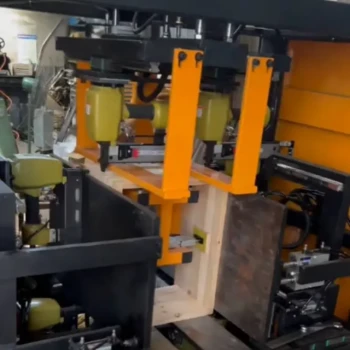
The definitive advantage of vertically designed Rational Hive Boxes is the shift from destructive extraction to sustainable, modular management. Unlike traditional log hives, which often require breaking the nest structure to access resources, Rational Hives utilize a stacked design comprising specific chambers for waste, brood, and honey. This allows beekeepers to harvest honey and monitor health layer-by-layer without harming the colony or disrupting its core organization.
By compartmentalizing the hive into functional vertical layers, this design transforms stingless bee apiculture from a scavenging activity into a standardized, scalable agricultural practice that significantly reduces colony mortality.
The Structural Advantage: Modularity
Vertical Compartmentalization
The core innovation of the Rational Hive is its vertical segmentation. The hive is stacked with a waste chamber at the bottom, followed by brood chambers, and capped with honey layers and a top cover.
Separation of Resources
This architecture physically separates honey storage from the brood and waste zones. In traditional log hives, these resources are often intermixed, leading to contamination during harvest. The Rational Hive ensures that honey can be extracted without introducing impurities from pollen or waste.
Optimized Internal Environment
Wooden Rational Hives offer superior regulation of temperature and humidity compared to makeshift or ceramic containers. The natural hygroscopic properties of the wood help prevent moisture retention, reducing the risk of mold growth and larval diseases within the nest cells.
Operational Efficiency and Scalability
Non-Destructive Harvesting
Harvesting from log hives is typically a destructive process that damages the nest and kills bees. Rational Hives allow for precise extraction where only the honey super is removed or accessed. This ensures the brood nest remains undisturbed, drastically lowering colony mortality rates during harvest.
Standardized Colony Splitting
The standardized dimensions of these boxes allow for interchangeable parts, which is critical for artificial propagation. Beekeepers can perform colony splitting (dividing one colony into two) efficiently, a process that is difficult and risky with irregular log hives.
Routine Monitoring
The detachable design facilitates regular internal inspections. Beekeepers can check for pests, assess queen health, and monitor growth in real-time without causing significant stress to the bees. This "operability" is essential for transitioning from casual collection to professional management.
Understanding the Trade-offs
Initial Investment vs. Long-term Yield
While traditional log hives or wild nests require little capital, industrial hive systems represent a higher initial investment. However, this cost is offset by the ability to scale operations and standardize management practices, which is impossible with irregular natural hives.
Technical Management Requirements
Using Rational Hives requires a shift in mindset from simple gathering to active management. The beekeeper must understand the function of each layer (waste vs. brood vs. honey) to utilize the ventilation and space allocation features effectively.
Making the Right Choice for Your Goal
To determine if transitioning to Rational Hive Boxes is the right move for your apiary, consider your primary objectives:
- If your primary focus is Commercial Scalability: Adopt Rational Hives immediately to utilize standardized splitting and maximize honey output through efficient, non-destructive harvesting.
- If your primary focus is Colony Health and Conservation: Use Rational Hives to reduce mortality rates during inspection and ensure better control over hive temperature and humidity.
Ultimately, the Rational Hive Box is not just a container; it is a tool that professionalizes stingless bee keeping by prioritizing the longevity of the colony over the convenience of the harvest.
Summary Table:
| Feature | Traditional Log Hives | Rational Hive Boxes (Vertical) |
|---|---|---|
| Harvest Method | Destructive; often kills bees | Non-destructive; modular honey removal |
| Resource Purity | High risk of honey contamination | Separated chambers for honey and waste |
| Colony Growth | Difficult to split or propagate | Standardized parts for easy colony splitting |
| Monitoring | Minimal internal visibility | Layer-by-layer inspection with low stress |
| Climate Control | Variable and prone to mold | Natural wood regulates humidity and heat |
| Scalability | Limited by irregular shapes | High; suitable for commercial operations |
Revolutionize Your Beekeeping Operation with HONESTBEE
Transitioning from traditional methods to professional, standardized management is the key to scaling your honey production and ensuring colony longevity. At HONESTBEE, we specialize in supporting commercial apiaries and distributors with high-quality, vertically designed Rational Hive Boxes and a full spectrum of professional beekeeping machinery.
How we add value to your business:
- Comprehensive Wholesale Offering: From precision-engineered hive-making machines to efficient honey-filling systems.
- Industry-Leading Tools: We supply everything from essential consumables to specialized hardware designed for high-yield apiculture.
- Global Support: We cater specifically to the needs of large-scale distributors seeking reliable, scalable equipment solutions.
Ready to elevate your apiary to professional standards? Contact us today to discuss your wholesale requirements!
References
- César Delgado, Claus Rasmussen. Management practices and honey characteristics of Melipona eburnea in the Peruvian Amazon. DOI: 10.1590/0103-8478cr20190697
This article is also based on technical information from HonestBee Knowledge Base .
Related Products
- Metal Bee Hive Stand Bee Box Stand for Beekeeping
- 5 Frame Wooden Nuc Box for Beekeeping
- Portable Bee Mating Hive Boxes Mini Mating Nucs 8 Frames for Queen Rearing
- Australian Langstroth Beehive Boxes for Beekeeping Wholesales
- 4 Frame Plastic Nuc Boxes for Beekeeping Bee Nuc Box
People Also Ask
- What height should a bee hive stand be? Optimize for Your Back and Hive Health
- What are the potential risks of plastic bee hive stands? Avoid Structural Failure in Your Apiary
- What are the essential technical specifications for a high-quality bee hive stand? Maximize Stability and Hive Safety
- What are the benefits of elevating a bee hive with a stand or base? Protect Your Colony and Your Back
- Why are specialized beehive stands or protective barriers necessary for pest management in apiaries? Secure Your Colony